Tungabhadra Board Model for Inter State Water Resource Management
Source:The Hindu ↗
Why It Matters
Inter-state water disputes and aging dam infrastructure are recurring themes in UPSC. This article provides a concrete successful case study (the Tungabhadra Board model) that can be cited in GS2 (Governance/Federalism) and GS3 (Infrastructure/Disaster Management/Water Resources) answers, contrasting it with protracted disputes in other river basins.
Summary
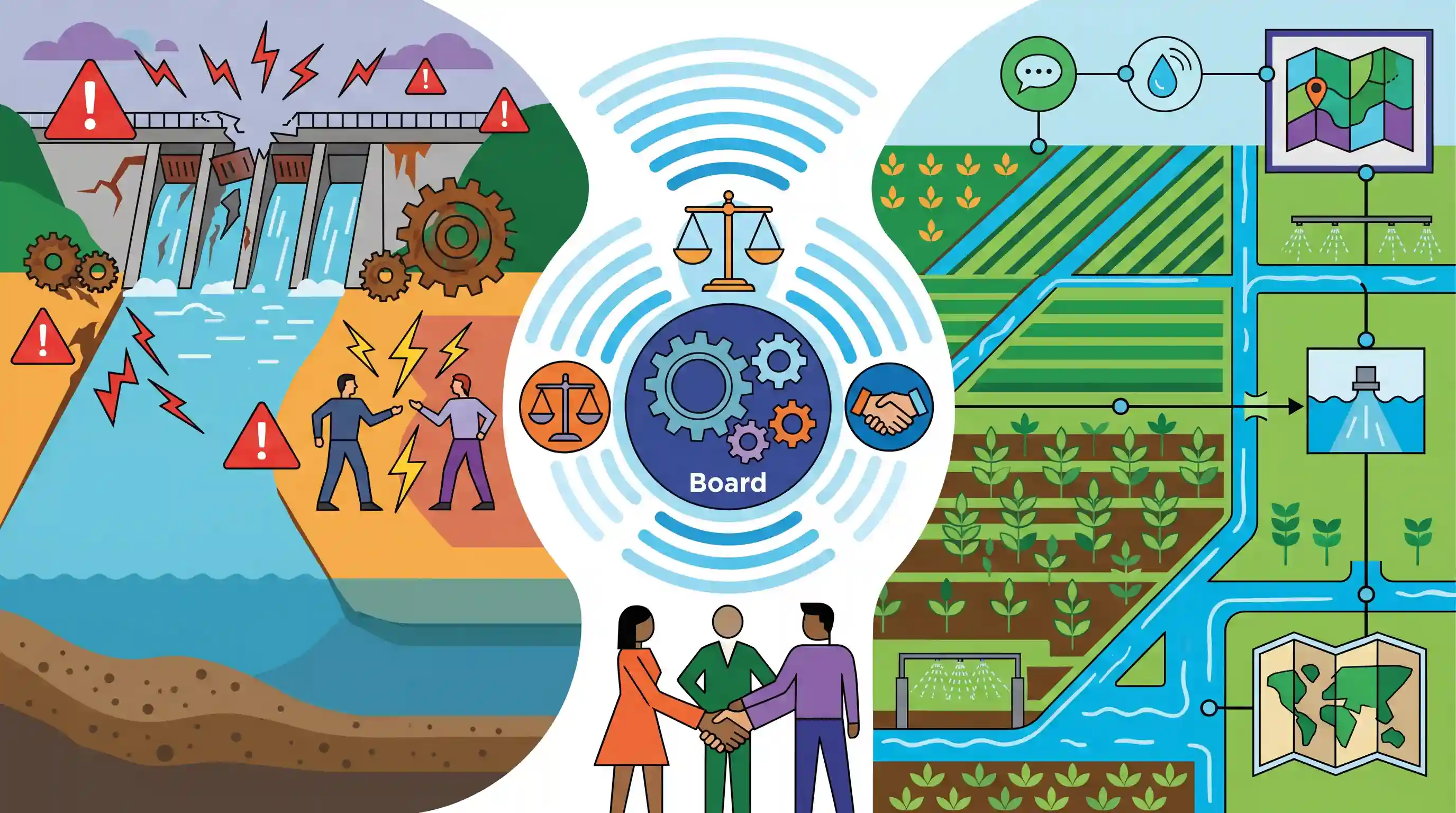
The article highlights the effective functioning of the Tungabhadra Board as a positive model for resolving inter-state river water disputes, specifically between Karnataka, Andhra Pradesh, and Telangana. It emphasizes that cooperative institutional mechanisms can overcome regional friction better than ad hoc panels or tribunals. Furthermore, the recent incident involving a damaged crest gate at the Tungabhadra dam brings to the forefront critical issues regarding India's aging dam infrastructure, the need for stringent dam safety protocols, and the impact of severe reservoir siltation on water storage capacity. The piece calls for integrated water resource management and transparent dialogue on projects like the Upper Bhadra lift irrigation scheme to ensure equitable water distribution.
Key Points
- The Tungabhadra Board serves as a successful institutional model for amicable inter-state water sharing between Karnataka, Andhra Pradesh, and Telangana, standing in contrast to the frequent deadlocks seen in the Krishna River Management Board.
- The recent emergency involving a washed-away crest gate at the Tungabhadra Dam highlights the urgent need for comprehensive dam safety audits, structural rehabilitation, and proactive maintenance of aging water infrastructure.
- Severe siltation has significantly reduced the Tungabhadra reservoir's storage capacity from 133 tmc ft to approximately 105 tmc ft, forcing states to manage competing agricultural and drinking water demands with constrained resources.
- Tensions over micro and lift irrigation projects, such as the Upper Bhadra project in Karnataka, underscore the importance of transparency and early institutional dialogue to prevent downstream friction.
Important Terms
Tungabhadra Board

A statutory body established in 1953 to manage the multipurpose project sharing water between Karnataka, Andhra Pradesh, and Telangana, following the Krishna Water Disputes Tribunal awards.
UPSC context
GS Paper 2: Statutory bodies and federalism; GS Paper 3: Water management and interstate cooperation models.
Inter-State River Water Disputes Act, 1956
Legislation enacted under Article 262 of the Constitution, empowering the Union to establish tribunals for the adjudication of disputes concerning the use and control of interstate river waters.
UPSC context
GS Paper 2: Dispute redressal mechanisms and federal challenges; tests constitutional provisions like Article 262.
Central Water Commission (CWC)
The premier technical organization under the Ministry of Jal Shakti, responsible for coordinating schemes for the control, conservation, and utilization of water resources, including dam safety and flood forecasting.
UPSC context
GS Paper 3: Disaster management (dam safety) and water resource development; GS Paper 2: Important government institutions.
Upper Bhadra Project
A major lift irrigation scheme in Karnataka granted 'National Project' status, aimed at providing sustainable irrigation and drinking water to drought-prone districts in the Krishna basin.
UPSC context
GS Paper 1: Geography (irrigation systems); GS Paper 3: Infrastructure and federal funding for national projects.
Dam Rehabilitation and Improvement Project (DRIP)
An externally aided initiative (World Bank/AIIB) to strengthen dam safety, improve operational performance of existing dams, and build institutional capacity across various Indian states and central agencies.
UPSC context
GS Paper 3: Infrastructure and disaster management (safety of aging dams).
Krishna River Management Board (KRMB)
A statutory autonomous body created under the Andhra Pradesh Reorganisation Act, 2014, to regulate the use and distribution of Krishna river waters between Andhra Pradesh and Telangana.
UPSC context
GS Paper 2: Reorganisation of states and federalism; GS Paper 3: Regional water resource management.
Prelims Trap
"The regulation and development of inter-state rivers falls under the Concurrent List of the Seventh Schedule."
Water is primarily a State subject (Entry 17, List II), but the regulation and development of inter-state rivers is explicitly a Union subject (Entry 56, List I).
Static Concepts Connected
How does the Constitution handle inter-state river water disputes?
- Article 262: Empowers Parliament to provide for the adjudication of any dispute regarding the use, distribution, or control of inter-state rivers.
- Ouster of Courts: Parliament may by law bar the Supreme Court and other courts from exercising jurisdiction over such water disputes.
- Statutory backing: Parliament enacted the Inter-State River Water Disputes Act, 1956, and the River Boards Act, 1956 under these provisions.
What is the institutional framework under the Dam Safety Act, 2021?
- National level: Establishes the National Committee on Dam Safety (NCDS) for policy making, and the National Dam Safety Authority (NDSA) for implementation.
- State level: Requires states to establish a State Committee on Dam Safety (SCDS) and a State Dam Safety Organisation (SDSO).
- Applicability: Applies to all specified dams above 15 meters in height, or 10-15 meters with specific design or structural criteria.
Cross-Topic Patterns
Statutory Boards vs. Tribunals
Contrasts the proactive cooperative federalism of statutory bodies (like the Tungabhadra Board) against the retrospective, often deadlocked nature of ad-hoc water dispute tribunals.
Catchment Ecology & Reservoir Siltation
Connects upstream deforestation and soil erosion directly to the reduction of reservoir live-storage capacity, showing how ecological degradation accelerates infrastructure stress.

Expect a multi-statement Prelims 2026 question blending Article 262, the 7th Schedule lists for water, and the Dam Safety Act 2021.
Linked PYQs · 3
Linked PYQs · 3
- 2023MainsGS3
Dam failures are always catastrophic, especially on the downstream side, resulting in a colossal loss of life and property. Analyze the various causes of dam failures. Give two examples of large dam failures.
- 2020MainsGS3
Suggest measures to improve water storage and irrigation system to make its judicious use under depleting scenario.
- 2016PrelimsGS1
Recently, linking of which of the following rivers was undertaken?
