NCP Faction Realignment and Political Merger Speculation
Source:Indian Express ↗
Why It Matters
Factional splits and potential mergers of political parties invoke crucial constitutional provisions, specifically the Tenth Schedule (Anti-Defection Law). Paragraph 4 of the Tenth Schedule exempts legislators from disqualification if their original political party merges with another and at least two-thirds of the legislative party agrees, making this a highly relevant applied polity topic for GS Paper 2.
Summary
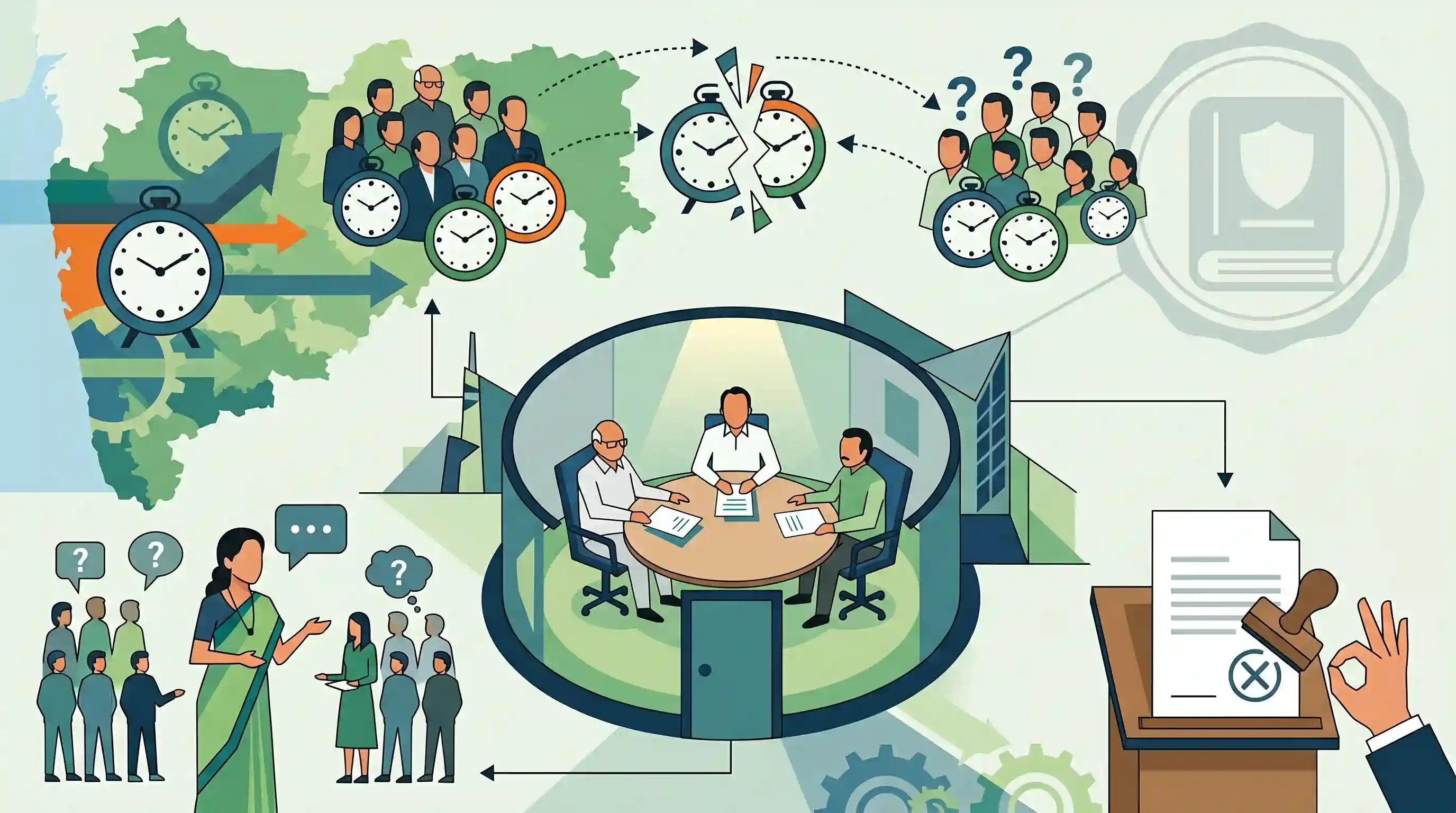
NCP(SP) chief Sharad Pawar, Maharashtra Deputy CM Ajit Pawar, and NCP state chief Jayant Patil held a closed-door meeting in Pune, sparking speculation about a potential merger of the two NCP factions. While Sharad Pawar indicated that MP Supriya Sule would consult with party MLAs and MPs regarding the decision, Sule has stated that there is no formal merger proposal on the table yet. The meeting highlights ongoing political realignment in Maharashtra.
Key Points
- NCP(SP) chief Sharad Pawar and Maharashtra Deputy Chief Minister Ajit Pawar met in Pune, raising speculation about a merger of the two NCP factions.
- NCP state chief Jayant Patil was also part of the closed-door meeting.
- Sharad Pawar mentioned that MP Supriya Sule would make a decision after consulting with party MLAs and MPs.
- Supriya Sule clarified that there is currently no formal proposal for a merger from either side.
Important Terms
Tenth Schedule

Added by the 52nd Amendment (1985), it provides the legal framework for disqualifying legislators on the grounds of defection to ensure political stability and party discipline.
UPSC context
GS Paper II (Polity). Essential for questions on parliamentary democracy, government stability, and the role of the Presiding Officer.
Anti-Defection Law
The legal mechanism in the Tenth Schedule that penalizes MPs and MLAs for switching parties or defying party directions (whips) after being elected.
UPSC context
GS Paper II (Polity). Tests knowledge of legislative accountability, judicial review (Kihoto Hollohan case), and the 91st Amendment’s impact.
Nationalist Congress Party (NCP)
A major party in Maharashtra; the Election Commission recognized the Ajit Pawar-led faction as the 'real' NCP, granting it the original name and 'clock' symbol.
UPSC context
GS Paper II (Elections). Relevant for understanding the Election Commission's power to resolve party split disputes under the Symbols Order, 1968.
NCP(SP)
The faction led by founder Sharad Pawar, officially named 'Nationalist Congress Party (Sharadchandra Pawar)' after the Election Commission ruled in favor of the rival faction.
UPSC context
GS Paper II (Polity/Elections). Illustrates political realignment and the legal recognition of factions during a vertical party split.
Merger (Tenth Schedule)
A legal exception under Paragraph 4 where legislators avoid disqualification if at least two-thirds of their party's members agree to join another party.
UPSC context
GS Paper II (Polity). Crucial for questions on the 91st Amendment Act, which deleted the 'one-third split' protection.
Whip
A written directive issued by a political party to its members in a legislative house to ensure they vote according to the party line.
UPSC context
GS Paper II (Polity). Tests understanding of party discipline versus the individual legislator's freedom of expression within the House.
Prelims Trap
A split by one-third of the members of a legislature party is protected from disqualification.
The 91st Amendment (2003) deleted the provision allowing a one-third split. Currently, only a merger supported by at least two-thirds of the legislature party members offers exemption from disqualification.
Static Concepts Connected
What are the conditions for a valid merger under the Tenth Schedule?
- Original Party Merger: The legislator's original political party must formally merge with another political party.
- Two-Thirds Majority: At least two-thirds of the members of the legislature party must agree to the merger to avoid disqualification.
- 91st Amendment Impact: The 91st Constitutional Amendment Act (2003) abolished the earlier exception that allowed a one-third split.
How does the Election Commission resolve disputes between rival party factions?
- Symbols Order 1968: Disputes are resolved under Paragraph 15 of the Election Symbols (Reservation and Allotment) Order, 1968.
- Test of Majority: The ECI typically uses the 'Test of Majority' across both organizational and legislative wings to identify the legitimate faction.
- Binding Decision: The Election Commission's decision under this order is binding on all rival sections or groups of the recognized party.
Cross-Topic Patterns
Tenth Schedule + Judicial Review limits
The Speaker's decision on defection is subject to judicial review, but courts cannot intervene prior to the Speaker's final decision, as established in the Kihoto Hollohan (1992) judgement.
ECI vs Speaker Jurisdictions
Factional splits trigger parallel tracks: the ECI determines the party symbol under the 1968 Order, while the legislative Speaker independently decides individual MLA disqualifications under the 10th Schedule.

Expect a multi-statement prelims question contrasting the ECI's 1968 Symbols Order jurisdiction with the Speaker's 10th Schedule powers.
Linked PYQs · 4
Linked PYQs · 4
- 2014PrelimsGS1
Which one of the following Schedules of the Constitution of India contains provisions regarding anti-defection?
- 1998PrelimsGS1
Which one of the following Schedules of the Constitution of India contains provisions regarding Anti-Defection Act?
- 2023MainsGS2
Discuss the role of Presiding Officers of state legislatures in maintaining order and impartiality in conducting legislative work and in facilitating best democratic practices.
- 2022MainsGS2
Discuss the role of the Election Commission of India in the light of the evolution of the Model Code of Conduct.
