Healthcare Access for Marginalized Communities in Sonagachi
Source:Indian Express ↗
Why It Matters
Improving healthcare access for highly stigmatized and marginalized groups like sex workers is a core component of achieving universal health coverage and ensuring the Right to Life with dignity (Article 21). It illustrates the critical role of community-based interventions in public health.
Summary
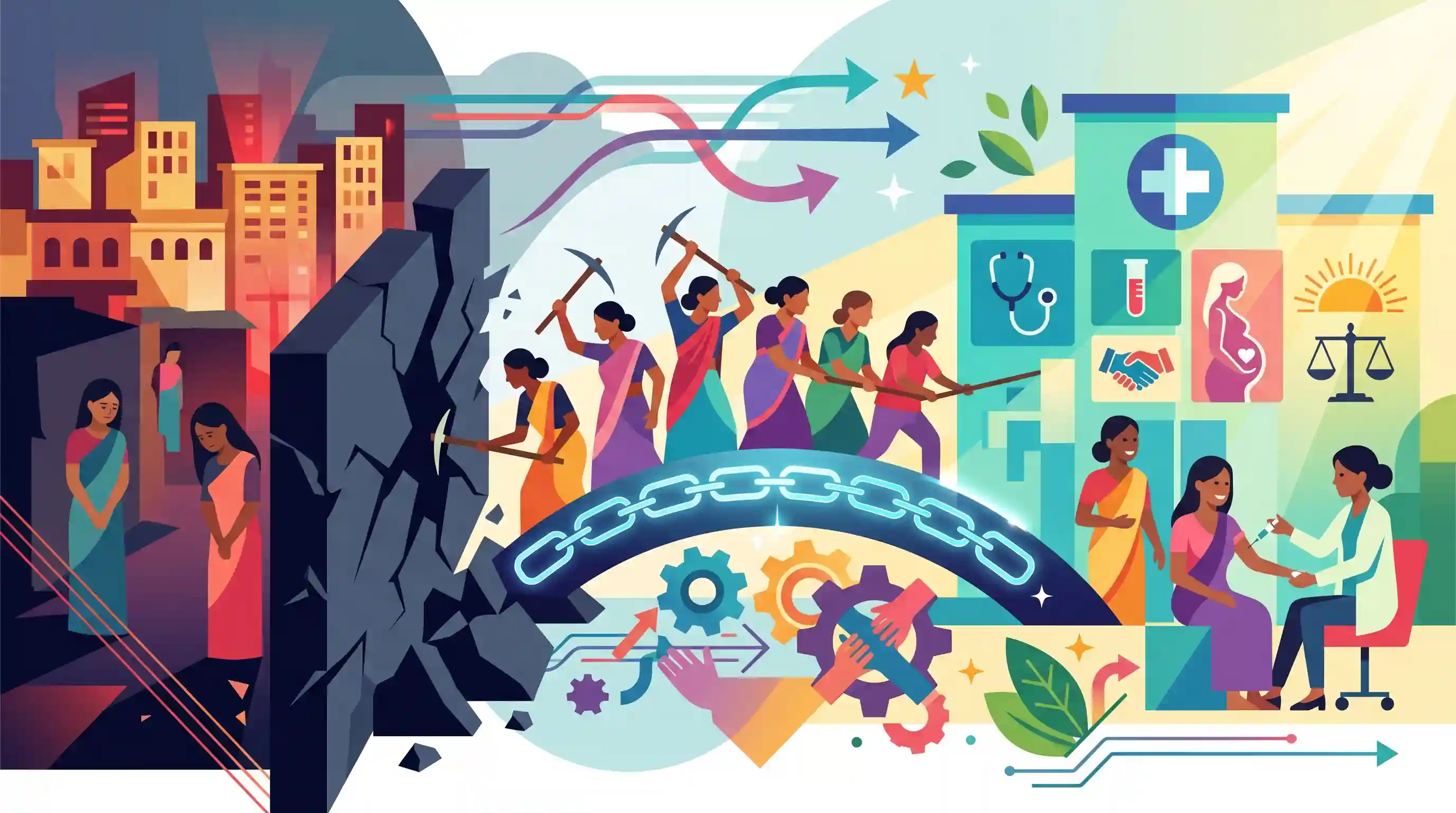
The article highlights the positive shifts in healthcare accessibility for sex workers in Sonagachi, India's largest red-light district. Sustained advocacy and community mobilization have helped marginalized sex workers overcome traditional barriers of social stigma and discrimination, enabling them to access crucial medical services, including sexual and reproductive healthcare. This development underscores the importance of inclusive public health policies and the vital role of civil society organizations in bridging the gap between vulnerable populations and the state healthcare system, thereby advancing the constitutional right to health and a dignified life.
Key Points
- Healthcare accessibility for sex workers in Sonagachi, India's largest red-light district, has witnessed marked improvements due to targeted interventions and community advocacy.
- Enhanced access includes vital reproductive and sexual health services, STI testing, and general medical care.
- Historically, severe social stigma and discrimination have acted as barriers to public health facilities for sex workers, but community mobilization is gradually overcoming these obstacles.
- Community-based organizations play a pivotal role in bridging the gap between marginalized individuals and state healthcare infrastructure.
Important Terms
Durbar Mahila Samanwaya Committee (DMSC)

A West Bengal-based collective of over 60,000 sex workers advocating for labor rights, social dignity, and healthcare through community-led HIV/STI prevention and advocacy.
UPSC context
GS Paper II: Role of NGOs/SHGs and GS Paper III: Social Justice/Health regarding marginalized sections.
Immoral Traffic (Prevention) Act (ITPA), 1956
The primary Indian legislation governing sex work; while the act of sex work is not illegal, it criminalizes brothel-keeping, pimping, and soliciting in public.
UPSC context
GS Paper II: Government policies and interventions for vulnerable sections and their implementation issues.
Budhadev Karmaskar v. State of West Bengal
A landmark Supreme Court judgment (2022) recognizing sex work as a 'profession' and directing that sex workers are entitled to dignity and equal protection under Article 21.
UPSC context
GS Paper II: Judiciary's role in protecting fundamental rights and interpreting constitutional provisions for marginalized groups.
Right to Health
Interpreted by the Supreme Court as part of the 'Right to Life' under Article 21; it mandates state obligation to provide non-discriminatory healthcare access.
UPSC context
GS Paper II: Fundamental Rights and Directive Principles; Paper III: Issues relating to development and management of Social Sector/Health.
Public Healthcare System
The network of government-funded hospitals and clinics (like PHCs and CHCs) providing essential medical services, often serving as the primary care provider for marginalized populations.
UPSC context
GS Paper III: Public health infrastructure and its accessibility/inclusivity for vulnerable sections of society.
Usha Multipurpose Cooperative Society
Established in 1995 by DMSC, it is Asia's first and largest financial cooperative run by and for sex workers to promote financial independence and inclusion.
UPSC context
GS Paper II: Role of Self-Help Groups (SHGs) and cooperatives in socio-economic empowerment.
Sonagachi
Located in North Kolkata, it is one of Asia's largest red-light districts and a major hub for community-led health interventions and sex worker rights movements.
UPSC context
Geography/Social Issues: Urban geography and socio-economic challenges of marginalized urban enclaves.
Prelims Trap
Prostitution is entirely prohibited under the ITPA, making sex workers legally ineligible to claim state healthcare benefits.
Under ITPA, commercial sex work itself is not a crime; rather, running brothels and public soliciting are penalized. Furthermore, the Supreme Court has explicitly recognized their fundamental right to health.
Static Concepts Connected
How does Article 21 apply to sex workers in India?
- Right to dignity: In the Budhadev Karmaskar case, the Supreme Court ruled that sex workers are entitled to a life of dignity under Article 21.
- Healthcare access: The Court directed states to provide basic amenities, ration cards, and access to state healthcare infrastructure without discrimination.
- Police sensitization: The SC mandated that police treat sex workers with dignity and refrain from verbal or physical abuse during raids.
What is the Targeted Interventions (TI) strategy under India's NACP?
- Focus on HRGs: It specifically focuses on High-Risk Groups (HRGs) like female sex workers and injecting drug users to control the spread of HIV/AIDS.
- Peer-led approach: It utilizes community members as educators and advocates to bypass social stigma and institutional hostility.
- Service delivery: Provides non-discriminatory delivery of sexual and reproductive healthcare, including STI/RTI treatment and free condoms.
Cross-Topic Patterns
Sex work as unorganized labour
The push to register sex workers on the e-Shram portal highlights the shift from viewing them solely as criminal subjects to recognizing them as unorganized workers entitled to social security.
CBOs bridging state capacity gaps
Just like Kudumbashree for poverty alleviation, organizations like the Durbar Mahila Samanwaya Committee act as crucial intermediaries delivering state health schemes to deeply stigmatized populations.

The expansion of Article 21 (Budhadev Karmaskar case) and ITPA's legal nuances regarding sex work are prime targets for a 2026 Polity MCQ.
Linked PYQs · 3
Linked PYQs · 3
- 2024MainsGS2
In a crucial domain like the public healthcare system the Indian State should play a vital role to contain the adverse impact of marketisation of the system. Suggest some measures through which the State can enhance the reach of public healthcare at the grassroots level.
- 2018MainsGS1
Women's movement in India has not addressed the issues of women of lower social strata.' Substantiate your view.
- 2023MainsGS2
Explain the constitutional perspectives of Gender Justice with the help of relevant Constitutional Provisions and case laws.
