Geneva diplomatic talks on Iran and Ukraine conflict
Source:The Hindu ↗
Why It Matters
It highlights high-stakes multi-theater diplomacy affecting global security. The concurrent peace processes in the Middle East and Eastern Europe reflect shifting geopolitical dynamics, the strategic role of third-party mediators like Oman, and evolving U.S. approaches to international conflict resolution.
Summary
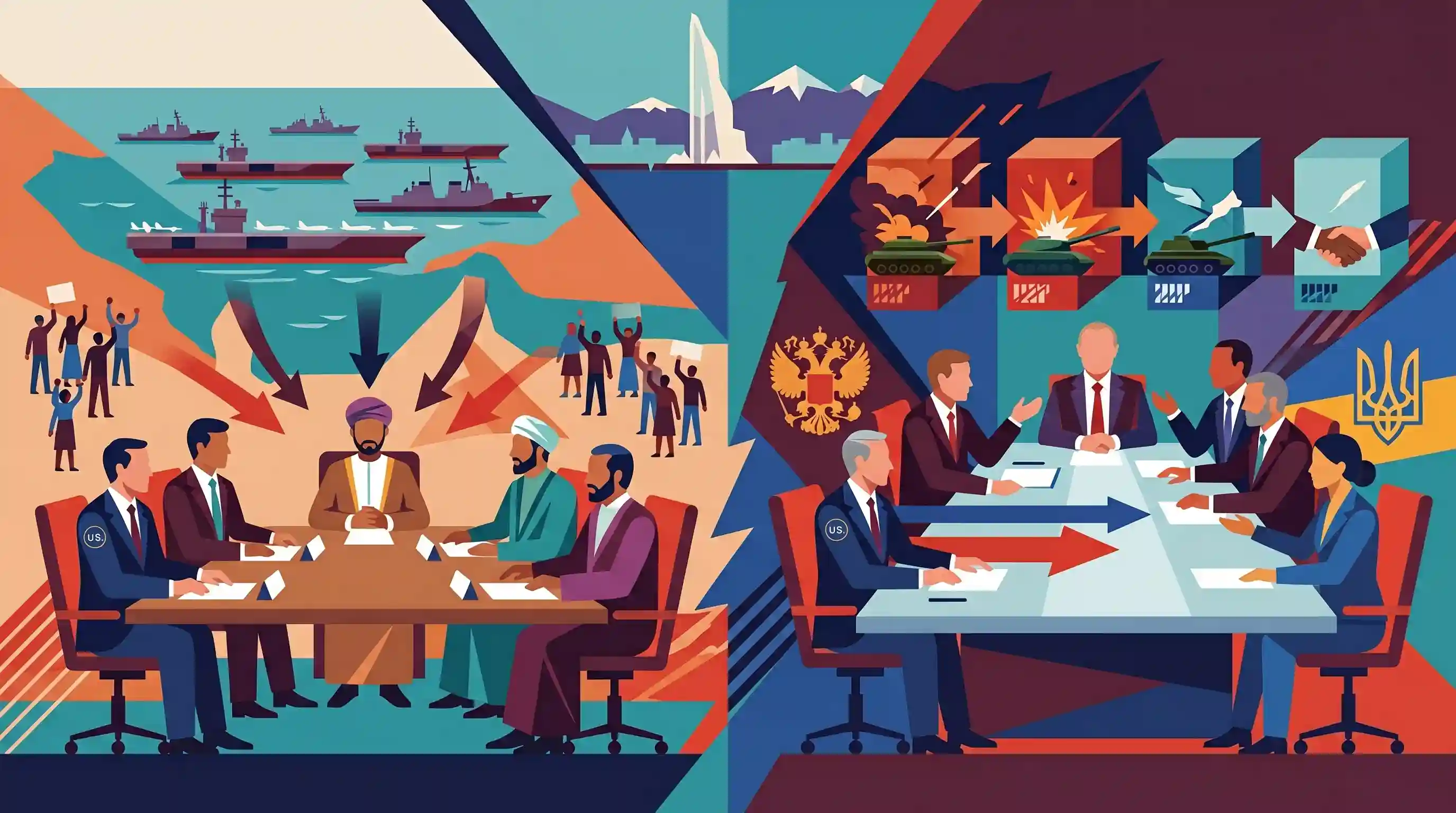
Two sets of critical diplomatic negotiations involving a U.S. delegation are scheduled to take place in Geneva. U.S. envoys Steve Witkoff and Jared Kushner will first hold Oman-mediated talks with Iranian representatives, as the Trump administration intensifies pressure on Tehran amid domestic protests and a growing U.S. naval presence. Later the same day, the envoys will participate in trilateral talks with Russian and Ukrainian officials, reflecting a strong diplomatic push by the U.S. to secure an agreement to end the four-year-old Russia-Ukraine war.
Key Points
- A U.S. delegation led by envoys Steve Witkoff and Jared Kushner is set to conduct two major sets of diplomatic negotiations in Geneva.
- The first meeting involves discussions with Iranian representatives, mediated by Oman, as the U.S. applies pressure via a naval buildup and leverages domestic unrest in Iran.
- The second meeting is a trilateral negotiation with Russia and Ukraine, reflecting President Donald Trump's push to end the four-year-old conflict.
- The concurrent talks underscore an aggressive and multifaceted U.S. diplomatic effort to reshape geopolitical stability in both the Middle East and Eastern Europe.
Important Terms
Omani-mediated Diplomacy

Oman's "friend to all, enemy to none" foreign policy, positioning it as the "Switzerland of West Asia" for neutral mediation between the U.S. and Iran.
UPSC context
GS II: International Relations. Crucial for India-West Asia relations and understanding regional stability mechanisms.
Trilateral Negotiations
A diplomatic format involving three distinct parties (here: U.S., Russia, and Ukraine) to address multifaceted geopolitical conflicts and secure binding security guarantees.
UPSC context
GS II: Bilateral, Regional and Global Groupings. Tests understanding of complex mediation frameworks.
Maximum Pressure Policy
A U.S. strategy combining severe economic sanctions and military buildup to isolate a nation (Iran) and force it back to the negotiating table for concessions.
UPSC context
GS II: Effect of Policies of Developed Countries on India's interests. Relevant for energy security and regional stability.
Geneva as a Diplomatic Hub
A world-recognized neutral territory hosting international organizations and "Track 1" diplomacy (official government-to-government talks) aimed at resolving global crises.
UPSC context
GS II: Important International Institutions and their role in global peace.
Strategic Signaling
The deployment of military assets, such as naval carrier groups, to communicate intent or resolve to an adversary during active diplomatic negotiations.
UPSC context
GS II: Global Geopolitics. Tests understanding of the intersection between military posture and foreign policy.
Strait of Hormuz
The world's most important oil transit chokepoint between the Persian Gulf and the Gulf of Oman, often subject to blockades during U.S.-Iran escalations.
UPSC context
GS I: World Geography (Chokepoints) & GS II: Strategic interests. Vital for India's energy security.
Prelims Trap
"The Strait of Hormuz is bordered by Iran to the north and the United Arab Emirates to the south."
Aspirants often assume the UAE forms the entire southern border of the Strait of Hormuz. In reality, Oman's Musandam Peninsula exclave forms the actual southern coast.
Static Concepts Connected
Why is Oman's geography and foreign policy critical to global energy security?
- Musandam Peninsula: An exclave of Oman that forms the southern coast of the Strait of Hormuz, granting it shared control with Iran over this critical global oil chokepoint.
- Strategic neutrality: Often termed the 'Switzerland of West Asia', Oman maintains diplomatic ties with both the US and Iran, serving as a vital backchannel mediator.
- Maritime connectivity: It acts as the crucial gateway linking the Persian Gulf to the Gulf of Oman and the broader Arabian Sea.
What defines 'Permanent Neutrality' in international relations?
- Treaty obligation: A state bound by international agreement or declaration to remain neutral in all future armed conflicts, such as Switzerland since 1815.
- Military restrictions: The state cannot join mutual defense alliances (like NATO) or permit foreign military bases on its sovereign territory.
- Diplomatic hub: This unaligned status makes neutral nations the preferred, trusted venues for hosting hostile parties during critical peace negotiations and summits.
Cross-Topic Patterns
Iran sanctions & Chabahar Port
U.S. pressure on Iran directly impacts India's strategic calculations, complicating bilateral energy trade and the development of the Chabahar Port for broader Central Asian access.
Transactional diplomacy vs UN frameworks
The deployment of special envoys for direct, closed-door negotiations marks a continuing shift away from traditional UN-mediated multilateral peace processes in global conflict resolution.

Expect a map-based Prelims question pairing the Musandam Peninsula, Strait of Hormuz, and Oman's geopolitical role in West Asia.
Linked PYQs · 4
Linked PYQs · 4
- 2025MainsGS2
"The reform process in the United Nations remains unresolved, because of the delicate imbalance of East and West and entanglement of the USA vs. Russo-Chinese alliance.” Examine and critically evaluate the East-West policy confrontations in this regard.
- 2012MainsGS2
How have the US sanctions against Iran affected India's bilateral relations with Iran?
- 2016PrelimsGS1
Which of the following is not a member of 'Gulf Cooperation Council'?
- 2023PrelimsGS1
Consider the following pairs: Area of conflict mentioned in news Country where it is located 1. Donbas : Syria 2. Kachin : Ethiopia 3. Tigray : North Yemen How many of the above pairs are correctly matched?
