India Canada Security Information Sharing Channel
Source:Indian Express ↗
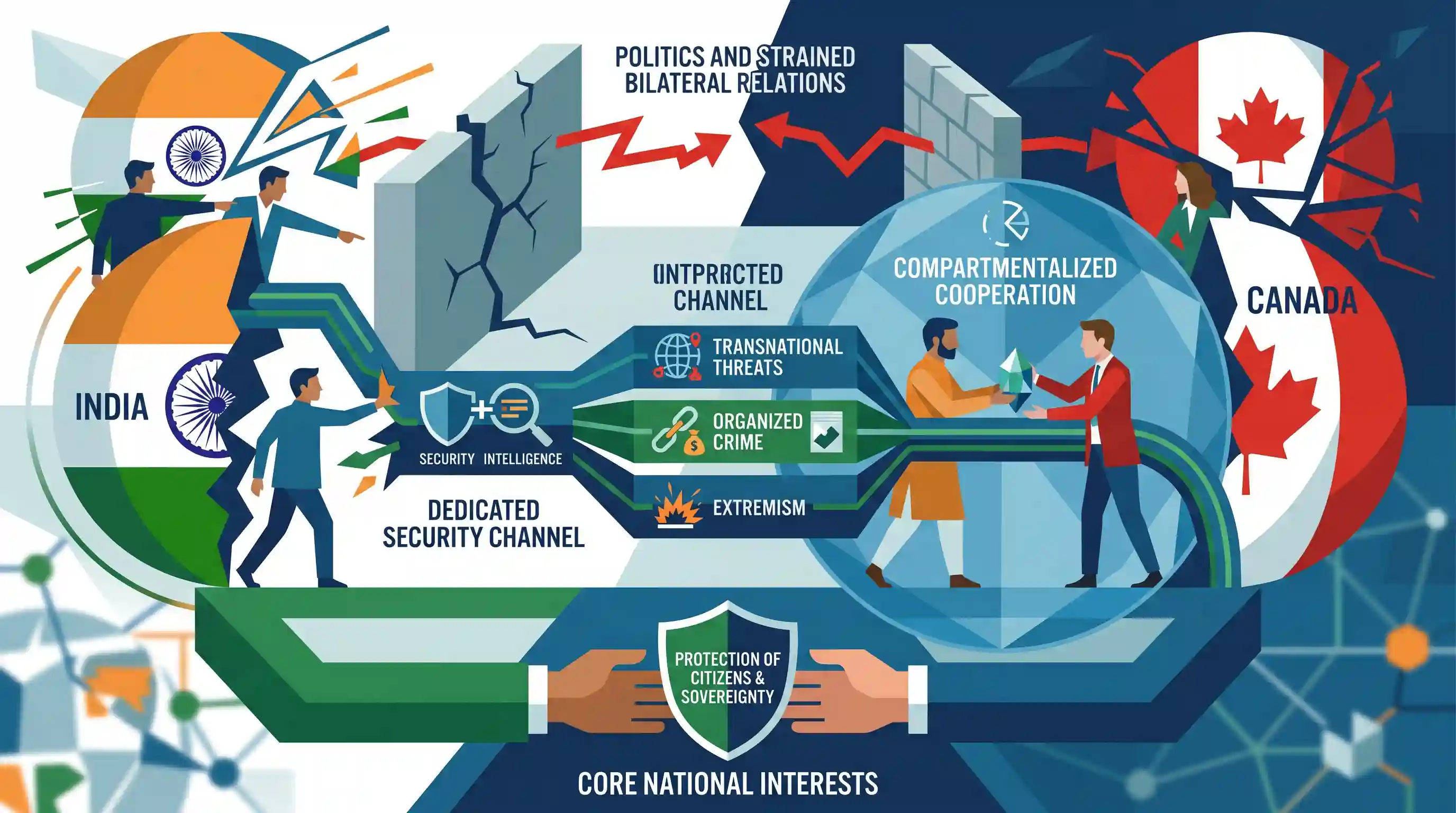
Why It Matters
It serves as an important case study for UPSC aspirants on how nations decouple vital internal security imperatives from diplomatic and political hurdles, utilizing intelligence diplomacy to combat transnational organized crime and extremism.
Summary
Following a period of severe diplomatic friction between India and Canada, the two nations have opened a dedicated channel for sharing security and intelligence information. Initiated after a visit by National Security Advisor Ajit Doval, this development marks a pragmatic effort to compartmentalize vital security cooperation from broader political disputes. The new channel aims to address transnational threats, organized crime, and extremism, highlighting the necessity of maintaining intelligence-sharing mechanisms to protect core national interests even amid strained bilateral relations.
Key Points
- India and Canada have established a dedicated channel for sharing security and intelligence information, following a visit by National Security Advisor Ajit Doval.
- The development signals a pragmatic attempt to maintain vital security cooperation despite the ongoing diplomatic standoff over pro-Khalistan extremism.
- The channel will likely focus on combating transnational organized crime, terror networks, and sharing actionable intelligence to safeguard internal security.
- The engagement demonstrates the role of backchannel diplomacy and intelligence agencies in managing bilateral ties when formal diplomatic relations are strained.
Important Terms
National Security Advisor (NSA)

The senior official and chief strategic advisor to the Prime Minister on internal and external security. The NSA heads the National Security Council (NSC) and coordinates India's premier intelligence and security agencies.
UPSC context
GS Paper II (Executive) & III (Security Architecture); tests understanding of the strategic decision-making hierarchy and institutional security framework.
Transnational Threats
Security risks that cross international borders, including global terrorism, narcotics trafficking, and cyber warfare. These threats bypass traditional state sovereignty and require multilateral or bilateral cooperation to mitigate.
UPSC context
GS Paper III (Internal Security); tests the ability to analyze non-traditional security challenges in a globalized, interconnected environment.
Intelligence Sharing
The reciprocal exchange of strategic information and threat assessments between nations' security agencies. It aims to provide early detection of threats like terrorism and organized crime to safeguard national interests.
UPSC context
GS Paper III (Security Agencies & Their Mandate); tests awareness of international security cooperation and modern intelligence-gathering protocols.
Organized Crime
Highly structured criminal networks operating for profit through illegal activities like smuggling, human trafficking, and money laundering. These groups often maintain a "nexus" with terrorist organizations and transnational links.
UPSC context
GS Paper III (Internal Security); focuses on criminal-terrorist linkages and the institutional/legal frameworks required to dismantle illicit networks.
Compartmentalization
A diplomatic strategy where nations separate specific areas of cooperation, such as security or trade, from broader political disputes or diplomatic friction to protect core mutual interests.
UPSC context
GS Paper II (International Relations); tests understanding of pragmatic realism and conflict management techniques in bilateral diplomacy.
Bilateral Relations
The political, economic, and strategic interactions between two sovereign nations. Currently, India-Canada relations are characterized by a "strategic rebalancing" amid tensions over diaspora politics and security grievances.
UPSC context
GS Paper II (International Relations); tests knowledge of India's foreign policy challenges and the role of diaspora in diplomatic ties.
Prelims Trap
"The National Security Council (NSC) of India is headed by the National Security Advisor."
The NSC is an executive agency headed by the Prime Minister. The NSA acts as its secretary and the chief executive of the national security management system, not its chairperson.
Static Concepts Connected
What distinguishes an Extradition Treaty from a Mutual Legal Assistance Treaty (MLAT)?
- Extradition Purpose: Focuses strictly on the formal surrender of a fugitive by one sovereign state to another for prosecution or to serve a criminal sentence.
- MLAT Purpose: Provides a formal framework to gather and exchange evidence, bank records, and witness statements necessary for active criminal investigations.
- Nodal Ministries: The Ministry of External Affairs (MEA) is nodal for Extradition requests, whereas the Ministry of Home Affairs (MHA) is the central authority for MLATs.
What is the structural framework of India's National Security Council (NSC)?
- Apex Level: Headed by the Prime Minister, with the Ministers of Home Affairs, Defence, External Affairs, and Finance serving as its core members.
- Three-Tier System: Operates via the Strategic Policy Group (SPG), the National Security Advisory Board (NSAB), and the National Security Council Secretariat (NSCS).
Cross-Topic Patterns
Terror-Gangster Nexus & Diaspora
Extortion and drug syndicates operating within the diaspora often fund domestic secessionism. This merges GS3 internal security challenges (organized crime) with GS2 diaspora policies and international extradition hurdles.
Compartmentalized Backchannel Diplomacy
Using NSA-led intelligence channels to bypass formal diplomatic freezes mirrors crisis-communication strategies traditionally used in India-Pakistan and India-China relations to maintain baseline state security.

GS3 Mains 2026 will likely feature a 15-marker on the 'terror-gangster nexus' exploiting foreign safe havens and extradition hurdles.
Linked PYQs · 3
Linked PYQs · 3
- 2022MainsGS3
Discuss the types of organised crimes. Describe the linkages between terrorists and organised crime that exist at the national and transnational levels.
- 2023MainsGS3
What are the internal security challenges being faced by India? Give out the role of Central Intelligence and Investigative Agencies tasked to counter such threats.
- 2020MainsGS2
Indian diaspora has a decisive role to play in the politics and economy of America and European Countries'. Comment with examples.
