SEBI Proposes Reinstating Stock Exchange Route for Buybacks
Source:The Hindu ↗
Why It Matters
Illustrates the dynamic nature of financial market regulations in India, showcasing how SEBI balances operational efficiency for corporations with the protection of minority shareholders and aligns market mechanisms with changing taxation regimes.
Summary
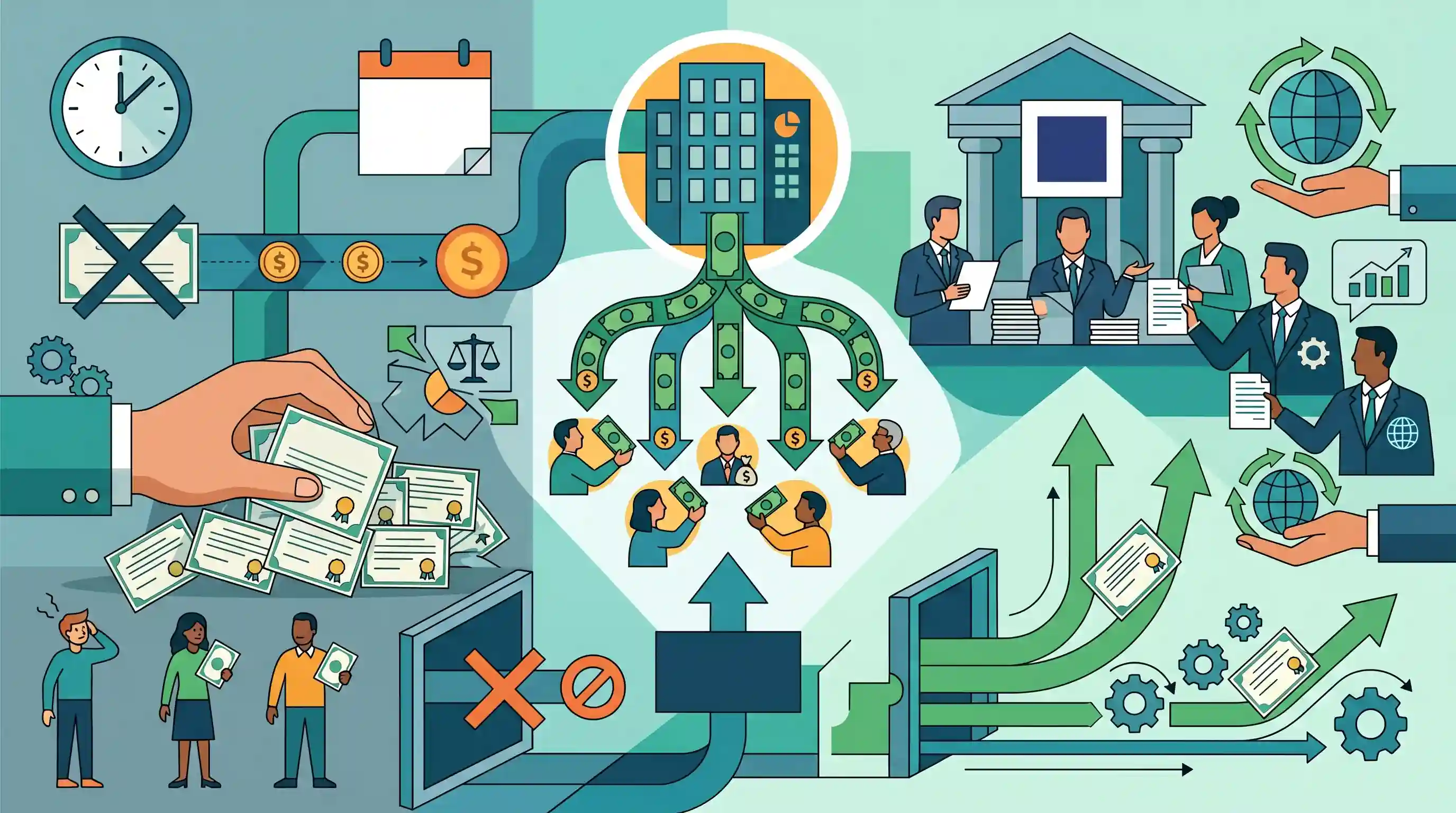
The Securities and Exchange Board of India (SEBI) is proposing to reinstate the stock exchange route for corporate share buybacks, which was previously discontinued in April 2025. The original suspension addressed concerns over inequitable opportunities for minority shareholders—where large sell orders could monopolize the buyback—and differential tax treatments. However, following a policy shift that now taxes buyback proceeds as dividends at the shareholder level, and advocacy from industry bodies like FICCI highlighting the method's efficiency and international acceptance, SEBI is considering bringing back this flexible capital return mechanism for listed companies.
Key Points
- SEBI has proposed re-introducing the stock exchange route for share buybacks to give listed companies an additional, efficient method to repurchase shares.
- This route was discontinued on April 1, 2025, due to concerns that large shareholders monopolized sell orders, denying equitable opportunities to minority investors, and due to differential tax treatments.
- A recent tax policy change now treats proceeds from share buybacks as dividends, shifting the tax incidence directly to the shareholders.
- Industry bodies like FICCI and the Investment Bankers Association lobbied for the reinstatement of the stock exchange route, citing its international recognition and operational efficiency.
Important Terms
SEBI (Securities and Exchange Board of India)

The statutory regulatory body established under the SEBI Act, 1992, to protect investor interests, regulate the securities market, and promote its development in India.
UPSC context
GS III: Economic Development (Capital Markets). Tests knowledge of statutory regulators and their role in market stability.
Share Buyback
A corporate action where a company repurchases its own outstanding shares from the secondary market or existing shareholders to reduce supply and increase the value of remaining shares.
UPSC context
GS III: Indian Economy. Relevant for understanding corporate governance, capital restructuring, and earnings per share (EPS) impact.
Stock Exchange Route
A mechanism where a company purchases its shares through nationwide stock exchanges using an order-matching system, offering flexibility in timing and price execution.
UPSC context
GS III: Investment Models. Important for distinguishing between market-based and fixed-price capital return mechanisms.
Tender Offer Route
An equitable buyback method where a company offers to repurchase shares from all shareholders on a proportionate basis at a fixed price within a specified window.
UPSC context
GS III: Corporate Governance. Tests understanding of fair and transparent mechanisms for protecting retail investor interests.
Dividend Taxation (Buybacks)
The current policy where buyback proceeds are taxed in the hands of shareholders as dividends (or capital gains), replacing the previous system of company-level buyback tax.
UPSC context
GS III: Government Budgeting and Taxation. Relevant for changes in fiscal policy and their impact on investment behavior.
FICCI (Federation of Indian Chambers of Commerce & Industry)
India's oldest and largest apex business organization that facilitates policy advocacy and provides a platform for networking and consensus-building within the Indian industry.
UPSC context
GS III: Role of Industry Bodies. Tests understanding of how non-government organizations influence economic policy and regulation.
Minority Shareholders
Shareholders who hold a small percentage of a company's total shares and lack the voting power to exert control over corporate management and decisions.
UPSC context
GS III: Corporate Governance. Essential for discussing equity, fairness, and the protection of small-scale retail investors.
Prelims Trap
"In India, share buyback proceeds are currently subjected to a Buyback Tax levied directly on the company."
This was abolished. Buyback proceeds are now treated as 'dividend income', shifting the tax liability entirely to individual shareholders based on their respective tax slabs.
Static Concepts Connected
What is a Share Buyback and how does it affect corporate financials?
- Mechanism: A listed company repurchases its own outstanding shares from the open market or existing shareholders, reducing overall share supply.
- EPS Impact: Because outstanding shares decrease while net income remains unchanged, the Earnings Per Share (EPS) typically increases.
What are the primary methods for executing a Share Buyback in India?
- Tender Offer Route: The company offers to buy shares proportionately from all shareholders at a fixed price, ensuring equitable participation for minority investors.
- Stock Exchange Route: The company buys shares from the secondary market using an order-matching mechanism, which is operationally efficient but can favor large sellers.
Cross-Topic Patterns
Tax shifts altering market regulation
By treating buyback proceeds as dividend income at the shareholder level, the recent tax policy removed the arbitrage SEBI previously cited when it originally banned the stock exchange route.
Efficiency vs Minority Protection
SEBI's fluctuating stance on the stock exchange route highlights the classic regulatory tension between corporate operational efficiency and protecting minority shareholders from institutional monopolies.

Expect a 2026 Prelims statement differentiating Tender Offer vs Stock Exchange buyback routes, explicitly linked to the recent tax incidence shift.
Linked PYQs · 2
Linked PYQs · 2
- 2024PrelimsGS1
Consider the following statements : 1. In India, Non-Banking Financial Companies can access the Liquidity Adjustment Facility window of the Reserve Bank of India. 2. In India, Foreign Institutional Investors can hold the Government Securities (G-Secs). 3. In India, Stock Exchanges can offer separate trading platforms for debts. Which of the statements given above is/are correct?
- 2018MainsGS3
Comment on the important changes introduced in respect of the Long-term Capital Gains Tax (LCGT) and Dividend Distribution Tax (DDT) in the Union Budget for 2018-2019.
