Synthetic Biology Biosensors for Heavy Metal Detection
Source:The Hindu ↗
Why It Matters
It demonstrates the real-world application of genetic engineering and synthetic biology in environmental monitoring. It directly connects to core UPSC themes like bioremediation, heavy metal toxicity (mercury), and technological solutions to ecological challenges.
Summary
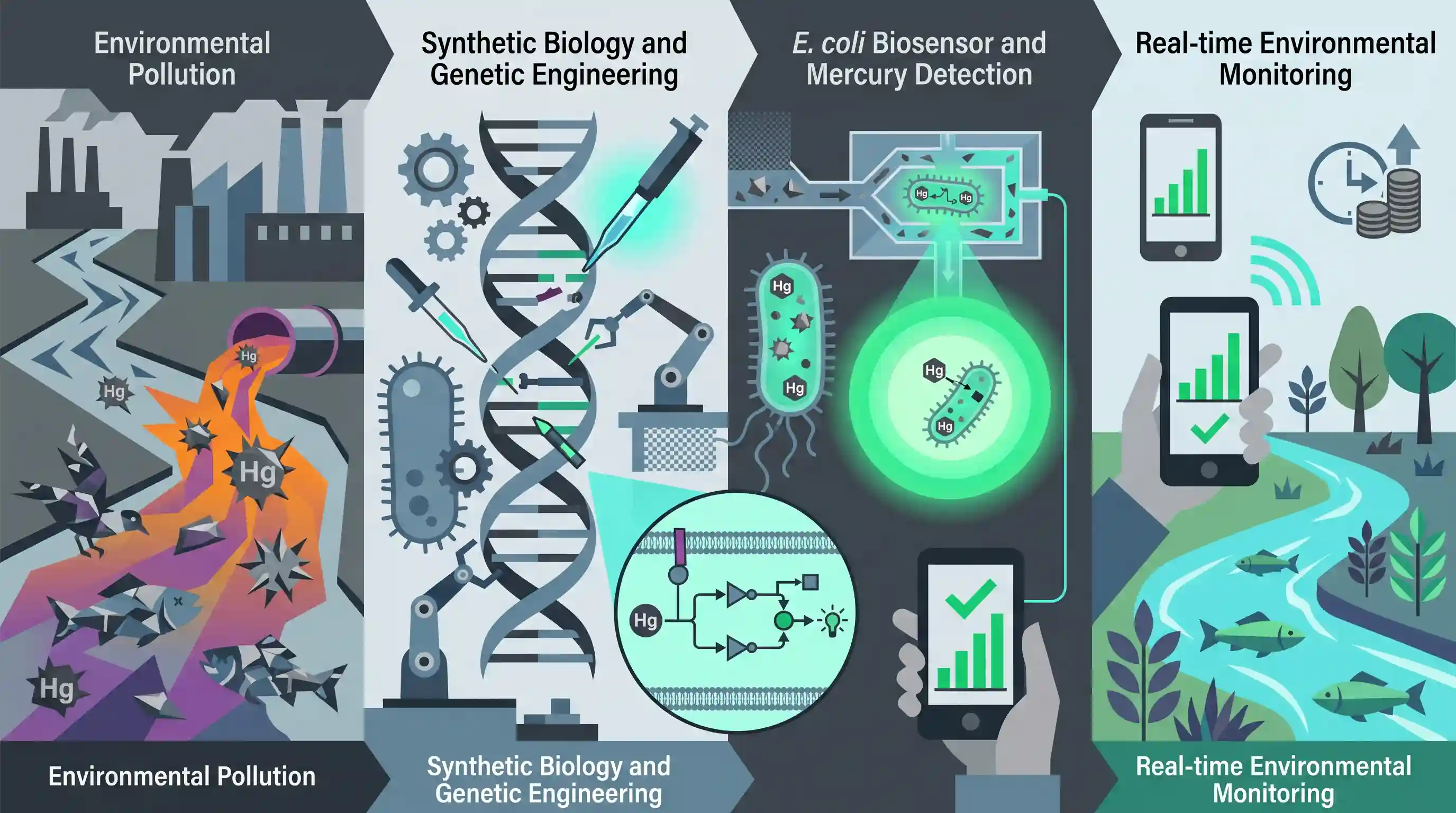
Researchers have utilized synthetic biology to genetically engineer E. coli bacteria into a biosensor that detects mercury, a highly toxic heavy metal. This innovation provides a cost-effective, real-time method for monitoring environmental pollution, showcasing the practical application of biotechnology in environmental management and surveillance of dangerous contaminants.
Key Points
- Scientists have genetically engineered E. coli bacteria to serve as a living biosensor capable of detecting mercury in the environment.
- This technique utilizes synthetic biology to make the bacteria react (e.g., via a reporter gene) when exposed to mercury ions, offering real-time monitoring.
- Provides a cost-effective alternative to conventional, resource-intensive laboratory tests for tracking heavy metal pollution in water bodies.
- Mercury is a potent neurotoxin that biomagnifies through the food web (methylmercury), necessitating rigorous environmental surveillance.
Important Terms
Minamata Convention on Mercury

A legally binding global treaty aimed at protecting human health and the environment from anthropogenic emissions and releases of mercury throughout its entire life cycle.
UPSC context
GS III: Environmental Pollution/International Treaties. Tests awareness of India's 2018 ratification and global chemical management frameworks.
Synthetic Biology
An interdisciplinary field that applies engineering principles to biology to design and construct new biological parts or redesign existing natural systems for specific functions.
UPSC context
GS III: Science & Technology. Focuses on disruptive biotechnologies and their multi-sectoral applications (health, environment, industry).
Biosensor
An analytical device combining a biological recognition element (like E. coli) with a transducer to detect chemicals and convert the response into a measurable signal.
UPSC context
GS III: Science & Technology. Relevant for understanding real-time monitoring of pollutants and medical diagnostics.
Minamata Disease
A severe neurological syndrome caused by methylmercury poisoning, characterized by motor impairment and sensory loss; first discovered in 1950s Japan due to industrial waste.
UPSC context
GS III: Health/Environment. Tests knowledge of heavy metal toxicity and the historical context of environmental regulation.
Bioremediation
The use of living organisms (bacteria, fungi, plants) to degrade, neutralize, or remove toxins and pollutants from soil, water, and other environments.
UPSC context
GS III: Environment (Pollution). Tests understanding of eco-friendly, science-backed alternatives to mechanical clean-up methods.
Biomagnification
The process where the concentration of a persistent toxin (like mercury) increases in the tissues of organisms as it moves up the food chain.
UPSC context
GS III: Environment (Ecology). Essential concept for explaining why small amounts of mercury become lethal for top predators.
Prelims Trap
E. coli naturally acts as a biosensor for heavy metal pollution in aquatic ecosystems.
While E. coli naturally indicates faecal contamination (coliform bacteria), it must be genetically engineered using synthetic biology to detect heavy metals.
Static Concepts Connected
How does mercury enter and magnify in the aquatic food chain?
- Bacterial transformation: Anaerobic bacteria in aquatic ecosystems convert relatively less toxic inorganic mercury into highly toxic, organic methylmercury.
- Bioaccumulation: Aquatic organisms absorb methylmercury faster than they can eliminate it from their bodies.
- Biomagnification: The concentration of methylmercury exponentially increases as it moves up the food web, severely impacting apex predators and humans.
What is a whole-cell biosensor in synthetic biology?
- Synthetic biology: Redesigning microorganisms (like bacteria or yeast) by engineering them to have new, targeted abilities to respond to specific environmental stimuli.
- Reporter genes: Scientists insert genes that produce a visible signal (like fluorescence or luminescence) when the cell encounters the target toxin.
- Real-time monitoring: Offers rapid, on-site, and cost-effective alternatives to heavy laboratory equipment for detecting environmental pollutants or medical diagnostics.
Cross-Topic Patterns
Biosensors for Minamata compliance
Real-time mercury biosensors can aid India's compliance with the Minamata Convention by providing cheap monitoring for artisanal mining and industrial effluents.
Dual role of E. coli in water quality
Links traditional environmental ecology (E. coli for coliform/sewage testing) with emerging synthetic biotech (engineered sensors for industrial heavy metals), expanding biological indicator utility.

Expect a multi-statement question in 2026 pairing synthetic biology applications (like biosensors) with biomagnification mechanisms.
Linked PYQs · 3
Linked PYQs · 3
- 2023PrelimsGS1
Consider the following statements regarding mercury pollution: 1. Gold mining activity is a source of mercury pollution in the world. 2. Coal-based thermal power plants cause mercury pollution. 3. There is no known safe level of exposure to mercury. How many of the above statements are correct?
- 2017PrelimsGS1
In the context of solving pollution problems, what is/are the advantage/advantages of bioremediation technique? 1. It is a technique for cleaning up pollution by enhancing the same biodegradation process that occurs in nature. 2. Any contaminant with heavy metals such as cadmium and lead can be readily and completely treated by bioremediation using microorganisms. 3. Genetic engineering can be used to create microorganisms specifically designed for bioremediation. Select the correct answer using the code given below:
- 2019PrelimsGS1
What is Cas9 protein that is often mentioned in news?
