Scientific Advances in Healthcare Genetics and Knowledge Systems
Source:The Hindu ↗
Why It Matters
The article bridges cutting-edge biotechnology (metabolomics, biomarkers, and bioinformatics) with a pressing socio-demographic challenge (an ageing population and the ensuing healthcare burden). This intersection is highly relevant for both GS3 (Science and Technology applications in healthcare) and GS1/GS2 (Population dynamics, geriatric care, and social sector management).
Summary
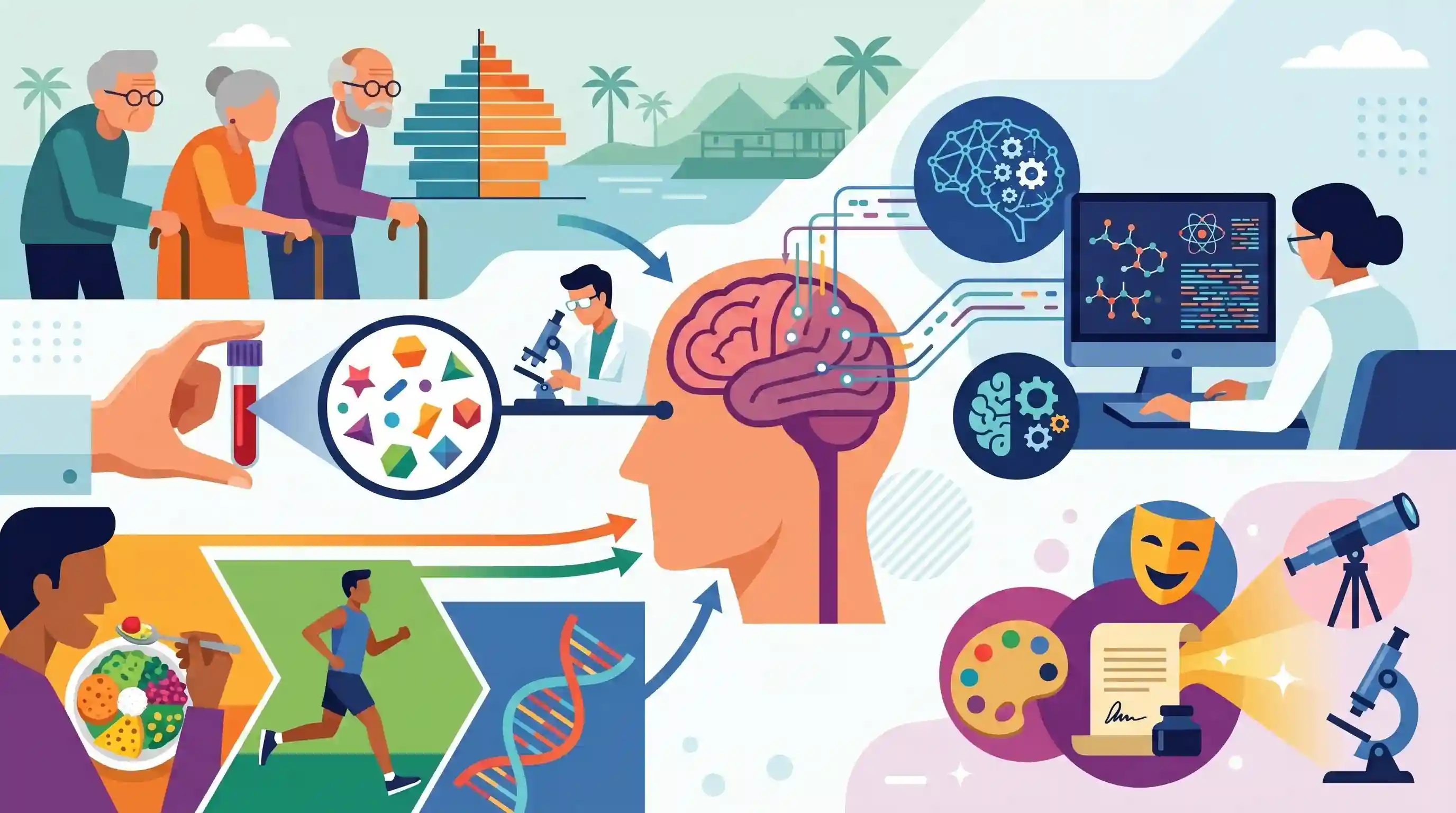
At a recent national research conference in Thiruvananthapuram, scientists presented significant advancements in predictive healthcare, notably identifying non-invasive, blood-based metabolic biomarkers for Alzheimer's disease. This breakthrough is particularly critical for Kerala, which faces an advanced demographic transition with a rapidly ageing population. The research highlights how regional diet, lifestyle, and genetics drive stage-specific metabolic disruptions linked to neurodegenerative conditions. Additionally, the conference underscored the growing integration of artificial intelligence and bioinformatics in classical biology, alongside a push for transdisciplinary methodologies combining the sciences, arts, and humanities to foster holistic knowledge creation.
Key Points
- Researchers have identified non-invasive, distinct blood-based metabolic signatures to detect and monitor Alzheimer's disease progression without relying on invasive clinical procedures.
- Metabolic profiling reveals that disease risks and progression are heavily influenced by geographic, dietary, lifestyle, and genetic backgrounds, particularly highlighting disruptions in taurine metabolism and neuroinflammation.
- Kerala is experiencing an advanced demographic transition with 20-25% of its population projected to be elderly, making early predictive healthcare crucial to mitigate caregiver burden and manage age-related neurodegenerative diseases.
- Modern biological research is increasingly relying on the integration of data science, bioinformatics, and artificial intelligence to decode complex phenomena like the 'Lyonisation of the X-Chromosome'.
- Experts advocated for a transdisciplinary approach to knowledge creation, merging scientific investigation, philosophy, and linguistics rather than relying solely on traditional textbook-driven paradigms.
Important Terms
Metabolic Biomarkers

Identifiable blood-based chemical signatures (metabolites) used for non-invasive, early detection and monitoring of diseases, specifically neurodegenerative conditions like Alzheimer's.
UPSC context
GS Paper 3: Science and Technology — developments and their applications in healthcare and disease management.
Demographic Transition
The shift in a population from high birth and death rates to low birth and death rates; Kerala’s "advanced" stage implies a rapidly ageing society.
UPSC context
GS Paper 1: Social Issues and Population — issues related to the elderly and demographic shifts.
Bioinformatics
An interdisciplinary field that uses software tools and data science to analyze complex biological data, such as genetic sequences and metabolic profiles.
UPSC context
GS Paper 3: Science and Technology — IT and biotechnology integration; emerging fields in Indian research.
Centre for Neuroscience (CNS)
A specialized research hub at CUSAT (established 2000) dedicated to studying the brain and neurodegenerative disorders through clinical and pre-clinical trials.
UPSC context
GS Paper 3: Science and Technology — institutional frameworks for specialized medical and biological research.
Centre for Human Genetics (CHG)
A premier Bengaluru-based institute and "Centre of Excellence for Rare Diseases" focused on advanced research in human genetics, genomics, and inheritance mechanisms.
UPSC context
GS Paper 3: Science and Technology — indigenization of technology and genetics-based disease control.
Cochin University of Science and Technology (CUSAT)
A state-owned autonomous university in Kerala that facilitates advanced research in applied science, technology, and transdisciplinary methodologies.
UPSC context
GS Paper 3: Science and Technology — role of state-level institutions in fostering innovation.
IISER Pune
A premier research-teaching institute under the Ministry of Education, declared an "Institute of National Importance" for its contributions to basic sciences and interdisciplinary education.
UPSC context
GS Paper 3: Science and Technology — achievements of Indians and Indian institutes in science.
Prelims Trap
"Lyonisation is a cellular process occurring in all human genomes to regulate gene expression and silence mutations."
Lyonisation (X-inactivation) specifically occurs in female mammals. One of the two X chromosomes is inactivated to ensure dosage compensation with males, who possess only one X chromosome.
Static Concepts Connected
What characterizes the advanced stages of the Demographic Transition Model (DTM)?
- Low vital rates: Both birth and death rates remain exceptionally low, leading to population stabilization or even absolute population decline.
- Ageing population: High life expectancy coupled with falling fertility rates expands the elderly demographic, creating a top-heavy or inverted population pyramid.
- High dependency ratio: A shrinking working-age population must support a rapidly growing elderly cohort, putting immense strain on pension and healthcare systems.
What are biological markers (biomarkers) and how are they used in modern medicine?
- Objective indicators: They are quantifiable medical signs (like specific proteins, hormones, or gene mutations) that indicate a normal biological state or a pathogenic process.
- Diagnostic role: They allow for early predictive screening, such as detecting Alzheimer's-linked tau proteins years before severe cognitive decline manifests.
- Non-invasive shift: Recent S&T advancements increasingly enable biomarker tracking via simple blood tests (liquid biopsies) rather than invasive tissue biopsies or spinal taps.
Cross-Topic Patterns
Demography, delimitation, and federalism
Kerala’s ageing population ('demographic winter') contrasts sharply with Northern India’s youthful bulge, directly sparking debates over parliamentary delimitation and Finance Commission resource allocations.
Bioinformatics & digital data privacy
The integration of AI to decode massive genetic datasets requires robust data anonymization, tying predictive healthcare advancements directly to the Digital Personal Data Protection (DPDP) Act frameworks.

Expect a Prelims question matching emerging genetic terms like 'Lyonisation', 'Barr body', or 'Biomarkers' to their biological functions.
Linked PYQs · 5
Linked PYQs · 5
- 2021PrelimsGS1
Magnetite particles, suspected to cause neurodegenerative problems, are generated as environmental pollutants from which of the following? 1. Brakes of motor vehicles 2. Engines of motor vehicles 3. Microwave stoves within homes 4. Power plants 5. Telephone lines Select the correct answer using the code given below.
- 2016PrelimsGS1
In the context of the developments in Bioinformatics, the term 'transcriptome', sometimes seen in the news, refers to
- 2023PrelimsGS1
'Microsatellite DNA' is used in the case of which one of the following?
- 2020MainsGS2
In order to enhance the prospects of social development, sound and adequate health care policies are needed particularly in the fields of geriatric and maternal health care. Discuss.
- 2024MainsGS1
What is the concept of a 'demographic winter'? Is the world moving towards such a situation? Elaborate.
