Wolbachia mosquitoes for dengue control and public health
Source:The Hindu ↗
Why It Matters
This article highlights cutting-edge biotechnology applications in vector-borne disease control, a recurring theme in UPSC Prelims and Mains regarding applied biotechnology, health security, and sustainable public health interventions.
Summary
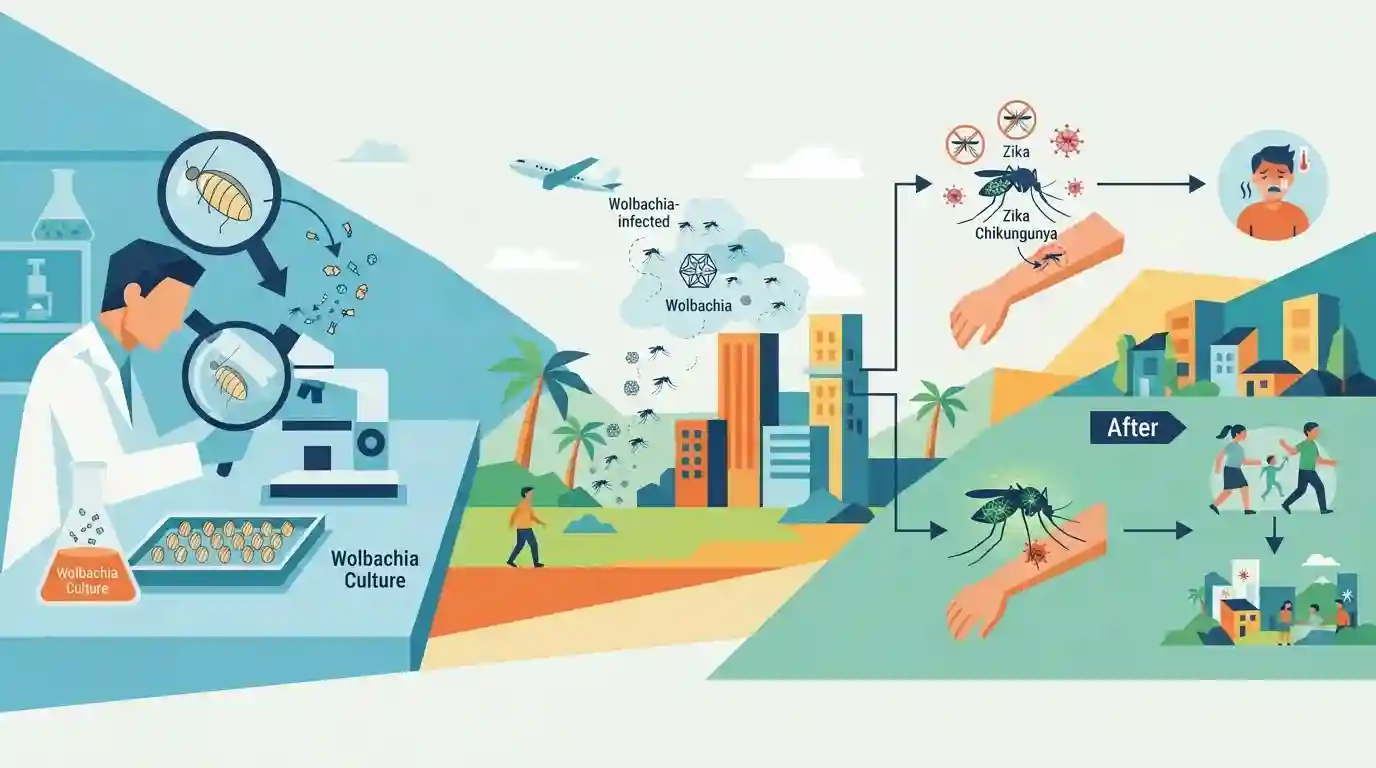
Recent scientific studies provide strong evidence supporting the use of Wolbachia-infected mosquitoes as a viable biological tool to combat dengue fever. By introducing this bacterium into mosquito populations, the transmission capacity of vector-borne pathogens like dengue, Zika, and chikungunya is significantly curtailed. This biotechnology-driven strategy presents a sustainable alternative to conventional vector control mechanisms, addressing public health challenges associated with tropical diseases.
Key Points
- New scientific evidence highlights the effectiveness of Wolbachia-infected mosquitoes in suppressing dengue transmission.
- Wolbachia is a naturally occurring bacterium that limits the replication of viruses like dengue, Zika, and chikungunya inside mosquitoes.
- Releasing specially bred mosquitoes provides a sustainable, biological alternative to traditional chemical insecticides and vector control methods.
- Such biotechnology-driven public health interventions offer scalable solutions to combat rising vector-borne diseases globally.
Important Terms
Wolbachia-infected mosquitoes

A naturally occurring intracellular bacterium introduced into Aedes mosquito populations to inhibit the transmission of viral pathogens like dengue, Zika, and chikungunya.
UPSC context
Important for GS Paper III (Science and Technology – Biotechnology) and public health measures addressing vector-borne diseases.
Static Concepts Connected
What is the mechanism of Wolbachia-based vector control in suppressing diseases like dengue?
- Bacterial Nature: Natural bacterium found in insect species, infecting over 50% of arthropod species globally but absent in Aedes aegypti naturally.
- Pathogen Inhibition: Competes for cellular resources and modulates immune responses inside mosquitoes, preventing arboviruses from replicating to transmissible levels.
- Reproductive Advantage: Infected males mating with uninfected females produce no viable offspring (cytoplasmic incompatibility), driving population replacement.
Cross-Topic Patterns
Biotechnology vs. Environmental Impact Assessment
Vector control strategies like Wolbachia intersect with environmental governance when assessing ecological risks of releasing bio-augmented species into natural ecosystems under the Wildlife Protection Act framework.
Climate Change & Tropical Disease Security
Rising tropical disease burdens due to climate change make biological vector control a key pillar of national health security alongside traditional sanitation drives.

Wolbachia bio-control method will feature in science-tech questions contrasting gene-drive technology with non-GMO biological interventions.
Linked PYQs · 1
Linked PYQs · 1
- 2023PrelimsGS1
'Wolbachia method' is sometimes talked about with reference to which one of the following?
