Science and Jan Bhagidari Drive India Tuberculosis Elimination Goals
Source:Indian Express ↗
Why It Matters
Provides a concrete example of how the state can leverage 'Jan Bhagidari' (citizen participation) and civil society to address systemic public healthcare challenges, directly relevant to GS2 topics on health, governance, and inclusive development, as well as GS3 applications of new medical treatments.
Summary
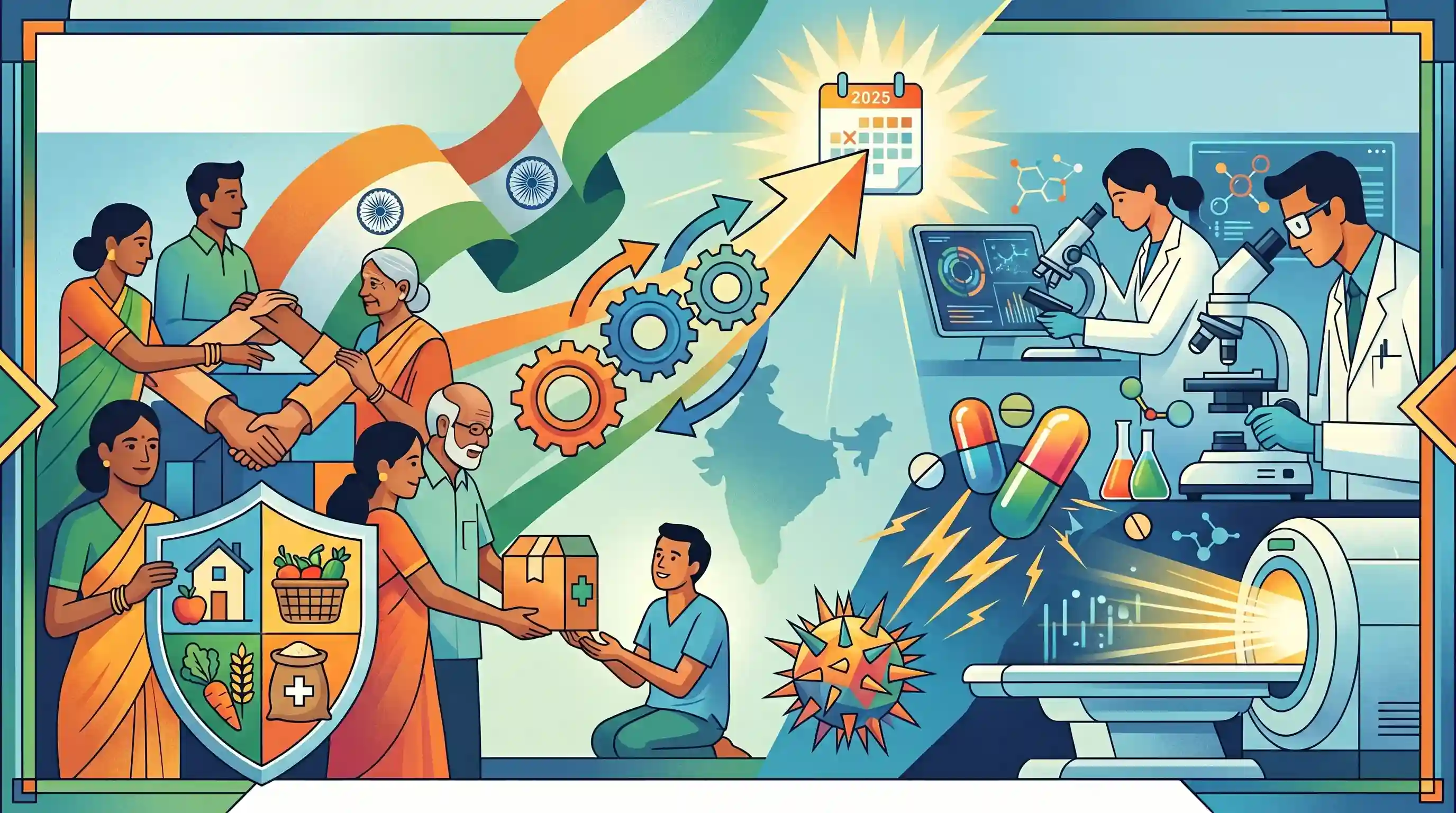
The article outlines India's accelerated efforts to eliminate Tuberculosis by 2025 through a dual strategy of scientific innovation and participatory governance ('Jan Bhagidari'). Under the Pradhan Mantri TB Mukt Bharat Abhiyaan, the 'Ni-kshay Mitra' initiative empowers citizens and organizations to support TB patients by addressing critical gaps in nutrition and care. This citizen-led movement is bolstered by scientific breakthroughs, such as the roll-out of the BPaLM regimen for drug-resistant TB and improved diagnostics, demonstrating a comprehensive model for overcoming entrenched public health crises.
Key Points
- India has set a target to eliminate Tuberculosis by 2025, which is five years ahead of the global Sustainable Development Goal (SDG) target.
- The concept of 'Jan Bhagidari' (people's participation) is being utilized through initiatives like Ni-kshay Mitra, where citizens provide nutritional, vocational, and diagnostic support to TB patients.
- The Pradhan Mantri TB Mukt Bharat Abhiyaan serves as a core framework integrating government efforts with citizen-led support mechanisms to tackle the socio-economic burdens of the disease.
- Scientific advancements, such as the implementation of the shorter and more effective BPaLM regimen for drug-resistant TB, are complementing community engagement efforts to accelerate eradication.
Important Terms
Pradhan Mantri TB Mukt Bharat Abhiyaan

A national initiative launched by the Ministry of Health and Family Welfare to eliminate Tuberculosis in India by 2025, five years ahead of global targets.
UPSC context
GS Paper II (Government Policies & Health); critical for questions on India's specific public health targets and mission-mode governance.
Ni-kshay Mitra
A community-led component of the PM TB Mukt Bharat Abhiyaan where 'Mitras' (donors) provide nutritional, diagnostic, and vocational support to adopted TB patients.
UPSC context
GS Paper II (Social Justice/Welfare Schemes); tests understanding of participatory governance and community involvement in solving health crises.
BPaLM regimen
A novel, all-oral treatment regimen for drug-resistant TB, reducing treatment duration from 18-20 months to just six months using four key drugs.
UPSC context
GS Paper III (Science & Technology); focuses on breakthroughs in healthcare and India’s adoption of global medical standards.
Jan Bhagidari
The concept of 'people's participation' in governance, emphasizing that major social and health challenges require the active contribution of citizens beyond government action.
UPSC context
GS Paper II (Governance); essential for discussing the shift from top-down administration to inclusive, citizen-centric policy implementation.
National TB Elimination Programme (NTEP)
The centrally sponsored scheme responsible for implementing India’s National Strategic Plan to eliminate TB through universal access to quality diagnosis and treatment.
UPSC context
GS Paper II (Health); the primary institutional framework for TB-related questions in the Civil Services Examination.
Sustainable Development Goal (SDG) 3.3
A United Nations target under 'Good Health and Well-being' to end the epidemics of AIDS, tuberculosis, malaria, and neglected tropical diseases by 2030.
UPSC context
GS Paper II/III (International Relations/Environment/Health); used for benchmarking India's progress against global developmental commitments.
Prelims Trap
"India's target to eliminate TB by 2025 aligns exactly with the global Sustainable Development Goal (SDG) timeline."
India's national target for TB elimination is 2025, which is deliberately set five years ahead of the global SDG target of 2030. UPSC frequently swaps these deadlines.
Static Concepts Connected
What distinguishes MDR-TB from XDR-TB in disease management?
- MDR-TB: Resistance to at least Isoniazid and Rifampicin, which are the two most potent first-line anti-TB drugs.
- XDR-TB: Resistance to first-line drugs PLUS any fluoroquinolone and at least one second-line injectable drug.
- BPaLM Regimen: A novel, all-oral 6-month treatment explicitly rolled out to drastically reduce the duration and increase the cure rate for MDR-TB.
What are the core pillars of India's National Strategic Plan (NSP) for TB Elimination?
- Detect: Find all drug-sensitive and drug-resistant TB cases, emphasizing unreached and highly vulnerable populations.
- Treat & Prevent: Initiate and sustain patients on appropriate treatment protocols and prevent TB emergence in susceptible, high-risk groups.
- Build: Strengthen enabling policies, health systems, human resources, and institutional structures to sustain eradication efforts.
Cross-Topic Patterns
AMR and patient compliance
Shorter treatments like the 6-month BPaLM regimen reduce patient non-compliance, directly tackling Antimicrobial Resistance (AMR)—a core GS3 health and science linkage.
DBT addressing social determinants
Ni-kshay Poshan Yojana uses Aadhaar-linked DBT to combat undernutrition, connecting GS2 welfare mechanisms directly to disease mortality reduction and social determinants of health.
Participatory Governance in Public Health
The 'Jan Bhagidari' approach of Ni-kshay Mitra mirrors the Swachh Bharat behavioral change model, utilizing participatory governance to solve entrenched public health infrastructure gaps.

A multi-statement Prelims question blending the 2025 vs 2030 TB targets, MDR-TB drug resistance specifics, and BPaLM regimen is highly likely.
Linked PYQs · 3
Linked PYQs · 3
- 2024MainsGS2
In a crucial domain like the public healthcare system the Indian State should play a vital role to contain the adverse impact of marketisation of the system. Suggest some measures through which the State can enhance the reach of public healthcare at the grassroots level.
- 2024MainsGS2
Public charitable trusts have the potential to make India's development more inclusive as they relate to certain vital public issues. Comment.
- 2024MainsGS2
The Citizens' charter has been a landmark initiative in ensuring citizen-centric administration. But it is yet to reach its full potential. Identify the factors hindering the realisation of its promise and suggest measures to overcome them.
