सुप्रीम कोर्ट का दोष का पदानुक्रम सिद्धांत जमानत न्यायशास्त्र को नियंत्रित करता है
स्रोत:द हिंदू ↗
क्यों मायने रखता है
जटिल साजिश के मामलों में जमानत के प्रति सुप्रीम कोर्ट का व्यक्तिगत दृष्टिकोण मनमानी और लंबी प्री-ट्रायल हिरासत के खिलाफ अनुच्छेद 21 के अधिकारों की रक्षा के लिए एक महत्वपूर्ण मिसाल कायम करता है, जो GS Paper 2 (संवैधानिक कानून और न्यायपालिका) के लिए सीधे प्रासंगिक है।
सारांश
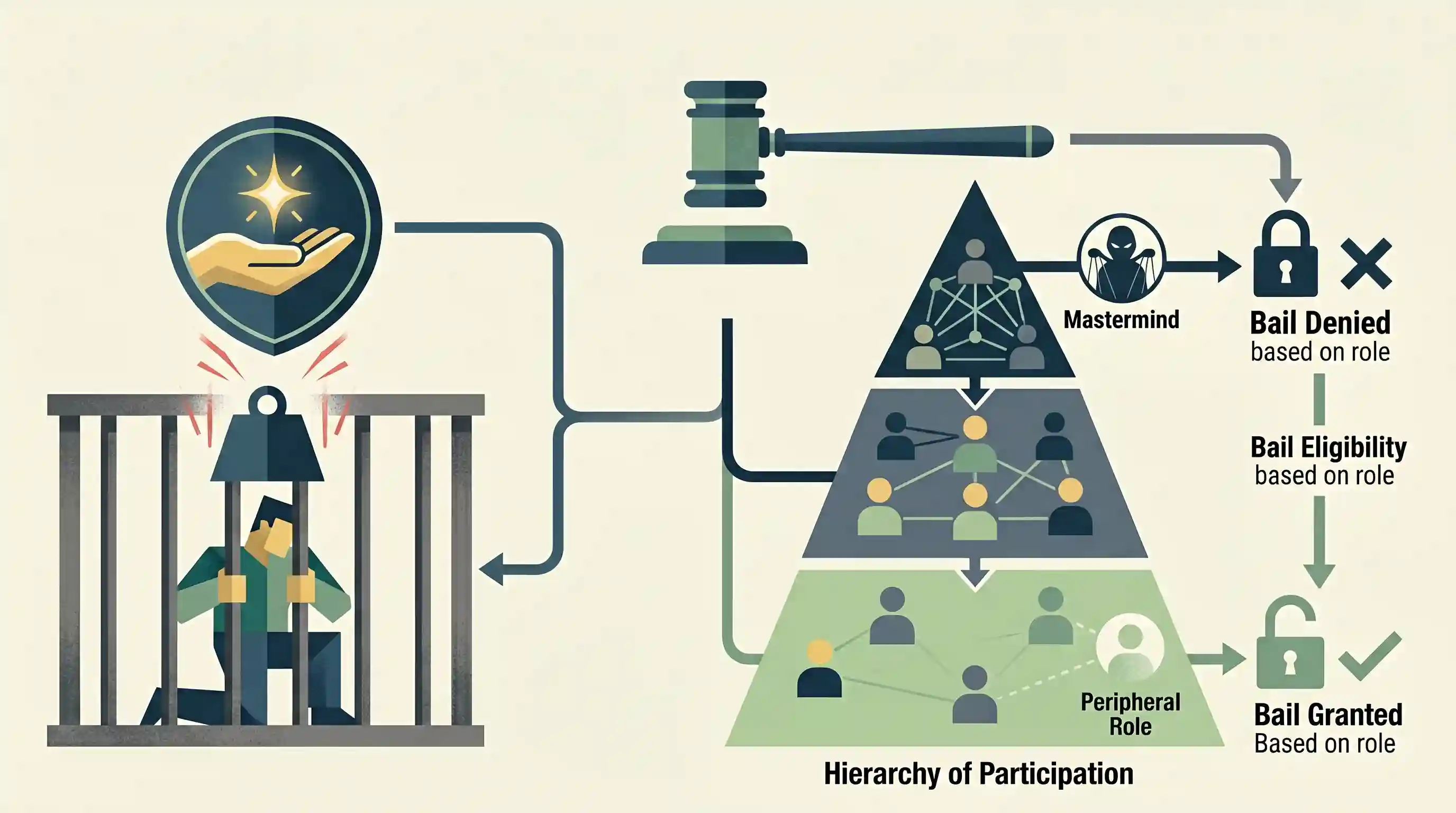
सुप्रीम कोर्ट ने दिल्ली दंगा व्यापक साजिश मामले में जमानत की पात्रता निर्धारित करने के लिए 'भागीदारी के पदानुक्रम' (hierarchy of participation) को स्पष्ट किया है। आरोपियों की व्यक्तिगत भूमिकाओं का आकलन करते हुए, कोर्ट ने उमर खालिद और शरजील इमाम जैसे मास्टरमाइंड माने जाने वाले लोगों की जमानत याचिका खारिज करने को उचित ठहराया, जबकि गौण भूमिका वाले लोगों को जमानत दे दी। बेंच ने इस बात पर जोर दिया कि विचाराधीन हिरासत (pre-trial detention) में सभी आरोपियों के साथ समान व्यवहार करना प्रभावी रूप से इसे एक दंडात्मक उपाय में बदल देगा, जो संविधान के अनुच्छेद 21 के तहत जीवन और स्वतंत्रता के मौलिक अधिकार का उल्लंघन होगा।
मुख्य बिंदु
- The Supreme Court employed a 'hierarchy of participation' or culpability to distinguish between accused individuals in the Delhi riots conspiracy case for granting bail.
- Bail was denied to Umar Khalid and Sharjeel Imam (deemed 'alleged masterminds' with direct evidence against them), while others with associative or peripheral roles, like Gulfisha Fatima, were granted bail.
- न्यायालय ने यह व्यवस्था दी कि साजिश के सभी आरोपियों के लिए विचाराधीन हिरासत (pre-trial detention) के प्रति एकसमान दृष्टिकोण इसे एक दंडात्मक तंत्र में बदलने का जोखिम पैदा करता है, जिससे अनुच्छेद 21 का उल्लंघन होता है।
- An individualistic assessment of each accused's role and the evidentiary strength against them is essential to determine the necessity of their continued detention.
महत्वपूर्ण शब्द
Hierarchy of Participation

A judicial metric assessing an accused's relative role (e.g., 'mastermind' vs. 'facilitator') in a conspiracy to determine bail eligibility and ensure proportionate detention.
UPSC context
GS पेपर II (न्यायपालिका)। जटिल षड्यंत्र के मुकदमों में व्यक्तिगत दोषिता और न्यायिक विवेक की समझ का परीक्षण करता है।
Article 21
Fundamental Right guaranteeing that no person shall be deprived of life or personal liberty except by law; the primary constitutional safeguard against arbitrary detention.
UPSC context
GS Paper II (Constitution). Fundamental for questions on civil liberties, judicial review, and the "right to a speedy trial."
UAPA की धारा 43D(5)
A stringent clause in the Unlawful Activities (Prevention) Act that prohibits bail if accusations are "prima facie true," significantly raising the bar for personal liberty.
UPSC context
GS Paper III (Internal Security) and GS II (Laws). Key for discussing the balance between national security and fundamental rights.
Bail Jurisprudence
The legal principles and precedents governing the grant of bail, traditionally rooted in the maxim "bail is the rule, jail is the exception."
UPSC context
GS Paper II (Judiciary). Essential for analyzing criminal justice reforms and the rights of undertrials.
विचारण-पूर्व हिरासत
Incarceration of an accused person before trial completion. The Supreme Court warns that prolonged detention without trial must not transform into punitive measures.
UPSC context
GS Paper II (Social Justice/Governance). Relates to prison reforms and the high percentage of undertrials in Indian jails.
प्रारंभिक ट्रैप
लंबे समय तक कारावास अनुच्छेद 21 के तहत आरोपी को स्वतः ही जमानत का हकदार बनाता है, जो UAPA के वैधानिक प्रतिबंधों को दरकिनार (override) करता है।
The SC ruled that trial delay is not an automatic "trump card" to bypass UAPA's strict bail embargo for accused holding a central, mastermind role.
संबंधित अवधारणाएँ
UAPA की धारा 43D(5) मानक भारतीय जमानत न्यायशास्त्र (bail jurisprudence) को किस प्रकार परिवर्तित करती है?
- मानक नियम: सामान्यतः, CrPC/BNSS के तहत "ज़मानत नियम है, जेल अपवाद है", जो Article 21 की गारंटियों से उत्पन्न होता है।
- Statutory Embargo: Section 43D(5) reverses this, mandating the denial of bail if the court finds the police chargesheet to be "prima facie true."
- सिद्ध करने का भार: The burden shifts heavily onto the accused to demonstrate from the chargesheet that the allegations are legally improbable.
क्या त्वरित सुनवाई का अधिकार एक मौलिक अधिकार है?
- Article 21 Implication: Yes, recognized by the SC in the Hussainara Khatoon case as an integral part of the Right to Life and Liberty.
- के.ए. नजीब अपवाद: यूनियन ऑफ इंडिया बनाम के.ए. नजीब मामले में, SC ने यह निर्णय दिया कि यदि त्वरित सुनवाई (speedy trial) के अधिकार का उल्लंघन होता है, तो संवैधानिक अदालतें UAPA के प्रावधानों के बावजूद जमानत दे सकती हैं।
अंतर-विषय पैटर्न
UAPA और PMLA जमानत में दोहरी शर्तें
Both UAPA and PMLA (Section 45) impose stringent reverse-burden conditions for bail. UPSC frequently tests these statutory exceptions to Article 21 liberty under special anti-terror and economic offense laws.
आपराधिक सिद्धांतों में न्यायिक नवाचार
Similar to the "rarest of rare" doctrine for capital punishment, the SC's new "hierarchy of participation" test creates a judicial scale to balance state security priorities with individual liberty.

Expect a multi-statement Prelims question comparing UAPA Sec 43D(5) bail embargoes with standard bail rules and Article 21 exceptions.
संबद्ध PYQ · 3
संबद्ध PYQ · 3
- 2023MainsGS2
“The Constitution of India is a living instrument with capabilities of enormous dynamism. It is a constitution made for a progressive society.” Illustrate with special reference to the expanding horizons of the right to life and personal liberty.
- 2024PrelimsGS1
Under which of the following Articles of the Constitution of India, has the Supreme Court of India placed the Right to Privacy ?
- 2021PrelimsGS1
'Right to Privacy' is protected under which Article of the Constitution of India?
