Legacy of Early Social Reformers in Women Empowerment
Source:The Hindu ↗
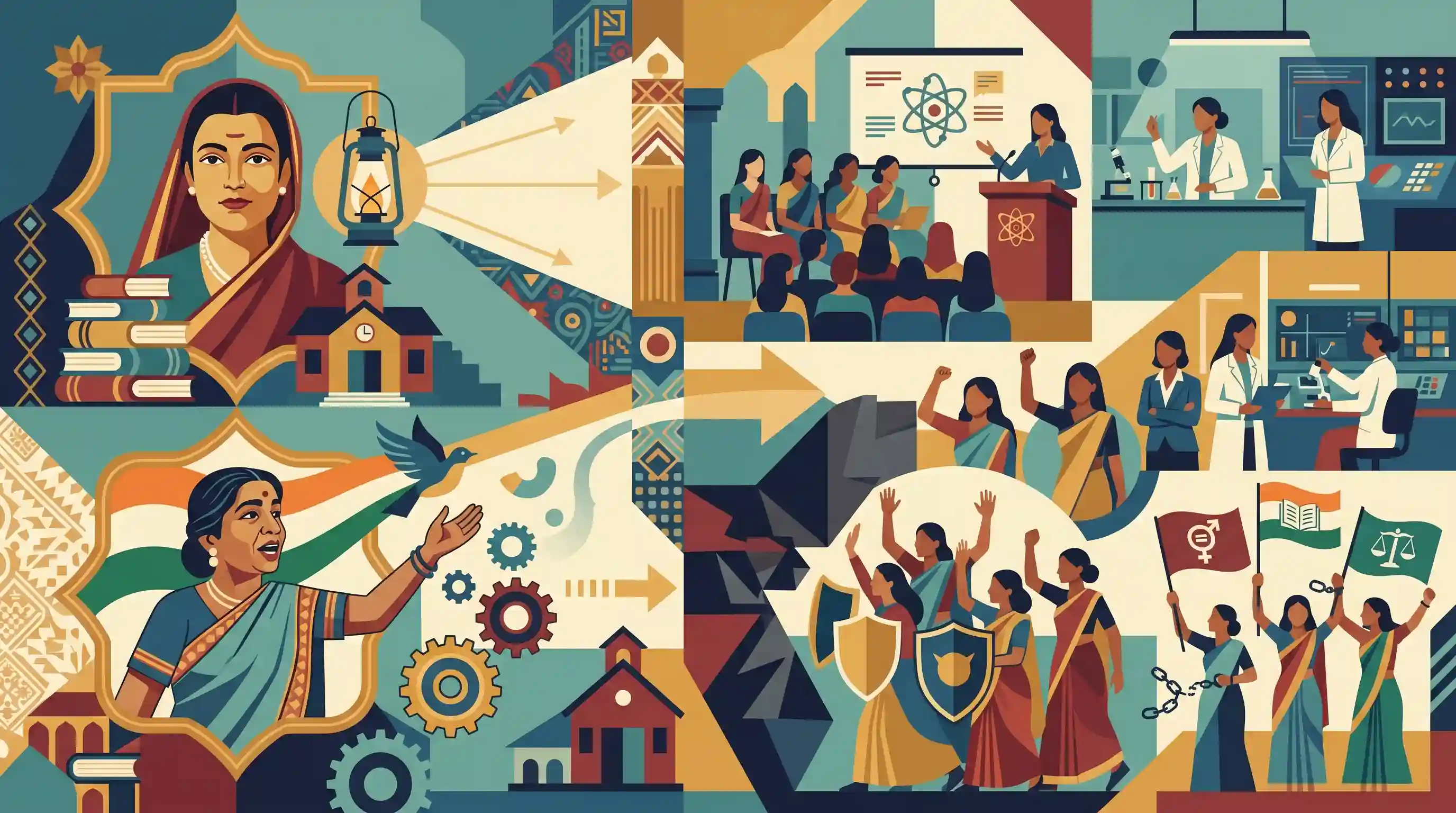
Why It Matters
Revisiting the contributions of early female leaders like Savitribai Phule (pioneer of women's education) and Sarojini Naidu (freedom fighter and activist) provides vital historical context for contemporary topics of women's empowerment and social justice, which are central themes in UPSC GS1.
Summary
The article underscores the enduring relevance of historic social reformers like Savitribai Phule and Sarojini Naidu as role models for contemporary women. Highlighting their legacy at a college event in Karnataka, speakers emphasized that adopting the selfless dedication and principles of these historical figures is critical for securing women's rights, living with dignity, and driving societal transformation against inequality and gender-based violence.
Key Points
- Savitribai Phule and Sarojini Naidu are highlighted as exemplary historical figures for their pioneering contributions to women's education, empowerment, and selfless social service.
- The event emphasized the need for modern women to draw inspiration from these leaders to lead a dignified life and fight for gender equality and self-respect.
- Following the principles of these early social reformers is deemed essential for achieving broader social transformation and eradicating violence against women.
Prelims Trap
Sarojini Naidu was the first woman President of the Indian National Congress.
Annie Besant was the first woman President (1917, Calcutta). Sarojini Naidu was the first *Indian* woman President (1925, Kanpur). UPSC frequently tests this subtle distinction.
Static Concepts Connected
What were the key institutional contributions of Savitribai Phule?
- Girls' Education: Started the first indigenous school for girls in Bhide Wada, Pune (1848) alongside Jyotirao Phule.
- Mahila Seva Mandal: Founded in 1852 to raise awareness about women's rights and organize strikes against the forced shaving of widows' heads.
- Balhatya Pratibandhak Griha: Established in 1863 as a care center to assist pregnant widows and actively prevent female infanticide.
How did Sarojini Naidu contribute to the Indian freedom struggle?
- INC Leadership: Became the first Indian woman to preside over the Indian National Congress during the 1925 Kanpur Session.
- Civil Disobedience: Led the non-violent raid on the Dharasana Salt Works following Mahatma Gandhi's arrest during the 1930 Salt Satyagraha.
- Literary Nationalism: Known as the 'Nightingale of India' (Bharat Kokila), she used poetry collections like 'The Golden Threshold' to evoke nationalism.
Cross-Topic Patterns
Women leading mass movements
Naidu's leadership at Dharasana marks a watershed moment in GS1 History where women transitioned from supportive roles to front-line leadership in mass satyagraha.
Historical roots of contemporary welfare
Phule's legacy links to GS1/GS2 themes of women's education and schemes like Beti Bachao Beti Padhao, highlighting the historical continuity of India's female literacy movements.

Expect a matching question in Prelims 2026 pairing female reformers (Phule, Ramabai, Naidu) with their exact institutions or literary works.
Linked PYQs · 3
Linked PYQs · 3
- 2025MainsGS1
Mahatma Jotirao Phule's writings and efforts of social reforms touched issues of almost all subaltern classes. Discuss.
- 2017MainsGS1
The women's questions arose in modern India as a part of the 19th century social reform movement. What were the major issues and debates concerning women in that period?
- 2024MainsGS1
Distinguish between gender equality, gender equity and women's empowerment. Why is it important to take gender concerns into account in programme design and implementation?
