Saudi East West Oil Pipeline Strategic Energy Vulnerability
Source:Indian Express ↗
ఇది ఎందుకు ముఖ్యం
Understanding critical infrastructure vulnerabilities like the Saudi East-West pipeline and the Strait of Hormuz is vital for analyzing global energy security, supply chain disruptions, and their direct implications for India's macroeconomic stability and foreign policy.
సారాంశం
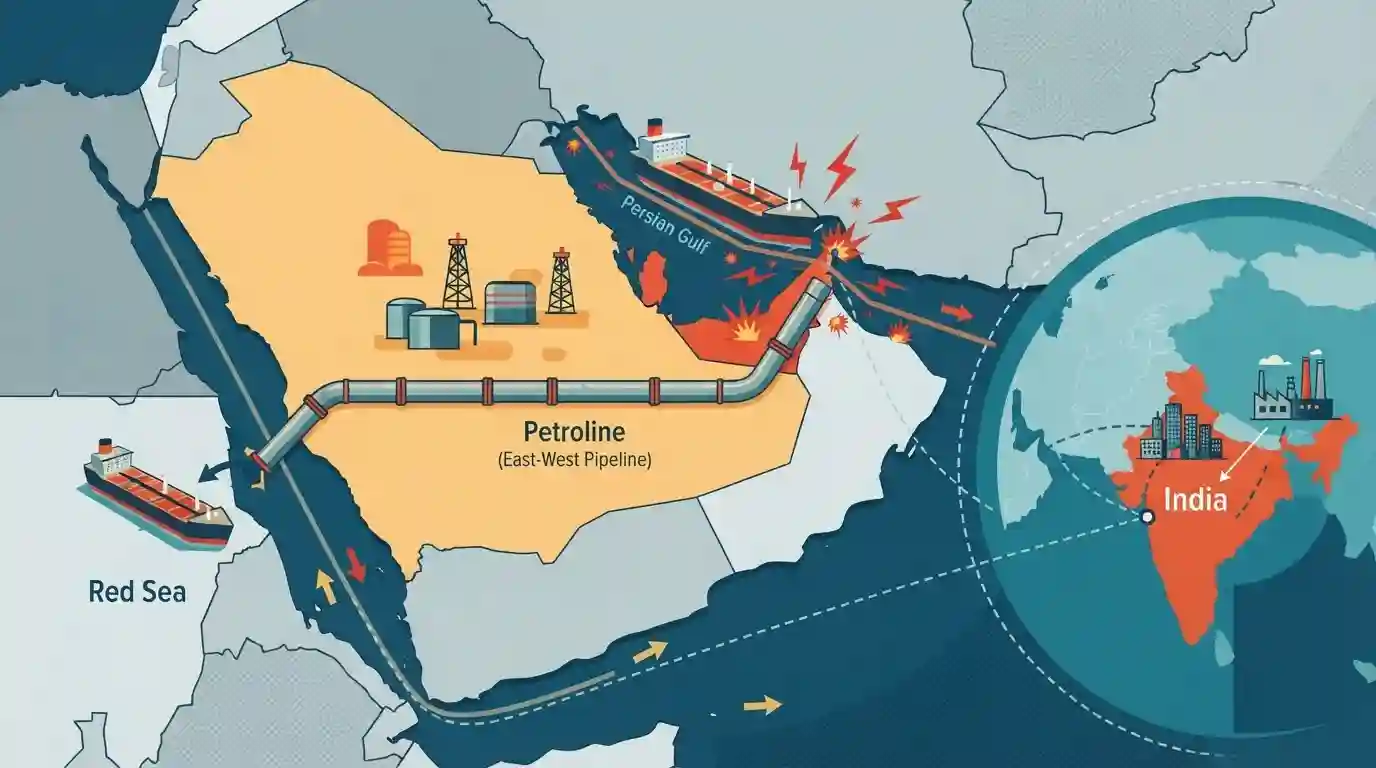
The article explores the geopolitical significance of the Saudi East-West Oil Pipeline (Petroline) in light of security threats and attacks. Serving as a crucial alternative to the Strait of Hormuz, the pipeline allows Saudi Arabia to export oil via the Red Sea. The discussion underscores global energy security vulnerabilities, chokepoint risks, and the cascading effects on major economies such as India.
ముఖ్య అంశాలు
- The Saudi East-West Oil Pipeline (also known as Petroline) is a critical strategic bypass route designed to transport crude oil from fields in eastern Saudi Arabia to Yanbu on the Red Sea coast, bypassing the vulnerable Strait of Hormuz.
- Recent geopolitical tensions, attacks, or security threats targeting energy infrastructure like the Petroline highlight the fragility of global supply chains and chokepoints.
- The security of West Asian energy corridors is paramount for global economic stability and directly impacts major energy importers like India.
- Chokepoint vulnerabilities in international trade (such as Hormuz or Bab-el-Mandeb/Red Sea) necessitate diversified energy security and alternative transit routes.
ముఖ్యమైన పదాలు
East-West Oil Pipeline (Petroline)

A 1,200 km oil transport system spanning from Abqaiq to Yanbu on the Red Sea, enabling Saudi Arabia to bypass the Strait of Hormuz for crude exports.
UPSC context
Important for GS Paper II/III (International Relations, Energy Security, West Asian geopolitics, and critical infrastructure vulnerabilities).
Saudi Aramco
The state-owned Saudi Arabian national petroleum and natural gas company, holding the world's largest proven crude oil reserves and managing critical hydrocarbon networks.
UPSC context
Important for GS Paper III (Energy Security, Global Economy, and Indian energy dependencies/supply chains).
ప్రిలిమ్స్ ఉచ్చు
The East-West Oil Pipeline connects eastern Saudi oil fields to the Mediterranean Sea, entirely bypassing maritime routes.
Aspirants often assume the Petroline connects Saudi oil fields directly to the Mediterranean or Persian Gulf, whereas it terminates at Yanbu on the Red Sea.
అనుసంధానమైన స్థిర భావనలు
What are the major global maritime oil chokepoints critical to India's energy security?
- Hormuz Chokepoint: Strait of Hormuz connects the Persian Gulf to the Gulf of Oman and the Arabian Sea, carrying a massive share of global LNG and crude oil.
- Bab-el-Mandeb: Bab-el-Mandeb connects the Red Sea to the Gulf of Aden, serving as the gateway to the Suez Canal for trade between Asia and Europe.
- Malacca Strait: Malacca Strait connects the Indian Ocean to the South China Sea, vital for East Asian energy imports and trade flows.
అంతర-అంశ నమూనాలు
Energy Chokepoints and Strategic Reserves (SPR)
The security of maritime chokepoints like Hormuz directly intersects with naval power projections (Indo-Pacific deployment) and strategic petroleum reserves (SPR) management under the Ministry of Petroleum.
West Asian Geopolitics and Macroeconomic Vulnerabilities
Attacks on pipelines and transit routes trigger immediate macroeconomic shocks, affecting India's current account deficit (CAD) and import-led inflation.

Strait of Hormuz and Red Sea bypass routes (Petroline) likely to be tested via assertion-reasoning or map-based matching in Prelims.
అనుసంధాన PYQలు · 2
అనుసంధాన PYQలు · 2
- 2017MainsGS2
The question of India's Energy Security constitutes the most important part of India's economic progress. Analyze India's energy policy cooperation with West Asian countries.
- 2025MainsGS2
"Energy security constitutes the dominant kingpin of India's foreign policy, and is linked with India's overarching influence in Middle Eastern countries.” How would you integrate energy security with India's foreign policy trajectories in the coming years?
