सउदी अरब की श्रम नीति में बदलाव और आर्थिक विविधीकरण
स्रोत:इंडियन एक्सप्रेस ↗
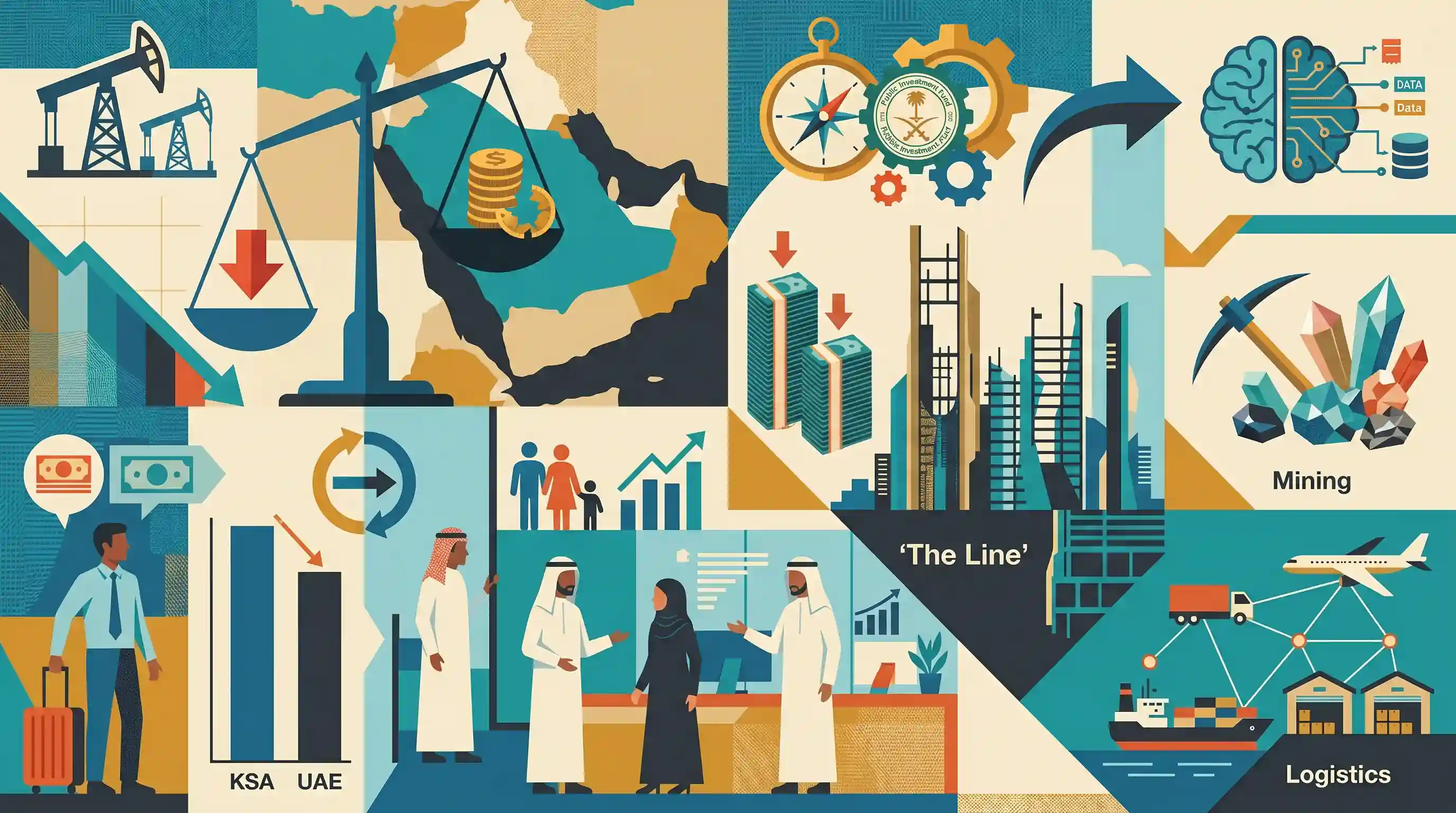
क्यों मायने रखता है
Understanding the economic restructuring of Saudi Arabia (Vision 2030) and the shifting labor policies (Saudisation) is crucial for Indian diaspora prospects and India's broader strategic, energy, and economic relations with West Asia.
सारांश
Saudi Arabia is significantly reducing the massive salary premiums it previously offered to attract foreign talent, signaling a shift in its economic diversification strategy. Driven by lower global oil prices, a widening fiscal deficit, and a strategic review by the Public Investment Fund (PIF), the Kingdom is pivoting away from costly real estate megaprojects like NEOM towards AI, mining, and logistics. Concurrently, labor market reforms dubbed 'Saudisation' aim to boost local employment in the private sector. This fiscal rationalization narrows the compensation gap with neighboring UAE, altering the regional dynamics for expatriate workers and highlighting the challenges in transitioning away from a hydrocarbon-dependent economy under the 'Vision 2030' plan.
मुख्य बिंदु
- सऊदी अरब अपने 'Vision 2030' मेगाप्रोजेक्ट्स पर खर्च को तर्कसंगत बनाने के उद्देश्य से विदेशी नियुक्तियों के लिए दिए जाने वाले आकर्षक वेतन प्रीमियम (जो पहले 40%+ थे) में कटौती कर रहा है।
- $925 बिलियन का पब्लिक इन्वेस्टमेंट फंड विशाल रियल एस्टेट और बुनियादी ढांचा परियोजनाओं (जैसे NEOM) से हटकर अब AI, लॉजिस्टिक्स और खनन जैसे उच्च-रिटर्न वाले क्षेत्रों पर अपना ध्यान केंद्रित कर रहा है।
- The slowdown is driven by lower global oil prices expanding the fiscal deficit, necessitating oil prices near $100/barrel to balance the budget.
- 'Saudisation' policies are being enforced to increase the proportion of Saudi citizens employed in the private sector, altering labor market dynamics.
- UAE (विशेष रूप से दुबई) कर-मुक्त वेतन, स्थापित जीवनशैली और बेहतर बुनियादी ढांचे के कारण विदेशी प्रतिभाओं के लिए एक अत्यधिक प्रतिस्पर्धी विकल्प बना हुआ है, जिससे सऊदी अरब के साथ वेतन का अंतर कम हो रहा है।
महत्वपूर्ण शब्द
Vision 2030

सऊदी अरब की तेल पर निर्भरता कम करने, अर्थव्यवस्था में विविधता लाने और स्वास्थ्य, शिक्षा, बुनियादी ढांचे तथा पर्यटन जैसे सार्वजनिक सेवा क्षेत्रों के विकास के लिए 2016 में शुरू किया गया एक रणनीतिक ढांचा।
UPSC context
GS Paper-II/III: West Asian structural reforms; tests understanding of regional economic shifts and global energy transition impact on India.
Saudisation (Nitaqat)
'निताकात' (Nitaqat) के रूप में भी जानी जाने वाली यह श्रम राष्ट्रीयकरण नीति, सऊदी कंपनियों के लिए सऊदी नागरिकों के एक निश्चित प्रतिशत को नियुक्त करना अनिवार्य बनाती है, जिसका उद्देश्य स्थानीय निजी क्षेत्र में भागीदारी को बढ़ाना है।
UPSC context
GS Paper-II: International Relations (Indian Diaspora). Tests knowledge of labor market changes affecting millions of Indian expatriates in the Gulf.
Public Investment Fund (PIF)
सऊदी अरब का सॉवरेन वेल्थ फंड और विजन 2030 के लिए प्राथमिक निवेश इंजन, जिसका उपयोग गैर-तेल राजस्व सुनिश्चित करने के लिए विशाल घरेलू परियोजनाओं और वैश्विक संपत्तियों के वित्तपोषण हेतु किया जाता है।
UPSC context
GS Paper-III: Economy and Investment Models. Crucial for understanding state-led economic transformation and global financial influence of sovereign funds.
NEOM
A $500 billion futuristic mega-city project in Tabuk Province, featuring sustainable regions like 'The Line.' It is a cornerstone of Vision 2030 currently undergoing fiscal rationalization.
UPSC context
GS पेपर-II/III: इन्फ्रास्ट्रक्चर और पश्चिम एशियाई भू-राजनीति। यह हाइड्रोकार्बन-निर्भर क्षेत्र में हाई-टेक आर्थिक विविधीकरण के पैमाने और चुनौतियों को दर्शाता है।
Economic Diversification
किसी अर्थव्यवस्था के औद्योगिक और सेवा क्षेत्रों का विस्तार करने की वह रणनीतिक प्रक्रिया, जिसका उद्देश्य तेल जैसे राजस्व के किसी एकल स्रोत पर निर्भरता को कम करना और वैश्विक कीमतों के झटकों (global price shocks) के प्रति संवेदनशीलता को न्यूनतम करना है।
UPSC context
GS Paper-III: Economic Development. Core theme for oil-exporting nations and its implications for India's long-term energy and economic security.
प्रारंभिक ट्रैप
भारत में आने वाले आवक प्रेषण (inward remittances) में खाड़ी सहयोग परिषद (GCC) देशों की हिस्सेदारी पूर्ण बहुमत (absolute majority) है।
The US recently overtook the UAE as the top single-country source of remittances. The overall share of the GCC in India's remittances has also structurally declined.
संबंधित अवधारणाएँ
What characterizes a "Rentier Economy" like Saudi Arabia?
- Revenue source: Relies heavily on external rent (e.g., oil exports) rather than domestic taxation or productive manufacturing.
- Macroeconomic vulnerability: Highly susceptible to global commodity price shocks, necessitating high break-even oil prices to fund state budgets and welfare.
- विविधीकरण को बढ़ावा: गैर-तेल क्षेत्रों (AI, पर्यटन) को विकसित करने और घरेलू कर आधार का विस्तार करने के लिए 'Vision 2030' जैसे संरचनात्मक सुधारों को प्रोत्साहित करता है।
How is India's inward remittance profile structurally changing?
- Volume and role: India remains the world's largest recipient, consistently receiving over $100 billion annually, which crucially offsets the merchandise trade deficit.
- Geographic shift: There is a steady shift from Gulf countries (low-skilled labor) to Advanced Economies like the US and UK (high-skilled tech workers).
अंतर-विषय पैटर्न
सऊदीकरण बनाम प्रवासी प्रेषण
'निताकत' (Nitaqat) जैसी श्रम राष्ट्रीयकरण नीतियां ब्लू-कॉलर भारतीय प्रवासियों के लिए रोजगार कम कर रही हैं, जिससे पारंपरिक खाड़ी-से-केरल प्रेषण (remittance) कॉरिडोर धीरे-धीरे कमजोर हो रहा है, जिसने ऐतिहासिक रूप से क्षेत्रीय अर्थव्यवस्थाओं को सहारा दिया था।
Sovereign Wealth Funds pivot
As Saudi scales back megaprojects due to fiscal deficits, its Public Investment Fund (PIF) shifts focus to AI and tech, altering sovereign wealth flows into Indian startups and infrastructure.

Expect a Prelims trend-question contrasting declining Gulf remittance shares with rising US inflows due to Gulf nationalization policies.
संबद्ध PYQ · 4
संबद्ध PYQ · 4
- 2017MainsGS2
The question of India's Energy Security constitutes the most important part of India's economic progress. Analyze India's energy policy cooperation with West Asian countries.
- 2021MainsGS3
“Investment in infrastructure is essential for more rapid and inclusive economic growth.” Discuss in the light of India's experience.
- 2020MainsGS2
Indian diaspora has a decisive role to play in the politics and economy of America and European Countries'. Comment with examples.
- 2017MainsGS2
Indian diaspora has an important role to play in South-East Asian countries' economy and society. Appraise the role of Indian diaspora in South-East Asia in this context.
