सांस्कृतिक कूटनीति और बांग्लादेश में विरासत संरक्षण
स्रोत:इंडियन एक्सप्रेस ↗
क्यों मायने रखता है
Demonstrates the practical application of cultural diplomacy and soft power in bilateral relations. It highlights how shared historical and cultural heritage can serve as both a point of contention and a bridge for cooperation between neighboring nations, relevant for IR and Heritage topics.
सारांश
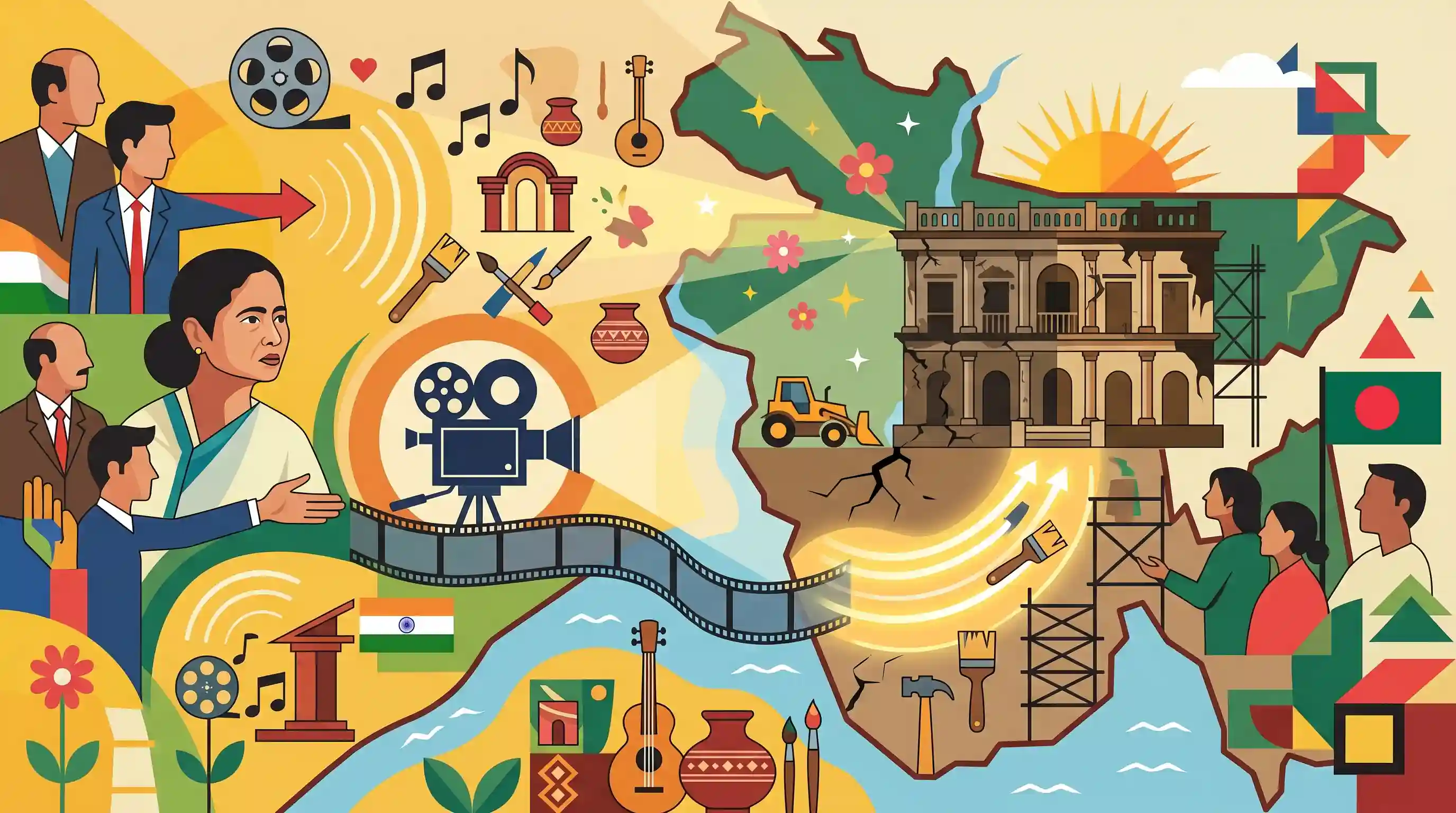
The Ministry of External Affairs (MEA) of India has urged the Bangladesh government to reconsider the demolition of the ancestral home of renowned filmmaker Satyajit Ray, located in Dhaka. Highlighting the shared cultural heritage between the two nations, India has offered assistance in repairing and restoring the historical property. This diplomatic outreach underscores the importance of cultural diplomacy and soft power in India-Bangladesh relations. The issue also addresses concerns raised by cultural figures and political leaders, including West Bengal CM Mamata Banerjee, over the preservation of shared historical and cultural legacies across borders.
मुख्य बिंदु
- The ancestral home of legendary filmmaker Satyajit Ray in Dhaka, Bangladesh, is reportedly facing demolition.
- India's Ministry of External Affairs (MEA) has officially requested the Bangladesh government to reconsider the demolition of the historically significant property.
- Highlighting shared cultural heritage, India has offered assistance to repair and restore the structure.
- West Bengal Chief Minister Mamata Banerjee has also expressed strong concerns over the preservation of this cultural landmark, emphasizing the deep emotional and cultural ties between Bengal and Bangladesh.
- The development underscores the critical role of cultural diplomacy, soft power, and shared historical legacies in India-Bangladesh bilateral relations.
महत्वपूर्ण शब्द
Soft Power

The ability of a country to influence international actors through attraction and persuasion—utilizing culture, political values, and foreign policies—rather than via military or economic coercion.
UPSC context
GS Paper II (International Relations); critical for understanding India's non-traditional diplomatic influence and global branding.
Cultural Diplomacy
The exchange of ideas, art, and traditions to foster mutual understanding between nations, serving as a primary tool for building long-term bilateral trust and people-to-people ties.
UPSC context
GS Paper II (Bilateral Relations); relevant for India-Bangladesh ties and resolving cross-border heritage disputes.
Neighborhood First Policy
A cornerstone of India's foreign policy prioritizing stable, consultative, and mutually beneficial relations with immediate neighbors through connectivity, infrastructure support, and development cooperation.
UPSC context
GS Paper II (India and its Neighborhood); essential for answering questions on regional integration and strategic security.
Heritage Conservation
The systematic maintenance and repair of historical sites and artifacts to preserve their physical integrity and ensure their cultural significance survives for future generations.
UPSC context
GS Paper I (Art and Culture) and GS Paper II; focuses on preserving trans-border cultural legacies.
Ministry of External Affairs (MEA)
The central Indian government ministry responsible for formulating foreign policy, managing international relations, and representing India in global forums and bilateral negotiations.
UPSC context
GS पेपर II (संस्थागत ढांचा); सभी अंतरराष्ट्रीय संबंधों के मामलों के लिए प्राथमिक कार्यकारी निकाय।
Shared Cultural Heritage
The collective pool of historical, linguistic, and artistic traditions (e.g., Ray, Tagore, Baul music) that binds the populations of India and Bangladesh despite political borders.
UPSC context
GS Paper I (Society/Culture) and GS Paper II; tests the use of common identity in regional diplomacy.
प्रारंभिक ट्रैप
Article 49 mandates the Indian State to protect monuments of Indian historical interest located in foreign countries.
Article 49 (DPSP) applies strictly to monuments declared by Parliament to be of national importance within India's territory, not overseas heritage sites.
संबंधित अवधारणाएँ
What is paradiplomacy and how does it manifest in India?
- Definition: The direct involvement of sub-national entities (states) in international relations and foreign policy dialogues.
- Constitutional reality: Though foreign affairs is strictly a Union subject (Entry 10, List I), border states often influence bilateral ties politically.
- Key examples: West Bengal in India-Bangladesh ties (Teesta, heritage), and Tamil Nadu in India-Sri Lanka relations (fishermen, Tamil rights).
Which Constitutional provisions safeguard cultural heritage?
- Article 49 (DPSP): Obligates the State to protect monuments and places of national importance from spoliation, disfigurement, or destruction.
- Article 51A(f): Makes it a duty of every citizen to value and preserve the rich heritage of our composite culture.
- Seventh Schedule: Monuments of national importance are under the Union List (Entry 67); others fall under the State List (Entry 12).
अंतर-विषय पैटर्न
Paradiplomacy in India-Bangladesh relations
West Bengal's active role in this cultural diplomacy mirrors its pivotal (and often blocking) political role in the unresolved Teesta River water-sharing agreement with Bangladesh.
Heritage conservation as foreign policy tool
India's offer to restore Ray's home aligns with cross-border heritage initiatives like Project Mausam and Buddhist circuit diplomacy to build neighborhood goodwill.

Paradiplomacy's role in shaping India's 'Neighborhood First' policy is a highly probable analytical question for Mains GS-II in 2026.
संबद्ध PYQ · 2
संबद्ध PYQ · 2
- 2018MainsGS1
Safeguarding the Indian art heritage is the need of the moment. Discuss.
- 2015MainsGS2
Terrorist activities and mutual distrust have clouded India-Pakistan relations. To what extent the use of soft power like sports and cultural exchanges could help generate goodwill between the two countries? Discuss with suitable examples.
