अंतरिक्ष स्पेक्ट्रम आवंटन से तकनीक और विज्ञान के बीच संघर्ष शुरू
स्रोत:द हिंदू ↗
क्यों मायने रखता है
यह 'ग्लोबल कॉमन्स' में एक उभरती हुई विनियामक चुनौती—अंतरिक्ष में रेडियो स्पेक्ट्रम के प्रबंधन—को रेखांकित करता है। वाणिज्यिक ब्रॉडबैंड विस्तार और वैज्ञानिक अनुसंधान के बीच के द्वंद्व को समझना GS3 Space Tech और GS2 International organizations के लिए महत्वपूर्ण है।
सारांश
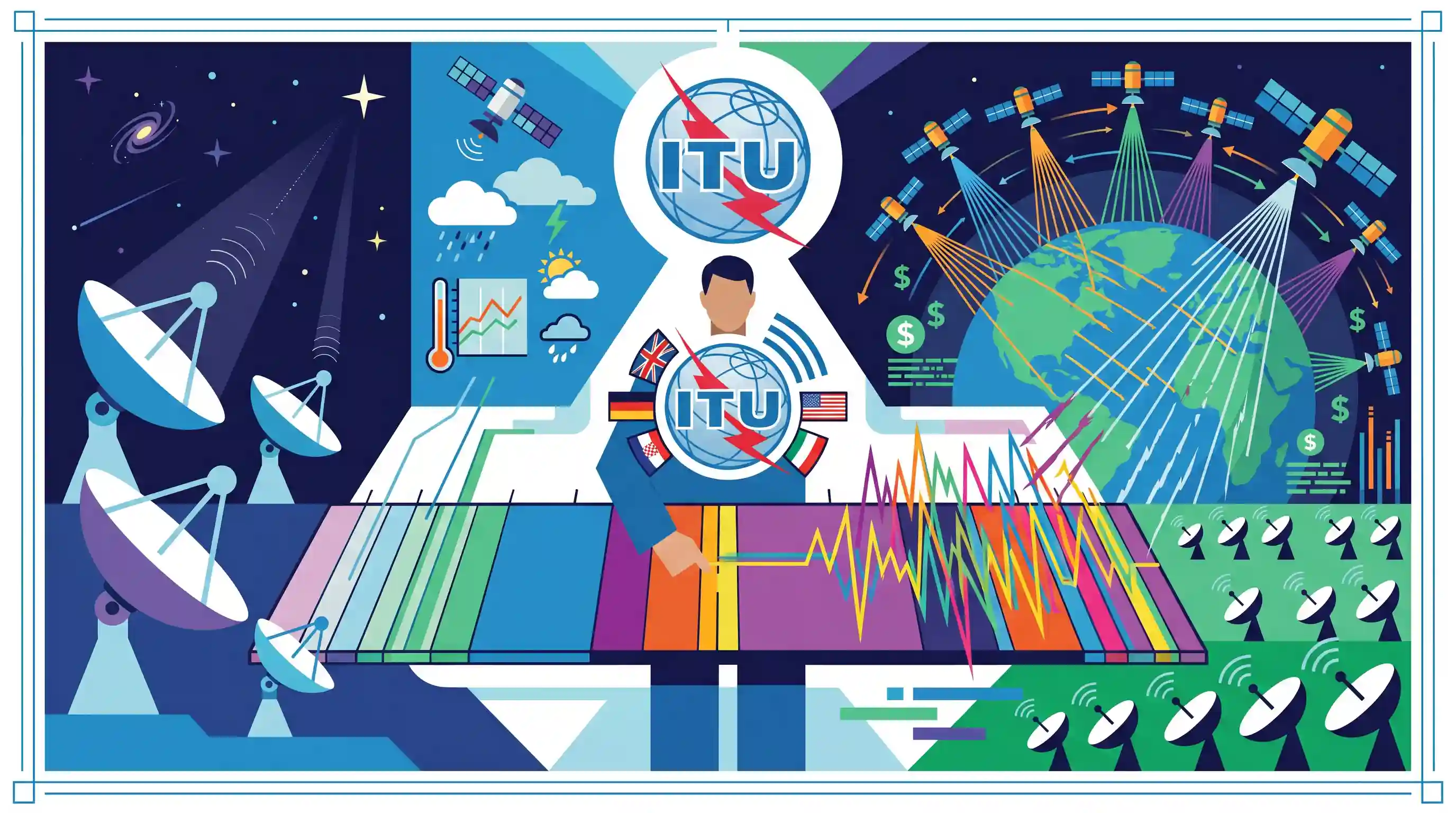
यह लेख अंतरिक्ष में रेडियो फ्रीक्वेंसी स्पेक्ट्रम के आवंटन को लेकर बढ़ते संघर्ष पर प्रकाश डालता है। जैसे-जैसे वाणिज्यिक संस्थाएं वैश्विक ब्रॉडबैंड इंटरनेट प्रदान करने के लिए लो अर्थ ऑर्बिट (LEO) उपग्रहों के मेगा-कॉन्स्टेलेशन लॉन्च कर रही हैं, उनकी ट्रांसमिशन फ्रीक्वेंसी महत्वपूर्ण वैज्ञानिक प्रयासों में हस्तक्षेप करने का खतरा पैदा कर रही हैं। रेडियो खगोलशास्त्री, जो ब्रह्मांड के मंद संकेतों का पता लगाने पर निर्भर करते हैं, और मौसम विज्ञानी, जो मौसम और जलवायु की निगरानी के लिए विशिष्ट माइक्रोवेव बैंड का उपयोग करते हैं, इस इलेक्ट्रोमैग्नेटिक प्रदूषण को लेकर तेजी से चिंतित हो रहे हैं। इस विवाद के केंद्र में International Telecommunication Union (ITU) है, जिसे आकर्षक वाणिज्यिक स्पेस इंटरनेट बाजार और आवश्यक वैज्ञानिक अवलोकनों की सुरक्षा के बीच संतुलन बनाने के लिए वैश्विक स्पेक्ट्रम नियमों को अपडेट करने का काम सौंपा गया है।
मुख्य बिंदु
- सैटेलाइट ब्रॉडबैंड मेगा-कॉन्स्टिलेशन (जैसे Starlink और Kuiper) की तेजी से तैनाती अंतरिक्ष में रेडियो फ्रीक्वेंसी स्पेक्ट्रम के लिए अभूतपूर्व मांग पैदा कर रही है।
- रेडियो खगोल विज्ञान को इन कॉन्स्टेलेशन से गंभीर खतरों का सामना करना पड़ रहा है, क्योंकि सूक्ष्म ब्रह्मांडीय रेडियो संकेत वाणिज्यिक उपग्रह प्रसारणों द्वारा आसानी से दब सकते हैं।
- मौसम संबंधी उपग्रहों और जलवायु निगरानी को भी हस्तक्षेप के जोखिमों का सामना करना पड़ता है, जो मौसम के पूर्वानुमान और आपदा संबंधी तैयारियों को प्रभावित कर सकते हैं।
- अंतर्राष्ट्रीय दूरसंचार संघ (ITU), जो वैश्विक स्पेक्ट्रम आवंटन का प्रबंधन करने वाली UN की एजेंसी है, शक्तिशाली वाणिज्यिक दूरसंचार कंपनियों के हितों और वैज्ञानिक समुदाय की आवश्यकताओं के बीच संतुलन बनाने के लिए संघर्ष कर रही है।
- व्यावसायिक गतिविधियों को वैज्ञानिक अवलोकनों में बाधा डालने से रोकने के लिए अंतरिक्ष गवर्नेंस और स्पेक्ट्रम नियमों को अपडेट करने की तत्काल आवश्यकता है।
महत्वपूर्ण शब्द
अंतर्राष्ट्रीय दूरसंचार संघ (ITU)

संयुक्त राष्ट्र की एक विशेष एजेंसी जो निर्बाध अंतर्राष्ट्रीय कनेक्टिविटी सुनिश्चित करने के लिए वैश्विक रेडियो स्पेक्ट्रम और उपग्रह कक्षाओं का समन्वय करती है।
UPSC context
GS2 (अंतरराष्ट्रीय संस्थान) और GS3 (टेलीकॉम); यह वैश्विक शासन और स्पेक्ट्रम विनियमन की समझ का परीक्षण करता है।
सैटेलाइट स्पेक्ट्रम
रेडियो फ्रीक्वेंसी जिसका उपयोग विशेष रूप से उपग्रहों और ग्राउंड स्टेशनों के बीच संचार के लिए किया जाता है, यह ITU द्वारा प्रबंधित एक सीमित वैश्विक संसाधन है।
UPSC context
GS3 (S&T/Economy); central to India's Satcom policy and the Telecommunications Act 2023.
मेगा-कॉन्स्टेलेशन
छोटे उपग्रहों (अक्सर LEO में) के व्यापक नेटवर्क जो निरंतर वैश्विक ब्रॉडबैंड इंटरनेट कवरेज प्रदान करने के लिए एक साथ मिलकर कार्य करते हैं।
UPSC context
GS3 (Space Technology); relevant for space debris, orbital crowding, and the digital divide.
निम्न पृथ्वी कक्षा (LEO)
An orbit within 2,000 km of Earth's surface, used for high-speed internet satellites due to its proximity and lower signal delay (latency).
UPSC context
GS3 (S&T); basic concept for orbital classification and satellite application questions.
Radio Astronomy
रेडियो तरंगों के माध्यम से ब्रह्मांड का वैज्ञानिक अध्ययन, जो वाणिज्यिक उपग्रह प्रसारणों से उत्पन्न होने वाले विद्युत चुंबकीय हस्तक्षेप (electromagnetic interference) के कारण तेजी से बाधित हो रहा है।
UPSC context
GS3 (S&T); highlights the conflict between commercial technological expansion and fundamental scientific observation.
Administrative Allocation
Assigning spectrum licenses directly by the government without an auction, typically for public interest or non-competitive satellite services.
UPSC context
GS3 (Indian Economy/Policy); critical for understanding recent shifts in India's telecom and space sector reforms.
प्रारंभिक ट्रैप
The ITU manages only terrestrial radio frequencies, while space orbits and spectrum are managed by UNOOSA.
ITU is the specialized UN agency responsible for allocating BOTH global radio-frequency spectrum and satellite orbits, not just terrestrial networks like 5G.
संबंधित अवधारणाएँ
How do LEO and GEO satellite networks differ for telecommunications?
- Altitude differences: LEO operates at 160–2,000 km, while GEO sits at ~36,000 km above the Earth's equator.
- Latency: LEO provides much lower latency (delay) ideal for modern internet, whereas GEO has higher latency due to the massive distance.
- Coverage requirements: A single GEO satellite covers 1/3 of the Earth, whereas LEO requires 'mega-constellations' of thousands of satellites for continuous global coverage.
What is the mandate of the International Telecommunication Union (ITU)?
- UN Specialized Agency: It is the oldest UN specialized agency, headquartered in Geneva, dealing with information and communication technologies.
- Spectrum and Orbits: यह सिग्नल हस्तक्षेप से बचने के लिए रेडियो-फ्रीक्वेंसी स्पेक्ट्रम और उपग्रह कक्षाओं के वैश्विक आवंटन का प्रबंधन करता है।
- Global Standardization: It establishes technical standards that ensure networks and technologies seamlessly interconnect globally.
अंतर-विषय पैटर्न
Mega-constellations & Kessler Syndrome
The proliferation of LEO satellites for global broadband not only crowds the radio spectrum but dramatically increases collision risks, heavily linking spectrum management to the Kessler Syndrome and space debris mitigation.
Spectrum conflict with Earth Observation
Commercial satellite frequencies closely border microwave bands used by remote sensing satellites. Interference risks degrading vital Earth observation data required for monsoon and cyclone forecasting.

2026 की प्रीलिम्स में सैटेलाइट ऑर्बिट्स पर ITU के मैंडेट (mandate) और LEO बनाम GEO सैटेलाइट्स की लेटेंसी (latency) एवं RFI चुनौतियों को मिलाकर पूछे जाने वाले एक प्रश्न की अपेक्षा करें।
संबद्ध PYQ · 4
संबद्ध PYQ · 4
- 2016MainsGS3
Discuss India's achievements in the field of Space Science and Technology. How the application of this technology has helped India in its socio-economic development?
- 2011PrelimsGS1
Satellites used for telecommunication relay are kept in a geostationary orbit. A satellite is said to be in such an orbit when: 1. The orbit is geosynchronous. 2. The orbit is circular. 3. The orbit lies in the plane of the Earth's equator. 4. The orbit is at an altitude of 22,236 km.
- 2020PrelimsGS1
"The experiment will employ a trio of spacecraft flying in formation in the shape of an equilateral triangle that has sides one million kilometres long, with lasers shining between the craft." The experiment in question refers to
- 2015MainsGS3
What do you understand by 'Standard Positioning Systems' and 'Precision Positioning Systems' in the GPS era? Discuss the advantages India perceives from its ambitious IRNSS programme employing just seven satellites.
