Urban Wetlands and Ecological Degradation of Sankey Tank in Bengaluru
Source:The Hindu ↗
Why It Matters
Provides a quintessential case study of how unscientific urban planning and the concretisation of wetlands lead to ecological collapse. It is highly relevant for UPSC questions dealing with the reclamation of water bodies into urban land use (GS1), urban flooding (GS3), and the role of environmental pressure groups in governance (GS2).
Summary
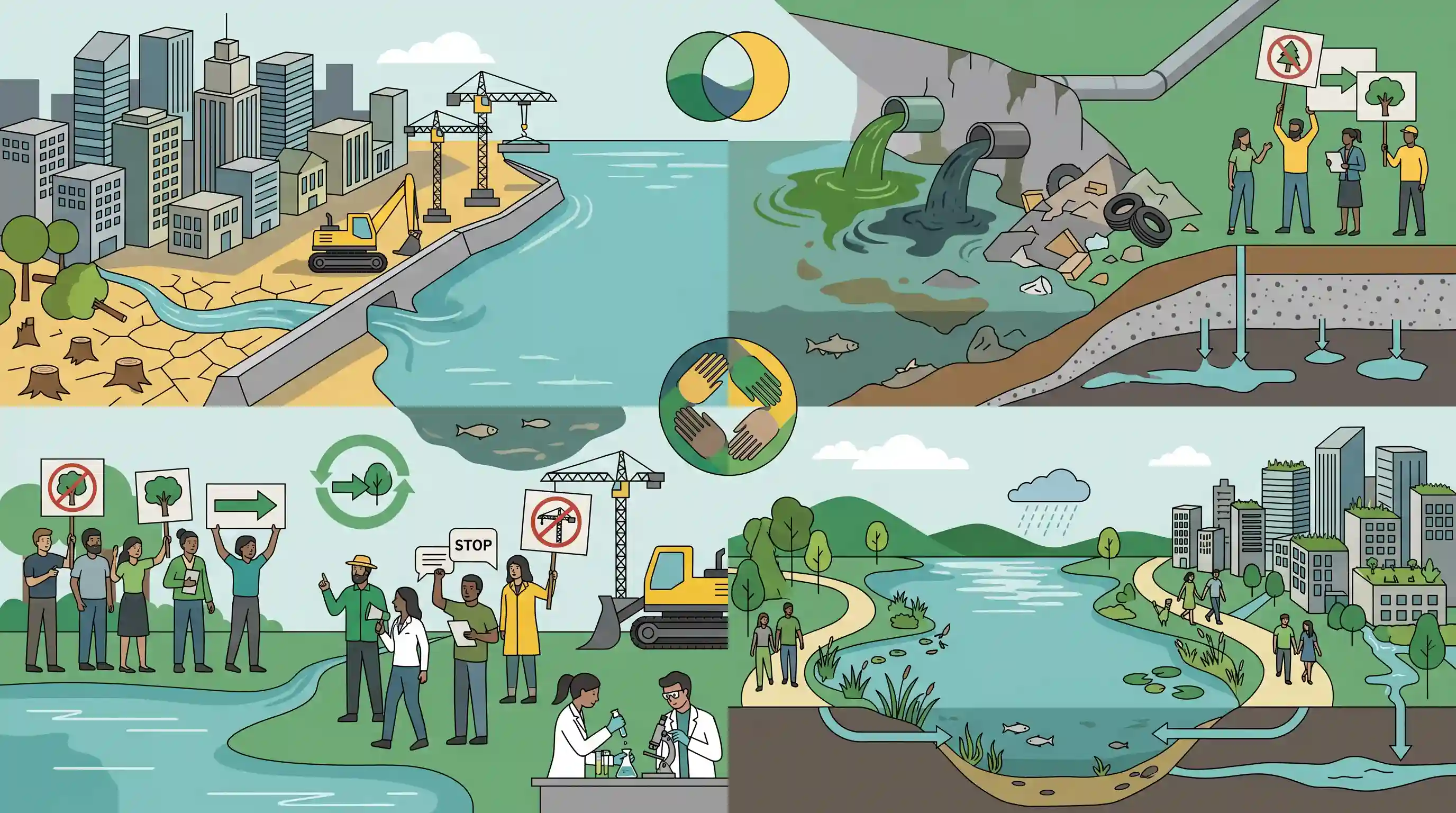
Environmental groups and citizens in Bengaluru are protesting the rapid ecological degradation of Sankey Tank, driven by unscientific 'development' and rampant concretisation. Interventions such as raising the lake bund have disrupted natural inflow systems, while unchecked sewage discharge, debris dumping, and tree felling have severely damaged the lake's ecosystem and groundwater recharge potential. Activists are demanding an immediate halt to construction, a thorough water quality audit, and a shift towards sustainable, ecologically sound wetland management.
Key Points
- Bengaluru's Sankey Tank is facing severe ecological degradation due to unscientific infrastructure development and excessive concretisation.
- The raising of the lake bund has disrupted natural hydrological flows, causing polluted water to back up into feeder channels.
- Continuous inflow of raw sewage, dumping of construction debris, and deforestation of the green buffer zone are destroying the lake's biodiversity and water quality.
- The shrinking water spread and damaged feeder network are negatively impacting the local groundwater recharge capacity.
- Environmental pressure groups and citizens are demanding a comprehensive water quality audit, immediate cessation of harmful construction, and science-based ecological restoration.
Prelims Trap
All urban lakes are automatically notified and managed by the Central Wetland Authority under the 2017 Rules.
The 2017 Rules decentralized management to State Wetland Authorities. Not all urban lakes are automatically protected; they must be specifically notified by the State.
Static Concepts Connected
What are the key regulatory features of the Wetlands (Conservation and Management) Rules, 2017?
- Decentralized Governance: Shifted primary jurisdiction from the Central Government to newly created State Wetland Authorities (SWAs).
- Prohibited Activities: Strictly bans solid waste dumping, discharge of untreated sewage, and permanent construction within notified wetlands.
- National Advisory Committee: Replaced the Central Wetland Regulatory Authority with a National Wetlands Committee in a purely advisory role.
How does the unscientific concretisation of urban lakes contribute to urban flooding?
- Reduced Permeability: Concrete bunds and bottoms prevent natural water percolation, drastically reducing the area's groundwater recharge capacity.
- Hydrological Disruption: Raising bund heights without topographical study disrupts natural inflow, causing stormwater to back up into local drainage networks.
- Loss of Buffer Sponges: Replacing vegetative riparian zones with concrete removes natural sponges that slow down and absorb surface runoff.
Cross-Topic Patterns
Urban Flooding & Wetland Hydrology
The destruction of urban lakes (GS3 Environment) directly exacerbates urban flooding (GS1 Geography/GS3 Disaster Management). The Sankey Tank case is a prime example for Mains answers on urban hydrology.
Civil Society & Municipal Accountability
Local environmental pressure groups demanding water quality audits showcase the role of Civil Society Organizations (GS2) acting as watchdogs when municipal governance fails in ecological management.

Expect a multi-statement Prelims question comparing the regulatory mandate of State Wetland Authorities vs local municipalities.
Linked PYQs · 4
Linked PYQs · 4
- 2021MainsGS1
What are the environmental implications of the reclamation of water bodies into urban land use ? Explain with examples.
- 2025MainsGS2
What are environmental pressure groups? Discuss their role in raising awareness, influencing policies and advocating for environmental protection in India.
- 2024MainsGS3
Flooding in urban areas is an emerging climate-induced disaster. Discuss the causes of this disaster. Mention the features of two such major floods in the last two decades in India. Describe the policies and frameworks in India that aim at tackling such floods.
- 2020MainsGS1
Account for the huge flooding of million cities in India including the smart ones like Hyderabad and Pune. Suggest lasting remedial measures.
