Visakhapatnam Promotes Rooftop Solar for SC and ST Households
Source:The Hindu ↗
Why It Matters
It highlights the practical implementation of renewable energy initiatives aligned with social justice, demonstrating how climate action schemes like PM Surya Ghar can serve dual purposes of poverty alleviation and environmental sustainability. Highly relevant for GS2 (Welfare) and GS3 (Energy/Environment).
Summary
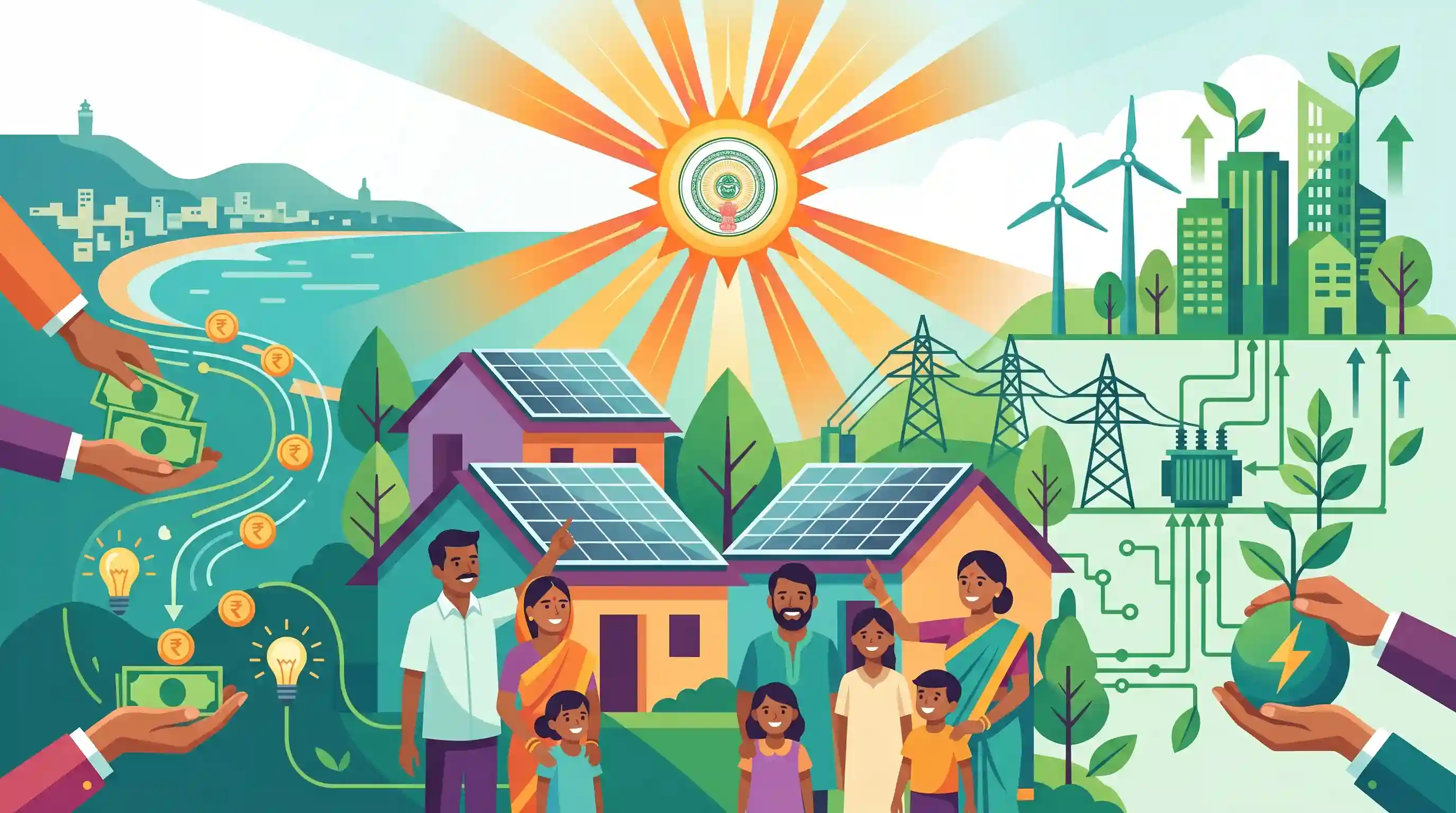
A focused initiative is underway in Visakhapatnam to promote rooftop solar installations among Scheduled Caste (SC) and Scheduled Tribe (ST) families under the PM Surya Ghar: Muft Bijli Yojana. The push aims to alleviate the financial burden of electricity bills for vulnerable households while simultaneously advancing India's renewable energy capacity. This represents an intersection of social welfare and green energy transition, ensuring marginalized communities benefit from sustainable development schemes.
Key Points
- Targeted promotion of rooftop solar panels for Scheduled Caste (SC) and Scheduled Tribe (ST) households in Visakhapatnam.
- The initiative is part of the PM Surya Ghar: Muft Bijli Yojana, which aims to provide free electricity via solar rooftops to residential consumers.
- Combines social welfare with environmental sustainability by ensuring the clean energy transition is inclusive and benefits marginalized communities.
- Helps vulnerable families reduce their monthly power expenditure while contributing to India's national renewable energy targets.
Important Terms
PM Surya Ghar: Muft Bijli Yojana

A central scheme launched in 2024 providing up to 300 units of free monthly electricity to 1 crore households through subsidized rooftop solar installations.
UPSC context
GS Paper II (Governance/Schemes) and GS Paper III (Energy). Focuses on energy poverty and renewable targets.
Rooftop Solar (RTS)
Small-scale solar photovoltaic systems installed on building roofs to generate electricity for on-site consumption and grid export.
UPSC context
GS Paper III (Infrastructure/Energy). Essential for achieving India's 500 GW non-fossil fuel capacity target by 2030.
Net Metering
A billing mechanism that allows solar energy producers to feed surplus electricity into the grid, earning credits that offset their utility bills.
UPSC context
GS Paper III (Economy/Infrastructure). Tests knowledge of regulatory frameworks for decentralized renewable energy distribution.
Inclusive Growth
Growth that creates opportunities for all segments of society and distributes the fruits of prosperity fairly, particularly among marginalized communities.
UPSC context
GS Paper III (Economic Development). Core UPSC theme regarding the intersection of social justice and economic policy.
Energy Security
The uninterrupted availability of energy sources at an affordable price, ensuring that national development is not hindered by supply disruptions.
UPSC context
GS Paper III (Environment/Energy). Key for discussions on reducing fossil fuel imports and achieving 'Atmanirbhar Bharat'.
Welfare Schemes for Vulnerable Sections
Targeted government interventions designed to provide social and financial support to historically marginalized or disadvantaged groups like SC/ST communities.
UPSC context
GS Paper II (Social Justice/Governance). Focuses on constitutional mandates for the upliftment of Scheduled Castes and Tribes.
Prelims Trap
PM Surya Ghar provides fully subsidized free solar panel installations and unlimited free electricity for SC/ST households.
The scheme caps free electricity at 300 units/month and offers up to a 60% capital subsidy (for 1-2kW systems). It does not provide 100% free installation to anyone.
Static Concepts Connected
What is 'Net-Metering' in the context of rooftop solar?
- Definition: A billing mechanism that credits solar energy system owners for the electricity they add to the national or regional grid.
- Prosumer concept: Transforms regular electricity consumers into 'prosumers' who both consume and produce energy, exporting surplus power back to DISCOMs.
- Billing mechanism: Consumers draw from the grid during shortfalls; they are ultimately billed only for the 'net' difference between energy consumed and energy exported.
What constitutes 'Energy Poverty' in global development frameworks?
- Definition: Defined by the WEF as the lack of access to sustainable modern energy services and products, limiting economic mobility and health outcomes.
- SDG 7 Linkage: Eradicating energy poverty is the core target of Sustainable Development Goal (SDG) 7: Affordable and Clean Energy for all.
Cross-Topic Patterns
Solar loans & Priority Sector Lending (PSL)
Bank loans up to ₹10 lakh per borrower for household solar power installations qualify as Priority Sector Lending (PSL) under RBI's Renewable Energy category.
Just Transition & Energy Poverty
Targeted green subsidies for SC/STs operationalize the 'Just Transition' framework, ensuring climate mitigation policies do not exacerbate historical socioeconomic inequalities or 'energy poverty'.

Expect a prelims question on PM Surya Ghar linking capital subsidy limits, net-metering mechanisms, and 'Model Solar Village' targets.
Linked PYQs · 5
Linked PYQs · 5
- 2018MainsGS3
“Access to affordable, reliable, sustainable and modern energy is the sine qua non to achieve Sustainable Development Goals (SDGs).” Comment on the progress made in India in this regard.
- 2022MainsGS3
Do you think India will meet 50 percent of its energy needs from renewable energy by 2030 ? Justify your answer. How will the shift of subsidies from fossil fuels to renewables help achieve the above objective ? Explain.
- 2019MainsGS2
Performance of welfare schemes that are implemented for vulnerable sections is not so effective due to absence of their awareness and active involvement at all stages of policy process. Discuss.
- 2023MainsGS2
“Development and welfare schemes for the vulnerable, by its nature, are discriminatory in approach.” Do you agree? Give reasons for your answer.
- 2025PrelimsGS1
Consider the following statements about 'PM Surya Ghar Muft Bijli Yojana': I. It targets installation of one crore solar rooftop panels in the residential sector. II. The Ministry of New and Renewable Energy aims to impart training on installation, operation, maintenance and repairs of solar rooftop systems at grassroot levels. III. It aims to create more than three lakhs skilled manpower through fresh skilling, and up-skilling, under scheme component of capacity building. Which of the statements given above are correct?
