सड़क मंत्रालय ने सुरंग निर्माण के लिए सुरक्षा दिशानिर्देश जारी किए
स्रोत:इंडियन एक्सप्रेस ↗
क्यों मायने रखता है
The guidelines reflect institutional learning from a major infrastructural disaster. They highlight the necessity of integrating disaster mitigation, hazard zonation, and worker safety into India's developmental and strategic agenda, especially within vulnerable border and hilly terrains.
सारांश
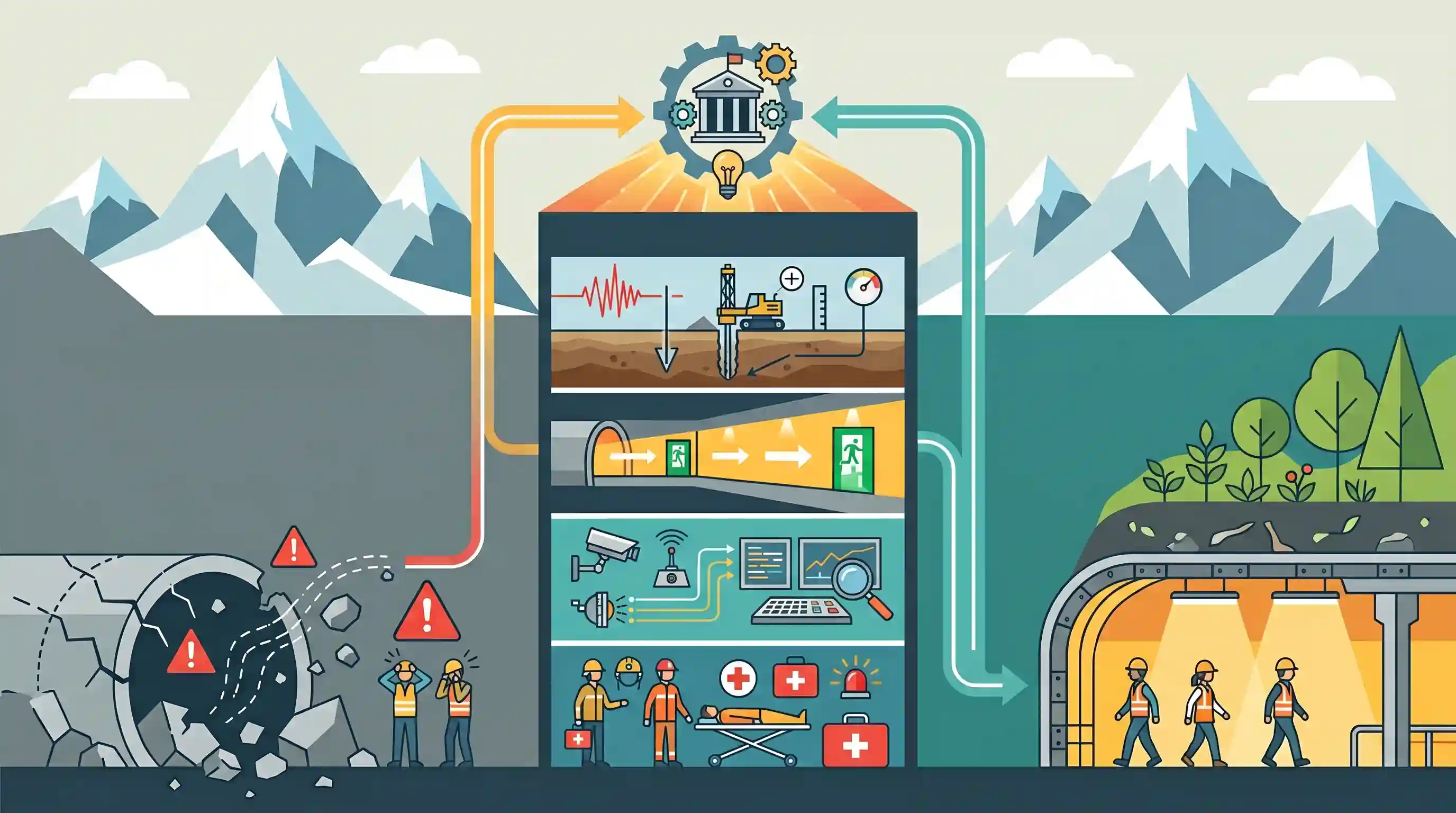
Following the Silkyara tunnel collapse in Uttarakhand, the Ministry of Road Transport and Highways has issued updated guidelines for tunnel construction. These guidelines aim to bolster safety and disaster resilience by mandating comprehensive geo-technical investigations, escape routes, continuous monitoring, and emergency response protocols, particularly for infrastructure projects in ecologically sensitive and geologically unpredictable zones like the Himalayas.
मुख्य बिंदु
- The Ministry of Road Transport and Highways (MoRTH) issued comprehensive guidelines for tunnel construction to prevent structural failures and occupational hazards like the Silkyara tunnel collapse.
- SOPs हिमालय जैसे भूगर्भीय रूप से संवेदनशील क्षेत्रों में बुनियादी ढांचा परियोजनाओं को शुरू करने से पहले गहन भू-तकनीकी जोखिम आकलन और जोनेशन मैपिंग पर जोर देते हैं।
- अनिवार्य सुरक्षा विशेषताओं में संभवतः निरंतर संरचनात्मक निगरानी, समर्पित निकास या बचाव शाफ्ट और पर्याप्त आपातकालीन वेंटिलेशन सिस्टम शामिल होंगे।
- The policy signifies a crucial transition toward proactive disaster preparedness, balancing aggressive regional infrastructure expansion with ecological sustainability and worker safety.
महत्वपूर्ण शब्द
Standard Operating Procedure (SOP) for Tunnel Construction

MoRTH-mandated protocols for highway tunnels (especially >1.5 km) requiring evaluation of multiple alignments, risk registers, and mandatory escape passages to ensure safety in geologically sensitive zones.
UPSC context
GS पेपर III (आपदा प्रबंधन/अवसंरचना)। प्रमुख अवसंरचनात्मक विफलताओं के बाद संस्थागत सुधारों और सुरक्षा मानकों पर केंद्रित है।
सड़क परिवहन और राजमार्ग मंत्रालय (MoRTH)
सड़क परिवहन, राष्ट्रीय राजमार्गों से संबंधित कानूनों के निर्माण और प्रशासन तथा पूरे भारत में सुरक्षित एवं लचीले टनलिंग इन्फ्रास्ट्रक्चर के विकास के लिए जिम्मेदार सर्वोच्च केंद्रीय मंत्रालय।
UPSC context
GS पेपर II (गवर्नेंस) और पेपर III (इंफ्रास्ट्रक्चर)। महत्वपूर्ण राष्ट्रीय कनेक्टिविटी का प्रबंधन करने वाले कार्यकारी निकायों के ज्ञान का परीक्षण करता है।
राष्ट्रीय राजमार्ग एवं अवसंरचना विकास निगम लिमिटेड (NHIDCL)
MoRTH के स्वामित्व वाली एक विशिष्ट कंपनी जिसे हिमालय, उत्तर-पूर्वी भारत और सीमावर्ती क्षेत्रों सहित चुनौतीपूर्ण क्षेत्रों में राष्ट्रीय राजमार्गों और रणनीतिक बुनियादी ढांचे के विकास और प्रबंधन का कार्य सौंपा गया है।
UPSC context
GS Paper III (Internal Security/Infrastructure). Key agency for strategic connectivity and disaster-resilient construction in fragile ecologies.
Geotechnical Investigation
भूगर्भीय जोखिमों, स्थिरता और भार वहन क्षमता का आकलन करने के लिए उप-सतही मिट्टी और चट्टानों के गुणों का वैज्ञानिक अध्ययन, जो अप्रत्याशित क्षेत्रों में सुरक्षित सुरंग संरेखण (tunnel alignments) डिजाइन करने के लिए अनिवार्य है।
UPSC context
GS पेपर I (भूगोल/भूभौतिकीय घटनाएं) और पेपर III। बड़े पैमाने की इंजीनियरिंग परियोजनाओं के लिए आवश्यक तकनीकी उचित सावधानी (technical due diligence) को रेखांकित करता है।
Geotechnical Baseline Report (GBR)
A mandatory project document establishing a contractual understanding of expected subsurface conditions and risks, ensuring accountability between owners and contractors for unforeseen geological challenges.
UPSC context
GS Paper III (Infrastructure). Important for understanding risk-sharing mechanisms and legal frameworks in public infrastructure contracts.
NP-4 Escape Pipe
MoRTH द्वारा अनिवार्य एक सुरक्षा विशेषता, जिसमें उच्च जोखिम वाले सुरंग क्षेत्रों में 0.9-मीटर व्यास के स्टील पाइप की आवश्यकता होती है ताकि फंसे हुए श्रमिकों के लिए एक समर्पित आपातकालीन निकासी मार्ग प्रदान किया जा सके।
UPSC context
GS Paper III (Disaster Management). Illustrates specific technological interventions for occupational safety and emergency preparedness.
प्रारंभिक ट्रैप
हिमालयी सुरंग निर्माण के लिए नई मानक संचालन प्रक्रियाएं (SOP) NDMA द्वारा तैयार की गई थीं।
These specific proactive tunnel construction SOPs and structural guidelines were issued by the Ministry of Road Transport and Highways (MoRTH), not the NDMA.
संबंधित अवधारणाएँ
Why are the Himalayas highly vulnerable to tunneling hazards?
- विवर्तनिक गतिविधि: ये युवा, भूकंपीय रूप से सक्रिय वलित पर्वत हैं, जो भारतीय और यूरेशियाई टेक्टोनिक प्लेटों के बीच निरंतर हो रही टक्कर के कारण निर्मित हुए हैं।
- भंगुर शैल संरचना: The region contains highly jointed, fractured, and weak sedimentary and metamorphic rocks prone to shearing.
- Geotechnical Hazards: अत्यधिक आंतरिक तनाव के कारण सुरंगों को स्क्वीजिंग ग्राउंड (squeezing ground), रॉक बर्स्ट (rock bursts) और अचानक पानी के रिसाव जैसे गंभीर संरचनात्मक जोखिमों का सामना करना पड़ता है।
What is a Geotechnical Baseline Report (GBR) in infrastructure?
- सब-सरफेस प्रोफाइलिंग: यह भूमिगत उत्खनन के दौरान अपेक्षित भूगर्भीय (geological), भू-तकनीकी (geotechnical) और भूजल स्थितियों का एक निश्चित आधार (baseline) स्थापित करता है।
- जोखिम आवंटन: परियोजना मालिक (project owner) और निष्पादन करने वाले कॉन्ट्रैक्टर के बीच अप्रत्याशित भूगर्भीय जोखिमों को पारदर्शी रूप से आवंटित करने के लिए एक महत्वपूर्ण संविदात्मक उपकरण के रूप में कार्य करता है।
- DPR Integration: MoRTH के नए नियमों के तहत, मजबूत प्रेडिक्टिव डिजाइन मॉडलिंग सुनिश्चित करने के लिए Detailed Project Report (DPR) के लिए GBR अनिवार्य है।
अंतर-विषय पैटर्न
हिमालयी पारिस्थितिकी बनाम रणनीतिक अवसंरचना
यह रणनीतिक सीमा अवसंरचना (जैसे चार धाम परियोजना) और विवर्तनिक रूप से सक्रिय हिमालयी क्षेत्र की पारिस्थितिक वहन क्षमता (ecological carrying capacity) के बीच के तनाव को रेखांकित करता है।
Sendai Framework Integration
Mandating 0.9m escape pipes and structural risk registers maps directly to the Sendai Framework's Priority 3: Investing in disaster risk reduction for infrastructure resilience.

2026 GS-3 में हिमालयी भूगर्भीय भेद्यताओं (rock bursts, squeezing ground) और MoRTH के नए टनल SOPs को जोड़ने वाले एक प्रश्न की अपेक्षा करें।
संबद्ध PYQ · 5
संबद्ध PYQ · 5
- 2019MainsGS3
Disaster preparedness is the first step in any disaster management process. Explain how hazard zonation mapping will help disaster mitigation in the case of landslides.
- 2021MainsGS3
Describe the various causes and the effects of landslides. Mention the important components of the National Landslide Risk Management Strategy.
- 2016MainsGS1
The Himalayas are highly prone to landslides. Discuss the causes and suggest suitable measures of mitigation.
- 2021MainsGS3
“Investment in infrastructure is essential for more rapid and inclusive economic growth.” Discuss in the light of India's experience.
- 2025MainsGS4
Keeping the national security in mind, examine the ethical dilemmas related to controversies over environmental clearance of development projects in ecologically sensitive border areas in the country.
