Chinese Hackers Exploit Vulnerabilities in Microsoft Servers
Source:The Hindu ↗
Why It Matters
For UPSC candidates, this article provides a concrete case study on state-sponsored cyber attacks and vulnerabilities in critical information infrastructure. It is highly relevant for GS Paper 3 (Internal Security - Cyber Security), illustrating the complexities of cross-border cyber espionage, the targeting of widely-used enterprise software, and the necessity of proactive defensive mechanisms.
Summary
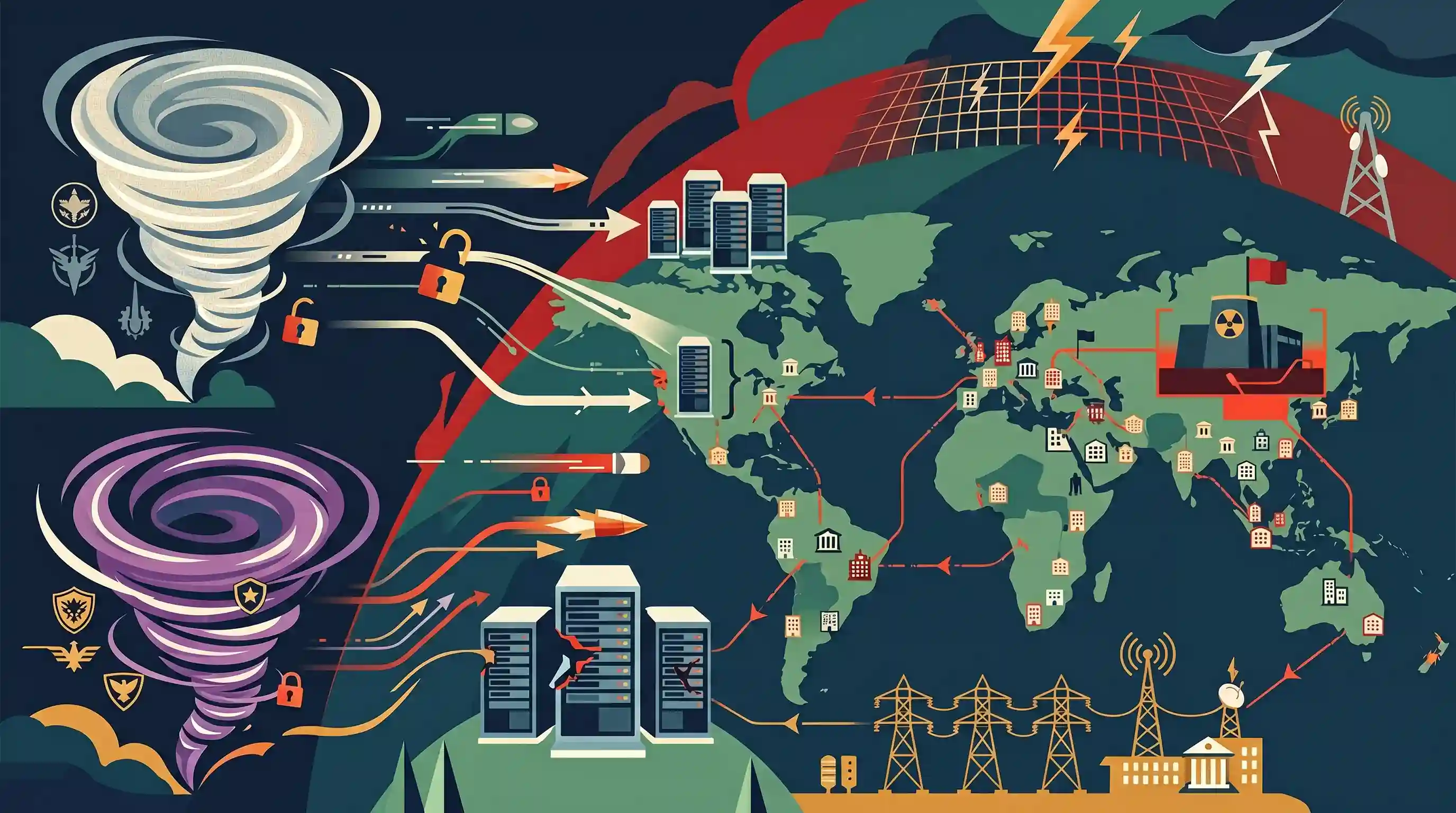
The article highlights significant cybersecurity vulnerabilities as state-sponsored Chinese hacking groups, such as Linen Typhoon and Violet Typhoon, targeted Microsoft SharePoint servers. By exploiting software flaws, these actors infiltrated over 400 organizations globally, including critical entities like the U.S. nuclear weapons agency. The scale and speed of these attacks underscore the growing threat of state-sponsored cyber espionage and the vital need for robust security frameworks to protect critical enterprise IT infrastructure from cross-border cyber warfare.
Key Points
- Chinese state-linked hacker groups, including Linen Typhoon, Violet Typhoon, and Storm-2603, exploited vulnerabilities in Microsoft SharePoint servers to access on-premises user facilities.
- Over 400 organizations were compromised, including government entities in Europe, the Middle East, and the United States, such as the U.S. nuclear weapons agency.
- The cyber espionage campaign highlights the severe risks posed to widely used enterprise software ecosystems and the speed at which hackers weaponize newly discovered flaws.
- Cybersecurity experts emphasize that such state-sponsored attacks are part of a broader global trend of nations honing cyber warfare and intellectual property theft capabilities.
- The incident underscores the urgency of patching critical information infrastructure and implementing robust defensive measures against cross-border cyber threats.
Important Terms
Critical Information Infrastructure (CII)

Computer resources whose incapacitation or destruction significantly impacts national security, economy, or public safety. In India, it is defined under Section 70 of the IT Act, 2000.
UPSC context
GS Paper III: Internal Security. Tests knowledge of national security frameworks and the role of agencies like NCIIPC in protecting digital assets.
National Nuclear Security Administration (NNSA)
A semi-autonomous U.S. federal agency under the Department of Energy responsible for managing the nuclear weapons stockpile and responding to radiological emergencies; recently breached by Chinese hackers.
UPSC context
GS Paper III: Cyber Security. Illustrates the vulnerability of global strategic assets to cross-border cyber warfare and state-sponsored espionage.
Linen Typhoon & Violet Typhoon
Designations for Chinese state-sponsored hacking groups (also known as APT27 and APT31) that specialize in espionage and intellectual property theft from government and defense sectors.
UPSC context
GS Paper II & III: International Relations & Internal Security. Pertains to asymmetric warfare and the geopolitical dimensions of state-backed cyber threats.
State-sponsored Cyber Espionage
The act of a government conducting unauthorized cyber activities to steal sensitive information or secrets from other states or organizations for strategic advantage.
UPSC context
GS Paper III: Internal Security. Evaluates the nature of modern security threats and the shift from conventional to digital-domain warfare.
Zero-day Vulnerability
A software vulnerability that is exploited by attackers before the developer has become aware of it or released a patch to fix it.
UPSC context
GS Paper III: Science & Tech / Security. Tests understanding of technical security risks and the critical importance of timely software patching.
Advanced Persistent Threat (APT)
A sophisticated, long-term cyberattack campaign by well-resourced groups (typically state-backed) to maintain persistent access to a network for data exfiltration or monitoring.
UPSC context
GS Paper III: Security. Focuses on the classification of complex cyber threats that require advanced mitigation strategies beyond standard antivirus tools.
Prelims Trap
"CERT-In is the designated nodal agency for the protection of Critical Information Infrastructure in India."
False. While CERT-In handles general cybersecurity incidents, NCIIPC (under NTRO) is the designated nodal agency specifically mandated by the IT Act to protect Critical Information Infrastructure.
Static Concepts Connected
What defines Critical Information Infrastructure (CII) and its nodal agency in India?
- Legal Definition: Section 70 of the IT Act, 2000 defines CII as computer resources whose incapacitation would have a debilitating impact on national security, economy, or public health.
- Nodal Agency: The National Critical Information Infrastructure Protection Centre (NCIIPC), functioning under the NTRO, is the nodal agency for protecting CII.
- Six Key Sectors: Transport, Power & Energy, Telecom, Government, Banking & Financial Services, and Strategic/Public Enterprises.
What are Zero-Day vulnerabilities and Advanced Persistent Threats (APTs)?
- Zero-Day Vulnerability: A software vulnerability that is unknown to the vendor. Attackers exploit it "zero days" after it is discovered, leaving no time for a patch.
- Advanced Persistent Threat (APT): Sophisticated, prolonged, and targeted cyberattacks—often state-sponsored—designed to infiltrate networks and remain undetected for long periods to steal data.
Cross-Topic Patterns
Hybrid warfare + Critical Infrastructure
State-backed hackers targeting critical sectors blur the lines between cyber espionage and physical warfare, linking GS-3 Cyber Security directly to GS-2 International Relations (hybrid warfare).
Big Tech monopolies + Sovereign vulnerability
Over-reliance on ubiquitous enterprise software (like Microsoft) creates systemic single points of failure for sovereign governments, accelerating the debate on indigenous, localized technology platforms.

Expect match-the-following Prelims questions linking APT groups (Linen Typhoon, RedEcho) to countries, or a GS-3 essay on CII protection.
Linked PYQs · 4
Linked PYQs · 4
- 2021MainsGS3
Keeping in view India's internal security, analyse the impact of cross-border cyber attacks. Also discuss defensive measures against these sophisticated attacks.
- 2017MainsGS3
Discuss the potential threats of Cyber attack and the security framework to prevent it.
- 2020MainsGS3
Discuss different types of cyber crimes and measures required to be taken to fight the menace.
- 2015MainsGS3
Considering the threats cyberspace poses for the country, India needs a "Digital Armed Force" to prevent crimes. Critically evaluate the National Cyber Security Policy, 2013 outlining the challenges perceived in its effective implementation.
