Court Directives on Social Media Deepfake Videos
Source:Indian Express ↗
Why It Matters
The misuse of deepfakes and AI-generated content poses a severe threat to democratic processes, electoral integrity, and internal security. It is highly relevant for UPSC GS3 (Science & Tech and Internal Security) regarding AI regulation and social media challenges, as well as GS2 (Polity) concerning freedom of speech, defamation, and electoral reforms.
Summary
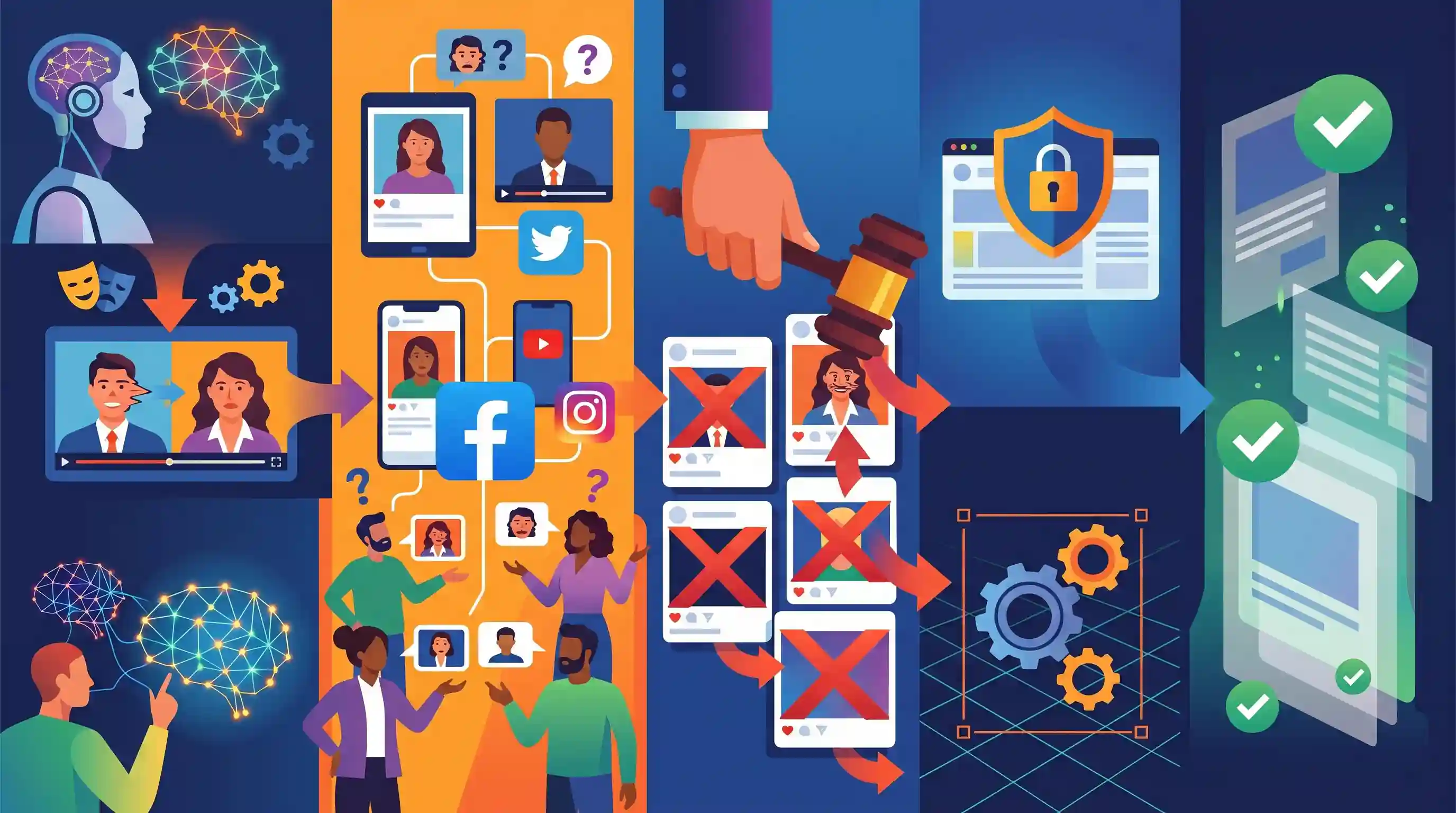
An Ahmedabad court has directed the Congress party and four of its leaders to remove allegedly defamatory 'deepfake' videos from social media platforms. The order brings into focus the growing misuse of artificial intelligence to create manipulated media in political campaigns. It highlights critical challenges related to defamation, electoral integrity, and the spread of fake news, pointing to the urgent need for robust regulatory frameworks to tackle the malicious use of deepfakes and ensure accountability on digital platforms.
Key Points
- An Ahmedabad court ordered the Congress party and four of its leaders to take down allegedly defamatory deepfake videos from social media.
- The ruling highlights the increasing use of artificial intelligence (AI) to generate manipulated media for political messaging and the legal challenges it poses.
- The incident raises significant concerns regarding the spread of misinformation, defamation, and the potential impact of synthetic media on electoral integrity and public discourse.
- It underscores the urgent need for comprehensive regulatory frameworks and updated Information Technology (IT) rules to govern the creation and dissemination of deepfakes on digital platforms.
Important Terms
Deepfake

Synthetic media created using Artificial Intelligence (deep learning) to realistically manipulate or impersonate individuals, often used for misinformation or character assassination.
UPSC context
GS Paper 3 (S&T/Cybersecurity); essential for discussing the ethical and security challenges of emerging technology.
Defamation
The act of harming a person's reputation through false statements; in India, it is both a civil wrong and a criminal offense.
UPSC context
GS Paper 2 (Polity); relates to Article 19(2) (reasonable restrictions) and Section 356 of Bharatiya Nyaya Sanhita.
Information Technology (IT) Rules, 2021
Framework mandating due diligence for digital platforms, including 36-hour timelines for removing unlawful content like deepfakes upon court orders.
UPSC context
GS Paper 2/3 (Governance/Security); key to the regulation of social media and intermediary accountability.
Electoral Integrity
The standard of ensuring elections are free, fair, and transparent, protected from subversion, fraud, or technological manipulation like disinformation.
UPSC context
GS Paper 2 (Governance/Elections); vital for analyzing the impact of technology on democratic legitimacy.
Right to Reputation
A fundamental right derived from the 'Right to Life and Personal Liberty' under Article 21, as affirmed by the Supreme Court.
UPSC context
GS Paper 2 (Constitution); tested in the context of balancing individual dignity against freedom of expression.
Intermediary Liability
The legal responsibility of social media platforms for user-posted content, governed by the 'Safe Harbour' provisions of Section 79 of the IT Act.
UPSC context
GS Paper 3 (Security/Economy); central to discussions on the governance of Big Tech platforms in India.
Prelims Trap
The Representation of the People Act and IT Act explicitly define and penalize AI-generated deepfakes.
Neither act explicitly mentions "deepfakes" or AI. AI misuse is currently prosecuted under broader provisions like Section 66D (IT Act) for impersonation or BNS for defamation.
Static Concepts Connected
How do Generative Adversarial Networks (GANs) create deepfakes?
- Generator network: Creates synthetic data, audio, or morphed images attempting to seamlessly mimic real-world inputs.
- Discriminator network: Evaluates the generated data against genuine datasets to detect flaws, anomalies, or fakes.
- Feedback loop: The two competing networks continuously train each other, mathematically refining the output until it becomes a hyper-realistic deepfake.
What is the legal framework against manipulated media in India?
- IT Rules 2021: Requires intermediaries (social media) to take down content involving impersonation or artificially morphed images within 24 hours of receiving a complaint.
- IT Act 2000: Section 66D penalizes cheating by personation using a computer resource, punishable with up to three years of imprisonment.
- BNS (Defamation): Creating synthetic media to maliciously damage an individual's reputation attracts criminal defamation proceedings, subject to free speech caveats.
Cross-Topic Patterns
Safe Harbour vs. Takedown Orders
Court orders to remove deepfakes test Section 79 of the IT Act. If intermediaries fail to act swiftly, they risk losing their safe harbour immunity from liability.
Article 324 & AI Disinformation
Deepfakes directly threaten the Election Commission's mandate for free and fair elections, bridging GS3 cyber security threats with GS2 constitutional powers and the RPA 1951.

Expect a 2026 Prelims multi-statement question combining GAN technology (Sci & Tech) with the 24-hour takedown mandate of IT Rules 2021.
Linked PYQs · 4
Linked PYQs · 4
- 2024MainsGS3
Social media and encrypting messaging services pose a serious security challenge. What measures have been adopted at various levels to address the security implications of social media? Also suggest any other remedies to address the problem.
- 2016MainsGS3
Use of Internet and social media by non-state actors for subversive activities is a major security concern. How have these been misused in the recent past? Suggest effective guidelines to curb the above threat.
- 2023MainsGS3
Introduce the concept of Artificial Intelligence (AI). How does Al help clinical diagnosis? Do you perceive any threat to privacy of the individual in the use of Al in healthcare?
- 2014MainsGS2
What do you understand by the concept "freedom of speech and expression"? Does it cover hate speech also ? Why do the films in India stand on a slightly different plane from other forms of expression ? Discuss.
