Intellectual Property Trademarks and National Security Symbols
Source:The Hindu ↗
Why It Matters
It highlights the intersection of intellectual property rights with national security and public sentiment, demonstrating the administrative processes under the Controller General of Patents, Designs and Trade Marks (Nice Classification) and the ethical boundaries of corporate branding.
Summary
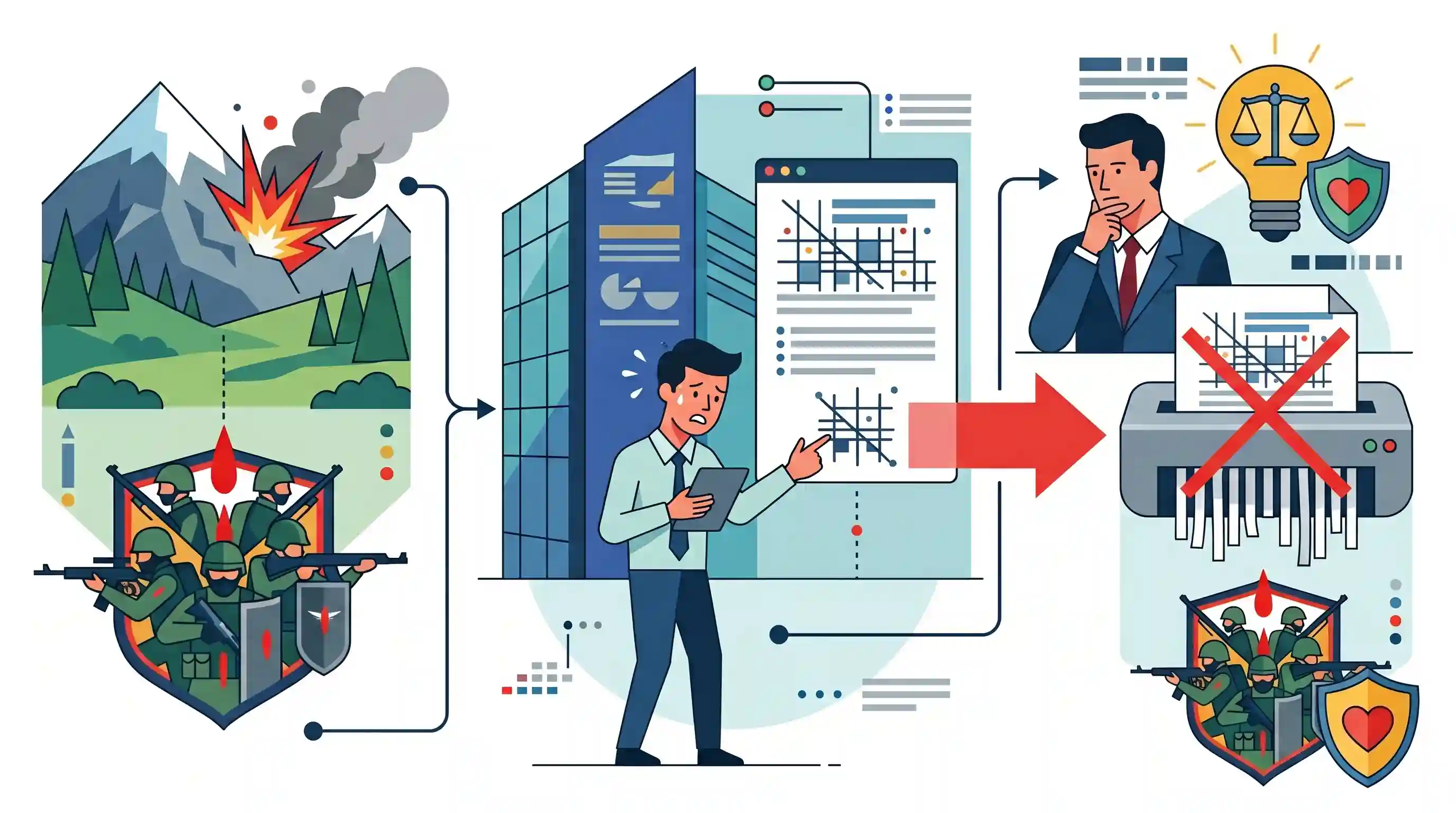
Reliance Industries has withdrawn a trademark application for the phrase 'Operation Sindoor', the codename for India's military strikes in Pakistan following a terror attack in Pahalgam. The application, inadvertently filed by a junior employee under Class 41 of the Nice Classification for entertainment services, was withdrawn as the company acknowledged the term's significance as an evocative symbol of national bravery and the armed forces' fight against terrorism.
Key Points
- Reliance Industries withdrew a trademark application for 'Operation Sindoor', which was inadvertently filed by a junior employee at Jio Studios.
- 'Operation Sindoor' was the codename for India's military strikes in Pakistan, conducted in response to a terror attack in Pahalgam.
- The application was filed with the Office of the Controller General of Patents, Designs and Trade Marks under Class 41 of the Nice Classification (which covers entertainment and cultural activities).
- Reliance stated that the term is a symbol of the Armed Forces' bravery and national consciousness, and thus should not be trademarked for commercial use.
Important Terms
Nice Classification

An international system for classifying goods and services for trademark registration, established by the Nice Agreement (1957) and administered by the World Intellectual Property Organization (WIPO).
UPSC context
GS Paper 3 (Intellectual Property Rights). Tests knowledge of international regulatory standards in trademark registration.
Controller General of Patents, Designs and Trade Marks (CGPDTM)
A statutory authority under the Ministry of Commerce and Industry (DPIIT) responsible for administering laws related to patents, trademarks, designs, and geographical indications in India.
UPSC context
GS Paper 2 (Regulatory Bodies) and GS Paper 3 (IPR). Tests understanding of India's intellectual property administrative framework.
Operation Sindoor
The codename for India’s May 2025 military strikes against terrorist infrastructure in Pakistan and PoJK, launched in response to a major terror attack in Pahalgam.
UPSC context
GS Paper 3 (Internal Security). Tests knowledge of counter-terrorism operations and India’s evolving military doctrine.
Class 41 (Nice Classification)
A specific category under the Nice Classification that encompasses services related to education, training, entertainment, and sporting or cultural activities.
UPSC context
GS Paper 3 (IPR). Relevant for understanding the specific legal classification of services in trademark applications.
Trademark
A recognizable sign, design, or expression identifying products or services, legally protected in India under the Trade Marks Act, 1999 to prevent unauthorized use.
UPSC context
GS Paper 3 (IPR). Tests fundamental conceptual understanding of intellectual property rights and commercial law.
Internal Security (Cross-border strikes)
A proactive military strategy involving precision strikes on foreign territory to neutralize security threats, reflecting India’s shift toward a "zero tolerance" policy against state-sponsored terrorism.
UPSC context
GS Paper 3 (Internal Security). Examines India’s strategic responses to cross-border threats and regional security challenges.
Prelims Trap
The Nice Classification system is a framework under the WTO's TRIPS agreement for protecting Geographical Indications.
The Nice Classification categorizes goods and services for trademarks, not GIs. Furthermore, it is a treaty administered by WIPO, completely distinct from the WTO's TRIPS framework.
Static Concepts Connected
Which government bodies administer the various intellectual property rights in India?
- Patents & Trademarks: Administered by the CGPDTM under DPIIT, Ministry of Commerce and Industry.
- Copyrights: Administration was transferred to DPIIT in 2016 to centralize major intellectual property management.
- Plant Varieties: Administered by the PPV&FR Authority under the Ministry of Agriculture and Farmers Welfare.
What are the core WIPO classification treaties acceded to by India?
- Nice Agreement: Categorizes goods and services into 45 classes specifically for the registration of trademarks.
- Vienna Agreement: Provides an international classification system for the figurative elements (logos and symbols) of trademarks.
- Locarno Agreement: Establishes an international classification system for industrial designs to streamline global registrations.
Cross-Topic Patterns
Commercializing National Security
The attempt to trademark military operations connects GS3 internal security milestones with GS4 corporate ethics, highlighting statutory limits on exploiting national sentiments for commercial gain.
Absolute Grounds for Trademark Refusal
Section 9 of the Trade Marks Act prohibits marks that are deceptive, hurt religious/national sentiments, or falsely suggest government patronage, acting as statutory ethical safeguards.

Expect a pairs question matching WIPO treaties (Nice, Vienna, Locarno) with their specific IPR domains (Trademarks, Designs) in 2026.
Linked PYQs · 3
Linked PYQs · 3
- 2017PrelimsGS1
With reference to the 'National Intellectual Property Rights Policy', consider the following statements: 1. It reiterates India's commitment to the Doha Development Agenda and the TRIPS Agreement. 2. Department of Industrial Policy and Promotion is the nodal agency for regulating intellectual property rights in India. Which of the above statements is/are correct?
- 2014MainsGS3
In a globalized world, Intellectual Property Rights assume significance and are a source of litigation. Broadly distinguish between the terms-Copyrights, Patents and Trade Secrets.
- 2016MainsGS3
The terms 'Hot Pursuit' and 'Surgical Strikes' are often used in connection with armed action against terrorist attacks. Discuss the strategic impact of such actions.
