Chemical Industry Pollution and Environmental Regulation Deficits
Source:The Hindu ↗
Why It Matters
Industrial pollution is a central topic in UPSC GS3 (Environment). Understanding the specific regulatory failures related to the chemical industry and the concept of 'green chemistry' provides essential fodder for answering Mains questions on water pollution, river conservation, and sustainable industrialization.
Summary
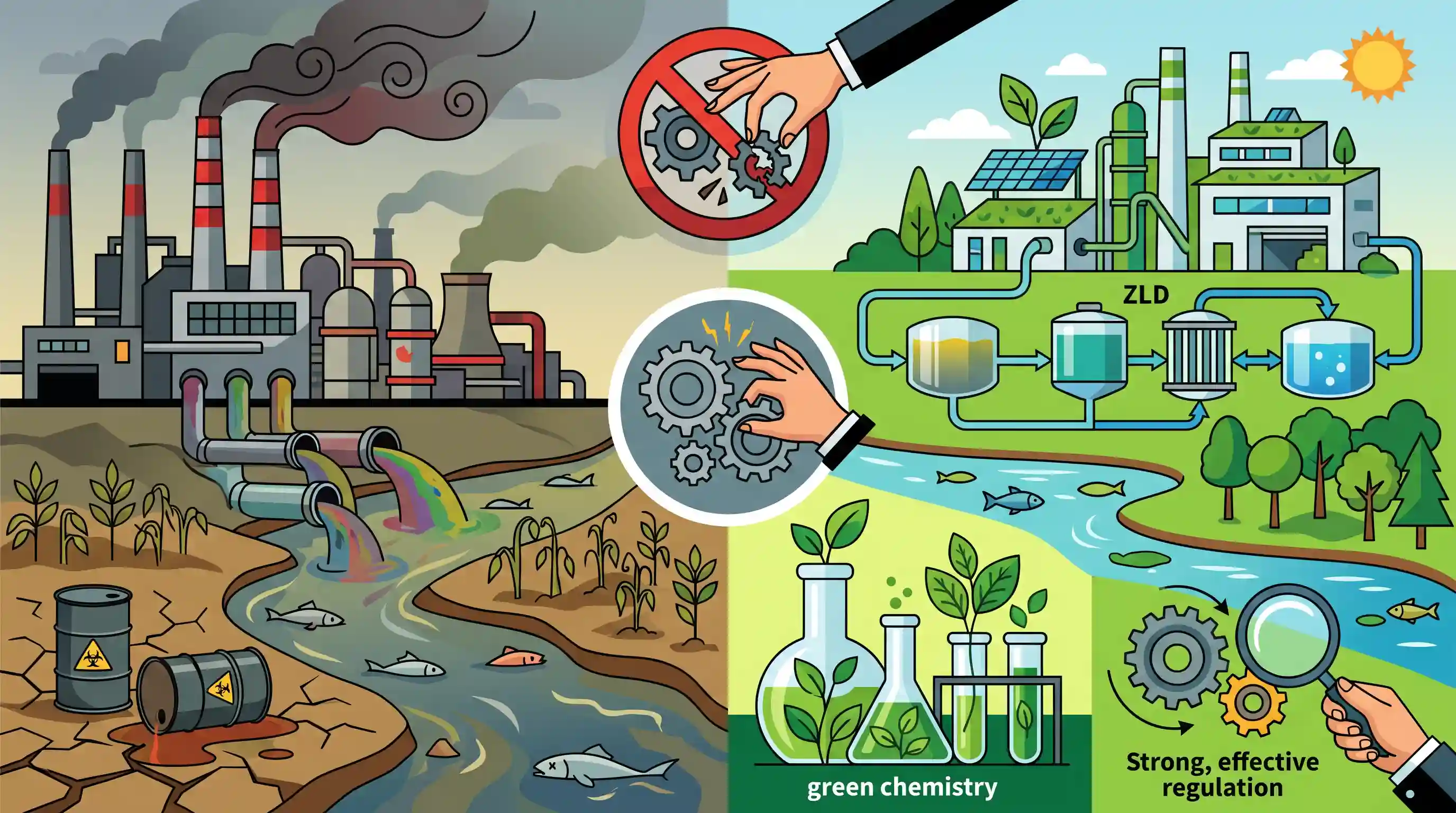
The article highlights the pressing need to address the severe environmental footprint of India's booming chemical industry. It points out that untreated industrial effluents, toxic emissions, and hazardous waste are causing widespread water and soil pollution, threatening public health and ecosystems. The author criticizes the weak enforcement of existing regulations by pollution control boards and advocates for systemic reforms. Key recommendations include strict adherence to Zero Liquid Discharge (ZLD) norms, modernization of effluent treatment infrastructure, and a strategic shift toward 'green chemistry' to ensure sustainable industrial development.
Key Points
- The rapid expansion of India's chemical industry has led to severe environmental degradation, primarily through the discharge of untreated toxic effluents into rivers and groundwater.
- A critical regulatory bottleneck is the lax enforcement of environmental norms by State Pollution Control Boards (SPCBs) and loopholes in existing laws.
- Persistent chemicals (like PFAS) and hazardous industrial waste pose long-term bioaccumulation risks to human health and ecosystems.
- Mitigation strategies must include upgrading Common Effluent Treatment Plants (CETPs), enforcing Zero Liquid Discharge (ZLD) protocols, and transitioning towards 'Green Chemistry' principles to minimize hazardous outputs.
Important Terms
Environment (Protection) Act, 1986

India's "umbrella" environmental law enacted post-Bhopal tragedy. It empowers the Central Government to coordinate state activities, set national emission/effluent standards, and regulate hazardous substances to improve environmental quality.
UPSC context
GS Paper 3 (Environment); the primary legal framework for all environmental regulations and industrial oversight in India.
Central Pollution Control Board (CPCB)
A statutory organization established under the Water Act, 1974. It provides technical expertise to the government, coordinates State Pollution Control Boards, and monitors national air and water quality standards.
UPSC context
GS Paper 2 (Statutory Bodies); central to questions on environmental governance, enforcement, and institutional monitoring.
Zero Liquid Discharge (ZLD)
An advanced wastewater management system where all industrial effluent is recycled and reused onsite. It prevents liquid waste discharge into the environment, leaving only solid residues for safe disposal.
UPSC context
GS Paper 3 (Pollution/Conservation); critical for sustainable industrial growth, water security, and resource efficiency.
Green Chemistry
A sustainable approach to chemical engineering focused on designing products and processes that minimize or eliminate the use and generation of hazardous substances throughout their life cycle.
UPSC context
GS Paper 3 (Sustainable Development); represents the technological shift from pollution remediation to proactive hazard prevention.
Hazardous Waste Management Rules, 2016
Regulatory framework under the EPA 1986 governing the safe handling, recycling, and disposal of toxic waste. It emphasizes a hierarchy of prevention, minimization, and recovery over simple disposal.
UPSC context
GS Paper 3 (Pollution); essential for studying industrial disaster management and public health safety.
Water (Prevention and Control of Pollution) Act, 1974
India's first major environmental law, enacted to prevent and control water pollution. It established the institutional framework of Central and State Pollution Control Boards to monitor water quality.
UPSC context
GS Paper 3 (Environment); fundamental for questions on water resource management and industrial effluent regulation.
Prelims Trap
"The Central and State Pollution Control Boards were established under the Environment (Protection) Act, 1986."
CPCB and SPCBs were actually constituted under the Water (Prevention and Control of Pollution) Act, 1974. They merely draw additional powers from the EPA, 1986.
Static Concepts Connected
What are the statutory origins and powers of the CPCB and SPCBs?
- Water Act, 1974: They were originally constituted under this Act to promote the cleanliness of streams and wells.
- Air Act, 1981: They were subsequently entrusted with added responsibilities to improve air quality and prevent air pollution.
- EPA, 1986: Provides them overarching powers to enforce environmental standards and manage hazardous wastes.
What are PFAS and why are they termed 'forever chemicals'?
- Chemical Structure: Per- and polyfluoroalkyl substances (PFAS) contain incredibly strong carbon-fluorine bonds that heavily resist environmental degradation.
- Bioaccumulation: They do not break down, instead building up in human bodies and ecosystems over time, posing severe health risks like cancer.
- Common Uses: Extensively used in non-stick cookware, water-repellent clothing, firefighting foams, and stain-resistant fabrics.
Cross-Topic Patterns
Chemical Effluents & Antimicrobial Resistance
Active Pharmaceutical Ingredients (APIs) discharged by chemical hubs into rivers accelerate Antimicrobial Resistance (AMR), connecting industrial effluent regulation to a major global public health crisis.
Zero Liquid Discharge & Water Stress
ZLD mandates are critical not just for halting pollution, but for minimizing industrial freshwater extraction in India's highly water-stressed regions like Gujarat and Tamil Nadu.

Expect a 2026 Prelims question pairing PFAS bioaccumulation ('forever chemicals') with everyday consumer products and industrial effluents.
Linked PYQs · 4
Linked PYQs · 4
- 2024MainsGS3
Industrial pollution of river water is a significant environmental issue in India. Discuss the various mitigation measures to deal with this problem and also the government's initiatives in this regard.
- 2013MainsGS3
Enumerate the National Water Policy of India. Taking river Ganges as an example, discuss the strategies which may be adopted for river water pollution control and management. What are the legal provisions of management and handling of hazardous wastes in India?
- 2024PrelimsGS1
With reference to perfluoroalkyl and polyfluoroalkyl substances (PFAS) that are used in making many consumer products, consider the following statements : 1. PFAS are found to be widespread in drinking water, food and food packaging materials. 2. PFAS are not easily degraded in the environment. 3. Persistent exposure to PFAS can lead to bioaccumulation in animal bodies. Which of the statements given above are correct?
- 2022PrelimsGS1
Which one of the following has been constituted under the Environment (Protection) Act, 1986?
