Export Diversification Strategies to Mitigate US Tariff Risks
Source:The Hindu ↗
આ શા માટે મહત્વનું છે
The article addresses the core GS3 topics of international trade, protectionism, and export competitiveness, providing strategic insights into how India can navigate bilateral trade tensions and minimize risks associated with shifting US tariff regimes.
સારાંશ
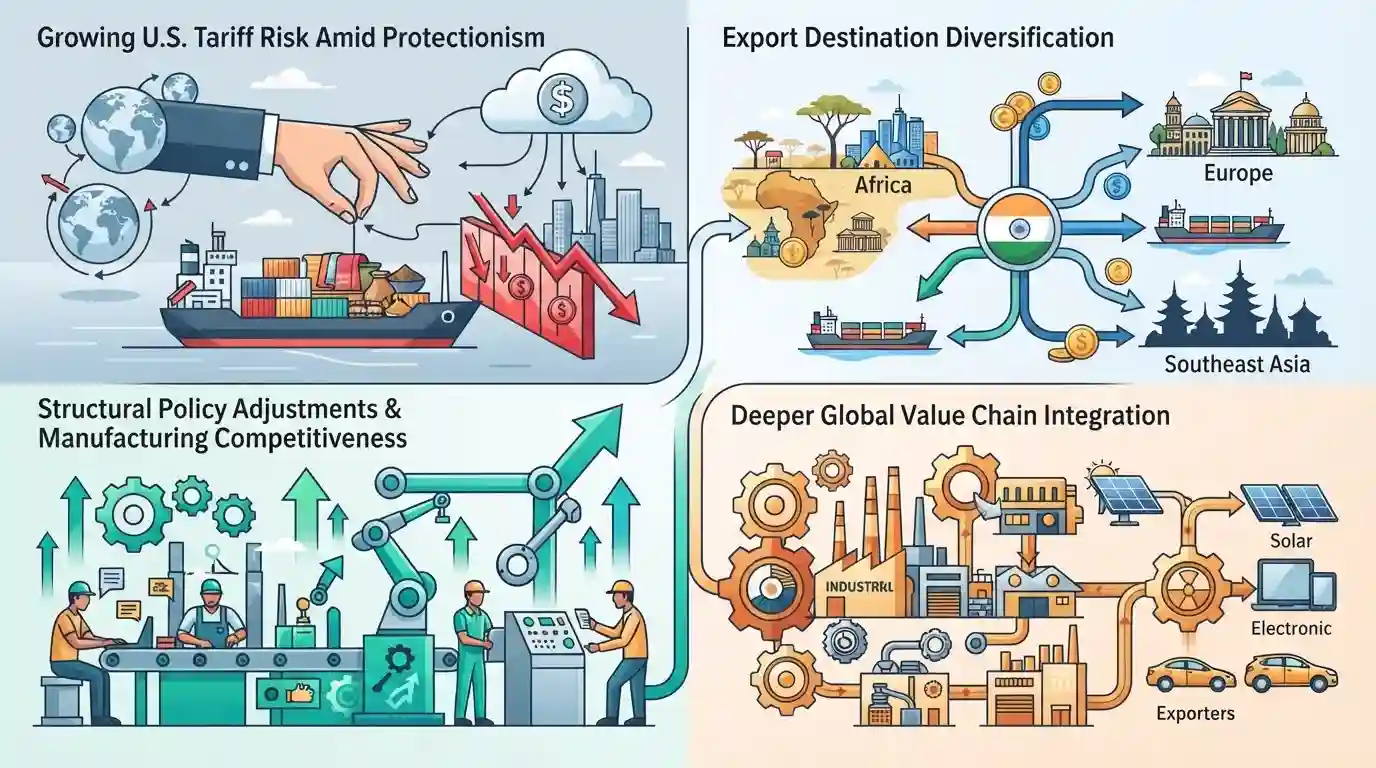
The article explores India's growing exposure to U.S. tariff risks amid shifting global trade dynamics and rising protectionism. It emphasizes the need for structural policy adjustments, export destination diversification, enhanced manufacturing competitiveness, and deeper integration into global value chains to safeguard India's external trade against unilateral tariff actions.
મુખ્ય મુદ્દા
- India faces significant exposure to U.S. tariff risks given its high reliance on the American market for merchandise exports.
- Global shifts toward protectionism, bilateralism, and trade friction threaten macroeconomic stability and export growth.
- Mitigating tariff vulnerabilities requires structural reforms, export diversification into alternative markets (e.g., Europe, Africa, Latin America), and integration into Global Value Chains (GVCs).
- Strengthening domestic manufacturing competitiveness and lowering logistics costs are critical to countering external trade shocks.
મહત્વપૂર્ણ શબ્દો
World Trade Organization

A global international organization dealing with the rules of trade between nations, providing a platform for negotiating trade agreements and resolving commercial disputes.
UPSC context
UPSC Prelims/Mains (GS Paper II/III): Important international institutions, global trade governance, and dispute resolution mechanisms affecting India's external trade.
United States Trade Representative
The principal agency of the United States federal government that develops, recommends, and administers foreign trade policy, leading bilateral trade negotiations and enforcement actions like Section 301.
UPSC context
UPSC Mains (GS Paper II/III): Bilateral relations with the U.S. and key institutional drivers of unilateral trade policies and tariff investigations.
પ્રિલિમ્સ ટ્રેપ
Integration into Global Value Chains (GVCs) is exclusively restricted to high-tech manufacturing sectors like electronics and automobiles.
Aspirants often assume Global Value Chains (GVCs) only involve high-tech manufacturing, ignoring how services and agriculture increasingly integrate into modern GVCs.
સંલગ્ન સ્થિર ખ્યાલો
What are the core instruments and principles governing international trade under the WTO framework?
- MFN Treatment: Ensures non-discrimination between trading partners through Most-Favoured-Nation (MFN) treatment.
- National Treatment: Prohibits less favorable treatment for imported goods once they enter domestic markets.
- Trade Remedies: Permits temporary relief against dumped or subsidized imports using anti-dumping and countervailing duties.
આંતર-વિષય પેટર્ન
U.S. Protectionism + WTO Appellate Paralysis
Rising U.S. protectionism and unilateral tariff actions intersect with WTO Appellate Body paralysis, testing India's diplomatic balancing act across minilateral and multilateral trade forums.

U.S. tariff vulnerabilities + India's export diversification strategy will likely feature in Mains GS3 (International Trade).
સંલગ્ન PYQ · 2
સંલગ્ન PYQ · 2
- 2018MainsGS3
How would the recent phenomena of protectionism and currency manipulations in world trade affect macroeconomic stability of India?
- 2025MainsGS3
What are the challenges before the Indian economy when the world is moving away from free trade and multilateralism to protectionism and bilateralism? How can these challenges be met?
