RBI calibrated monetary tightening to balance inflation and growth
Source:Indian Express ↗
આ શા માટે મહત્વનું છે
It directly addresses core concepts of India's macroeconomic management, central bank autonomy, monetary policy transmission, and the balancing act between inflation control and economic growth, which are frequently tested in UPSC Civil Services Mains (GS3) and Prelims.
સારાંશ
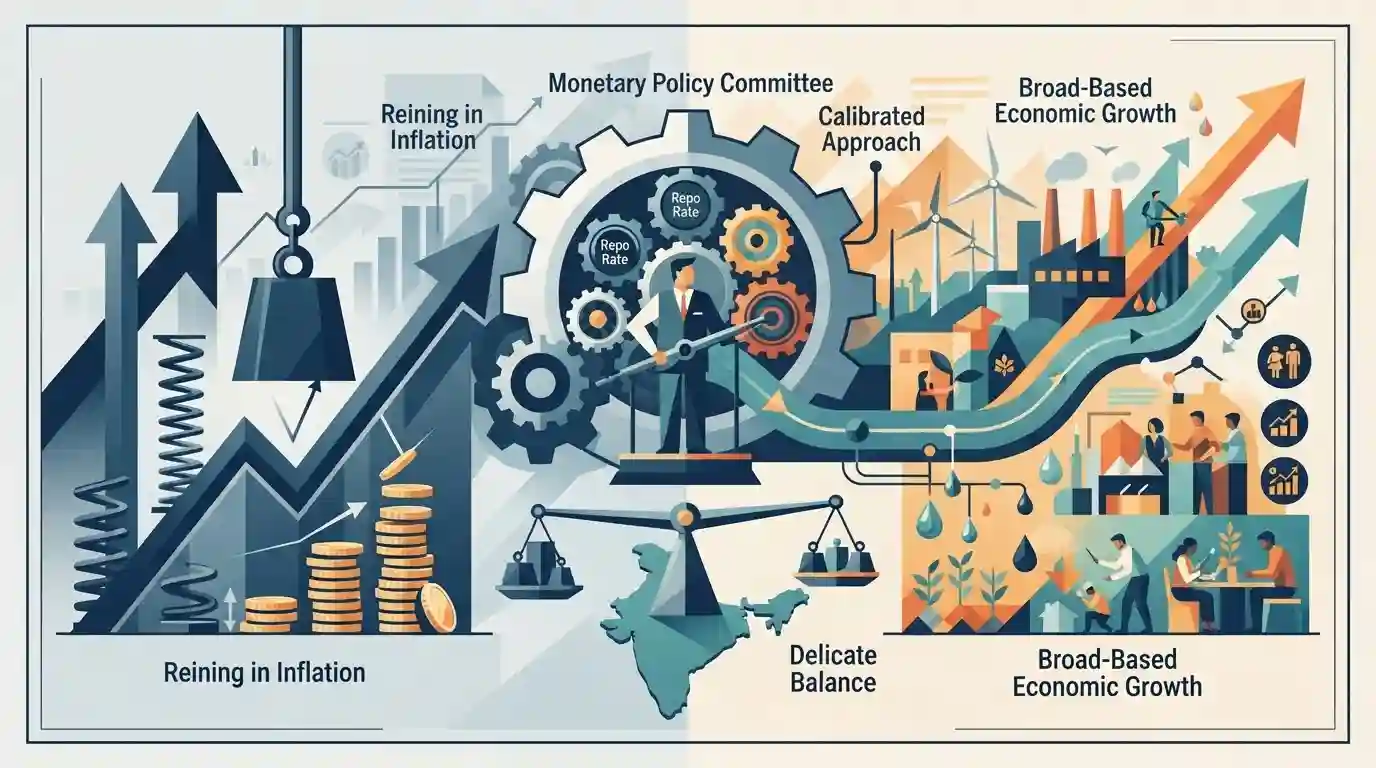
This editorial analyzes the Reserve Bank of India's calibrated approach toward repo rate adjustments and monetary policy tightening, emphasizing the delicate balance between reining in inflation and sustaining broad-based economic growth in India.
મુખ્ય મુદ્દા
- The article examines the Reserve Bank of India's (RBI) stance on repo rate adjustments and calibrated monetary tightening to balance inflation control and economic growth.
- Monetary policy tools like the repo rate are critical instruments for managing aggregate demand and anchoring inflation expectations within the mandated target band.
- Calibrated tightening ensures that price stability is maintained without unduly stifling credit growth or post-pandemic economic recovery.
- The interplay between global macroeconomic trends, domestic liquidity management, and central bank credibility remains vital for India's macroeconomic stability.
મહત્વપૂર્ણ શબ્દો
Reserve Bank of India

India's central banking institution, which controls the monetary supply, regulates the banking system, manages foreign exchange, and acts as a banker to the government and commercial banks.
UPSC context
UPSC GS Paper III (Indian Economy). Tests structural knowledge of central banking, monetary management, and financial sector regulation.
Monetary Policy Committee
A statutory committee of six members headed by the RBI Governor, responsible for fixing the benchmark policy repo rate to maintain price stability while keeping growth in mind.
UPSC context
UPSC GS Paper III (Indian Economy). Tests inflation targeting framework, monetary policy tools, and institutional decision-making.
પ્રિલિમ્સ ટ્રેપ
The Monetary Policy Committee determines the repo rate under a fixed 4% inflation target without any statutory tolerance band.
Aspirants often confuse the RBI's inflation target band (4% +/- 2%) with the repo rate itself, or assume the MPC is a statutory body created outside the RBI Act.
સંલગ્ન સ્થિર ખ્યાલો
What is the legal framework and structure of India's Monetary Policy Committee (MPC)?
- Statutory Basis: Statutory body constituted under Section 45ZB of the amended RBI Act, 1934, entrusted with fixing the benchmark policy repo rate.
- Composition: Comprises six members: three official members from the RBI (Governor as Chairperson, a Deputy Governor, and one officer) and three external members appointed by the Central Government.
- Inflation Mandate: Operates under a flexible inflation targeting framework with a statutory CPI inflation target of 4% with a tolerance band of +/- 2%.
આંતર-વિષય પેટર્ન
Monetary Policy and Fiscal Deficit Interplay
Monetary policy adjustments by the RBI directly impact debt servicing costs for government borrowing, creating a critical feedback loop with fiscal deficit targets under the FRBM Act.
Capital Flows and Exchange Rate Volatility
Global interest rate cycles and US Federal Reserve tightening trigger foreign portfolio capital outflows from India, complicating RBI's domestic liquidity management and foreign exchange reserves.

MPC voting patterns, inflation tolerance band breaches, and liquidity adjustment facility (LAF) tools are high-yield prelim themes.
સંલગ્ન PYQ · 3
સંલગ્ન PYQ · 3
- 2024MainsGS3
What are the causes of persistent high food inflation in India? Comment on the effectiveness of the monetary policy of the RBI to control this type of inflation.
- 2022PrelimsGS1
With reference to the Indian economy, consider the following statements: 1. If the inflation is too high, Reserve Bank of India (RBI) is likely to buy government securities. 2. If the rupee is rapidly depreciating, RBI is likely to sell dollars in the market. 3. If interest rates in the USA or European Union were to fall, that is likely to induce RBI to buy dollars. Which of the statements given above are correct?
- 2022PrelimsGS1
In India, which one of the following is responsible for maintaining price stability by controlling inflation?
