RBI MSME ऋण सीमा संशोधन और REIT ऋण दिशा-निर्देश
स्रोत:द हिंदू ↗
क्यों मायने रखता है
The article covers crucial updates to RBI regulations impacting MSME credit and alternative investment vehicles (REITs/InvITs). These topics are recurrent in GS3, mapping directly to syllabus areas like 'Indian Economy and issues relating to mobilization of resources, growth, development' and 'Investment Models'. Understanding the regulatory framework for InvITs and REITs is especially important for Prelims.
सारांश
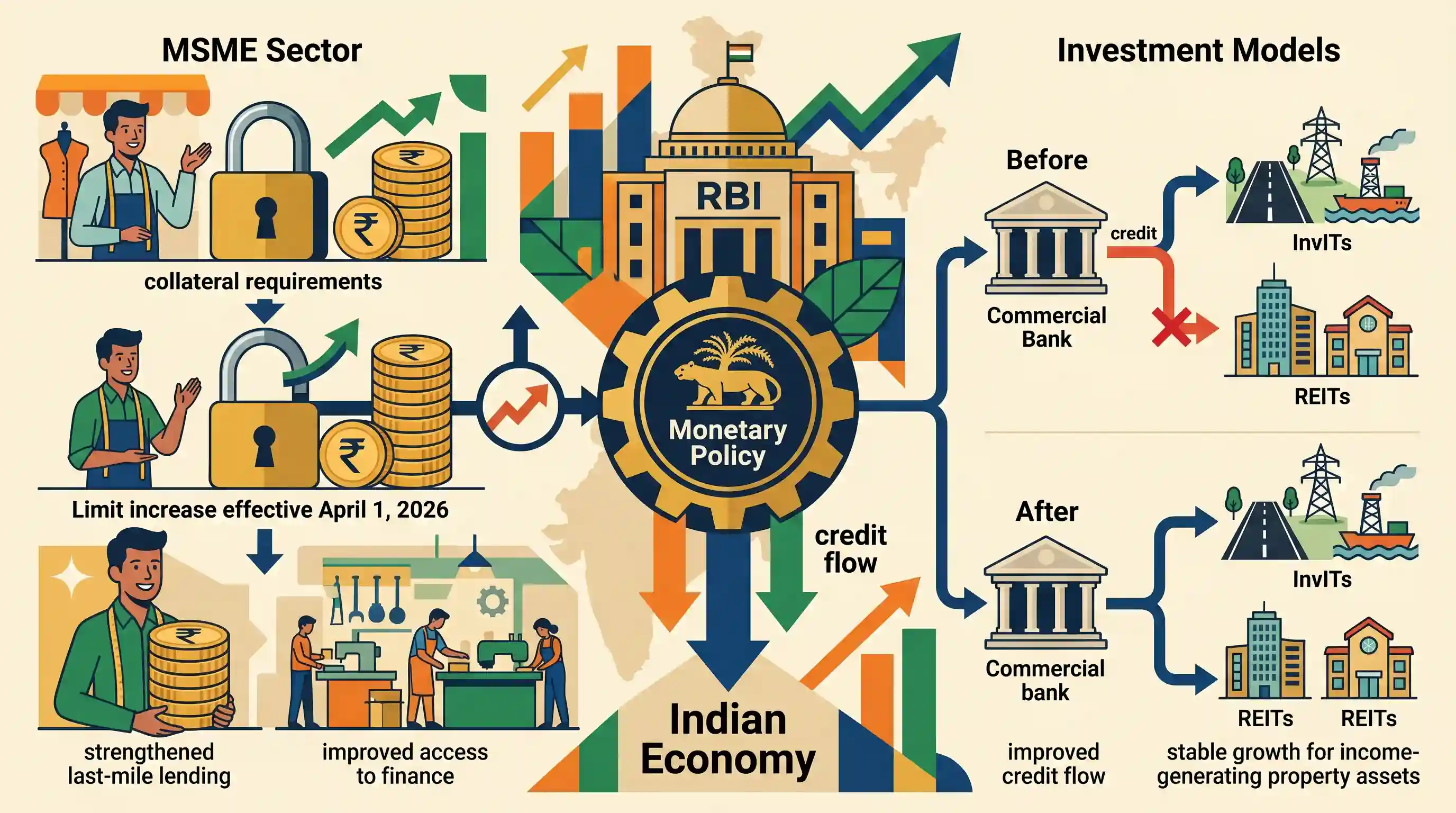
The Reserve Bank of India (RBI) has announced new measures to boost credit flow to small businesses and the real estate sector. The central bank proposed doubling the limit for collateral-free loans to micro and small enterprises to ₹2 million (₹20 lakh) from ₹1 million, effective April 1, 2026. In another significant move, the RBI permitted commercial banks to extend finance to Real Estate Investment Trusts (REITs), extending a lending facility previously restricted to Infrastructure Investment Trusts (InvITs). The decision, aligned with SEBI's recent move to treat REITs as equity, aims to strengthen last-mile lending, improve access to competitive long-term bank finance, and ensure stable growth for income-generating property assets.
मुख्य बिंदु
- RBI ने औपचारिक वित्तपोषण को बढ़ावा देने के लिए छोटे व्यवसायों के लिए बिना गारंटी वाले ऋण (collateral-free loan) की सीमा को ₹10 लाख से दोगुना कर ₹20 लाख कर दिया है।
- संशोधित MSME ऋण मानदंड 1 अप्रैल, 2026 से स्वीकृत या नवीनीकृत किए गए ऋणों पर लागू होंगे।
- Commercial banks are now permitted to lend to Real Estate Investment Trusts (REITs) under prudential safeguards, extending a facility already available to Infrastructure Investment Trusts (InvITs).
- SEBI ने हाल ही में REITs को इक्विटी के रूप में मानने की अनुमति दी है, जिससे इस एसेट क्लास में म्यूचुअल फंड निवेश संभव हो गया है।
- REITs के लिए बैंक वित्त (bank finance) की अनुमति देने के इस कदम का उद्देश्य पुनर्वित्त (refinancing) की जरूरतों को कम करना, स्थिर बैलेंस शीट का समर्थन करना और रियल एस्टेट क्षेत्र में नई फंडिंग को प्रोत्साहित करना है।
महत्वपूर्ण शब्द
भारतीय रिज़र्व बैंक (RBI)

भारत का केंद्रीय बैंक और नियामक निकाय जो भारतीय बैंकिंग प्रणाली को विनियमित करने, मौद्रिक नीति का प्रबंधन करने और ब्याज दरों तथा ऋण नियंत्रण जैसे उपकरणों के माध्यम से वित्तीय स्थिरता बनाए रखने के लिए उत्तरदायी है।
UPSC context
GS पेपर 3: भारतीय अर्थव्यवस्था। मौद्रिक नीति, बैंकिंग विनियमन और प्राथमिकता प्राप्त क्षेत्रों को ऋण प्रवाह से संबंधित प्रश्नों के लिए महत्वपूर्ण।
भारतीय प्रतिभूति और विनिमय बोर्ड (SEBI)
भारत के प्रतिभूति बाजार के लिए वैधानिक नियामक, जो निवेशकों के हितों की रक्षा करता है और पारदर्शी एवं कुशल पूंजी बाजार सुनिश्चित करने के लिए स्टॉक एक्सचेंजों तथा वित्तीय मध्यस्थों को विनियमित करता है।
UPSC context
GS पेपर 3: पूंजी बाजार। निवेश माध्यमों (investment vehicles) में नियामक सुधारों और निवेशक सुरक्षा से संबंधित विषयों के लिए महत्वपूर्ण।
रियल एस्टेट इन्वेस्टमेंट ट्रस्ट (REIT)
एक कंपनी या ट्रस्ट जो आय उत्पन्न करने वाली रियल एस्टेट का स्वामित्व, संचालन या वित्तपोषण करती है, जिससे छोटे निवेशकों को प्रत्यक्ष स्वामित्व के बिना व्यावसायिक संपत्ति से लाभांश (dividends) अर्जित करने की सुविधा मिलती है।
UPSC context
GS पेपर 3: निवेश मॉडल। बुनियादी ढांचा वित्तपोषण और रियल एस्टेट क्षेत्र की पारदर्शिता और तरलता के लिए प्रासंगिक।
इंफ्रास्ट्रक्चर इन्वेस्टमेंट ट्रस्ट (InvIT)
एक निवेश साधन जो म्यूचुअल फंड के समान है और व्यक्तिगत तथा संस्थागत निवेशकों को बुनियादी ढांचा परियोजनाओं (infrastructure projects) में निवेश करने में सक्षम बनाता है ताकि वे उससे उत्पन्न होने वाली आय का एक हिस्सा अर्जित कर सकें।
UPSC context
GS Paper 3: बुनियादी ढांचा और निवेश मॉडल। एसेट रीसाइक्लिंग और दीर्घकालिक वित्तपोषण रणनीतियों को समझने के लिए महत्वपूर्ण।
सूक्ष्म और लघु उद्यम (MSEs)
विशिष्ट निवेश और टर्नओवर सीमाओं के आधार पर वर्गीकृत लघु-स्तरीय औद्योगिक या सेवा इकाइयाँ, जो भारत में रोजगार और GDP के लिए एक महत्वपूर्ण क्षेत्र के रूप में कार्य करती हैं।
UPSC context
GS पेपर 3: MSME क्षेत्र। वित्तीय समावेशन और औद्योगिक विकास के लिए सरकार/RBI की पहलों पर केंद्रित है।
संपार्श्विक-मुक्त ऋण
Loans provided by financial institutions that do not require the borrower to pledge any assets or security, often used to support small businesses and entrepreneurs.
UPSC context
GS पेपर 3: वित्तीय समावेशन। यह ऋण सुलभता और प्राथमिकता प्राप्त क्षेत्र ऋण (Priority Sector Lending) में जोखिम प्रबंधन के ज्ञान का परीक्षण करता है।
प्रारंभिक ट्रैप
SEBI ने म्यूचुअल फंड की भागीदारी को बढ़ावा देने के लिए REITs और InvITs दोनों को इक्विटी-संबंधित उपकरणों के रूप में वर्गीकृत किया है।
SEBI ने केवल REITs को इक्विटी-संबंधित के रूप में पुनर्वर्गीकृत किया है। InvITs अपनी प्राइवेट प्लेसमेंट प्रकृति और स्थिर नकदी प्रवाह के कारण 'हाइब्रिड' इंस्ट्रूमेंट्स के रूप में वर्गीकृत बने हुए हैं।
संबंधित अवधारणाएँ
भारत में REITs मौलिक रूप से InvITs से किस प्रकार भिन्न हैं?
- अंतर्निहित परिसंपत्ति: REITs मुख्य रूप से पूर्ण हो चुकी और आय उत्पन्न करने वाली वाणिज्यिक रियल एस्टेट में निवेश करते हैं। InvITs राजमार्गों और ट्रांसमिशन लाइनों जैसी दीर्घकालिक बुनियादी ढांचा परिसंपत्तियों में निवेश करते हैं।
- वर्गीकरण: SEBI म्यूचुअल फंड्स के लिए REITs को 'इक्विटी-संबंधित इंस्ट्रूमेंट्स' मानता है, जबकि InvITs 'हाइब्रिड' वर्गीकरण बनाए रखते हैं।
- ऋण संबंधी प्रतिबंध: बैंक अब दोनों को ऋण दे सकते हैं, लेकिन REITs को दिए जाने वाले बैंक फंड के भूमि अधिग्रहण के लिए उपयोग पर कड़ाई से प्रतिबंध है।
सूक्ष्म और लघु उद्यमों की 2020 की समग्र परिभाषा क्या है?
- सूक्ष्म उद्यम: प्लांट और मशीनरी या उपकरणों में ₹1 करोड़ तक का निवेश, और ₹5 करोड़ तक का वार्षिक टर्नओवर।
- लघु उद्यम: प्लांट और मशीनरी या उपकरणों में ₹10 करोड़ तक का निवेश, और ₹50 करोड़ तक का वार्षिक टर्नओवर।
अंतर-विषय पैटर्न
अकाउंट एग्रीगेटर के माध्यम से कैश-फ्लो लेंडिंग
संपार्श्विक-मुक्त (collateral-free) MSME सीमाओं को बढ़ाना RBI Account Aggregator फ्रेमवर्क के साथ तालमेल बिठाता है, जो भारतीय बैंकिंग को परिसंपत्ति-आधारित ऋण (asset-backed lending) से हटाकर डिजिटल ट्रेल्स (digital trails) का उपयोग करते हुए पूरी तरह से कैश-फ्लो-आधारित ऋण (cash-flow-based lending) की ओर स्थानांतरित करता है।
InvITs और राष्ट्रीय मुद्रीकरण पाइपलाइन
While REITs unlock real estate capital, their sister-instrument InvITs are heavily utilized by NHAI and PowerGrid to monetize brownfield infrastructure assets under the National Monetisation Pipeline.

2026 Prelims में SEBI वर्गीकरण और बैंक ऋण मानदंडों के आधार पर REITs और InvITs के बीच अंतर करने वाले एक बहु-कथनीय प्रश्न (multi-statement question) की अपेक्षा करें।
संबद्ध PYQ · 3
संबद्ध PYQ · 3
- 2023PrelimsGS1
Consider the following statements with reference to India: 1. According to the 'Micro, Small and Medium Enterprises Development (MSMED) Act, 2006', the 'medium enterprises' are those with investments in plant and machinery between ₹ 15 crore and ₹ 25 crore. 2. All bank loans to the Micro, Small and Medium Enterprises qualify under the priority sector. Which of the statements given above is/are correct?
- 2023PrelimsGS1
Consider the following statements: Statement-I: Interest income from the deposits in Infrastructure Investment Trusts (InvITs) distributed to their investors is exempted from tax, but the dividend is taxable. Statement-II: InvITs are recognized as borrowers under the 'Securitization and Reconstruction of Financial Assets and Enforcement of Security Interest Act, 2002'. Which one of the following is correct in respect of the above statements?
- 2023MainsGS3
Faster economic growth requires increased share of the manufacturing sector in GDP, particularly of MSMEs. Comment on the present policies of the Government in this regard.
