Counter-Terrorism Strategy for Internal Security Challenges
Source:Indian Express ↗
Why It Matters
Terrorism and internal security are core components of the UPSC Mains GS3 syllabus. A mature and strategic perspective on countering radicalization and managing cross-border threats provides valuable insights for essay and subjective answers on national security.
Summary
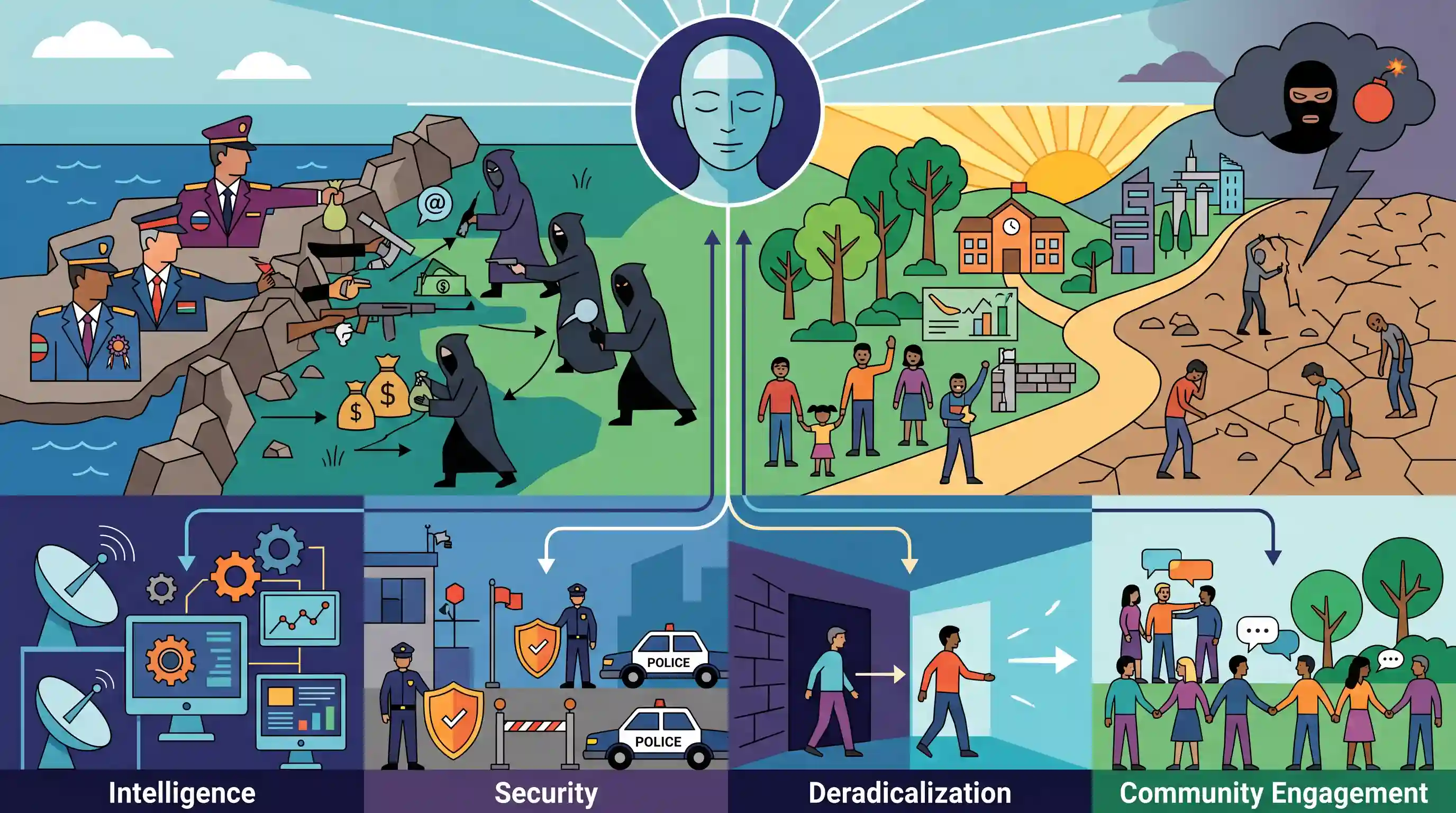
In this opinion piece, Ram Madhav advocates for a calm and mature discourse on terrorism in India. Rather than relying solely on reactionary or emotional responses, he emphasizes the necessity of a comprehensive and strategic approach to counter-terrorism. This includes understanding the ideological underpinnings of radicalization, addressing the socio-political factors that fuel it, and strengthening the state's intelligence and security apparatus. The article underscores that dealing with the multifaceted challenges posed by both state and non-state actors requires sustained community engagement, deradicalization programs, and robust internal security frameworks.
Key Points
- The article emphasizes the need for a thoughtful, comprehensive, and mature approach to dealing with terrorism and internal security threats, moving beyond reactionary measures.
- Highlighting the evolving nature of the terror threat, it calls for strategies that address not only the security dimensions but also the socio-political and ideological roots of radicalization.
- A resilient counter-terrorism strategy requires better intelligence, inter-agency coordination, community engagement, and deradicalization initiatives.
- The discussion underscores the importance of dealing with both state and non-state actors involved in cross-border terrorism through sustained diplomatic and strategic pressure.
Prelims Trap
Terrorism and radicalization in border regions are solely the byproduct of socio-economic developmental deficits.
UPSC often uses absolute terms. While developmental deficits aid radicalization, they are not the sole cause; ideological indoctrination and proxy warfare are primary drivers.
Static Concepts Connected
What is India's core institutional intelligence framework against terrorism?
- MAC: The Multi-Agency Centre (MAC) under the Intelligence Bureau functions as the nodal body for sharing intelligence inputs among central and state agencies.
- NATGRID: An integrated intelligence master grid linking databases (like banking, telecom, immigration) of key central agencies for real-time threat tracking.
- NIA: Investigates pan-India terror offenses; its 2019 amendment expanded jurisdiction to include cyber terrorism and human trafficking.
What are the non-kinetic components of a deradicalization strategy?
- Counter-narratives: Promoting moderate ideological discourses through religious leaders and community influencers to neutralize extremist propaganda.
- Socio-economic integration: Addressing perceived developmental deficits through employment, targeted education, and social inclusion of vulnerable youth.
- Family counseling: Utilizing family units for early detection of behavioral changes and the psychological rehabilitation of radicalized individuals.
Cross-Topic Patterns
Civil society in deradicalization
Tackling extremism links to GS2 Governance, as NGOs, local bodies, and educational institutions are increasingly deployed as non-kinetic buffers for early detection and ideological deradicalization.
Proxy warfare and FATF mandates
The management of external state actors sponsoring cross-border terrorism bridges GS3 Security and GS2 IR, specifically India's diplomatic push at multilateral forums like FATF to choke proxy terror financing.

Expect a GS3 Mains question evaluating the shift from purely kinetic counter-terrorism to a 'Whole of Society' deradicalization approach.
Linked PYQs · 2
Linked PYQs · 2
- 2025MainsGS3
Terrorism is a global scourge. How has it manifested in India? Elaborate with contemporary examples. What are the counter measures adopted by the State? Explain.
- 2021MainsGS3
Analyse the multidimensional challenges posed by external state and non-state actors, to the internal security of India. Also discuss measures required to be taken to combat these threats.
