Rajya Sabha decorum and presiding officer legislative powers
Source:Indian Express ↗
Why It Matters
The conduct of parliamentary business, the role of the Vice-President as the Chairman of the Rajya Sabha, and the privileges of MPs are core components of the GS Paper 2 syllabus. UPSC frequently tests the challenges in maintaining legislative decorum and the impartiality of the Presiding Officer.
Summary
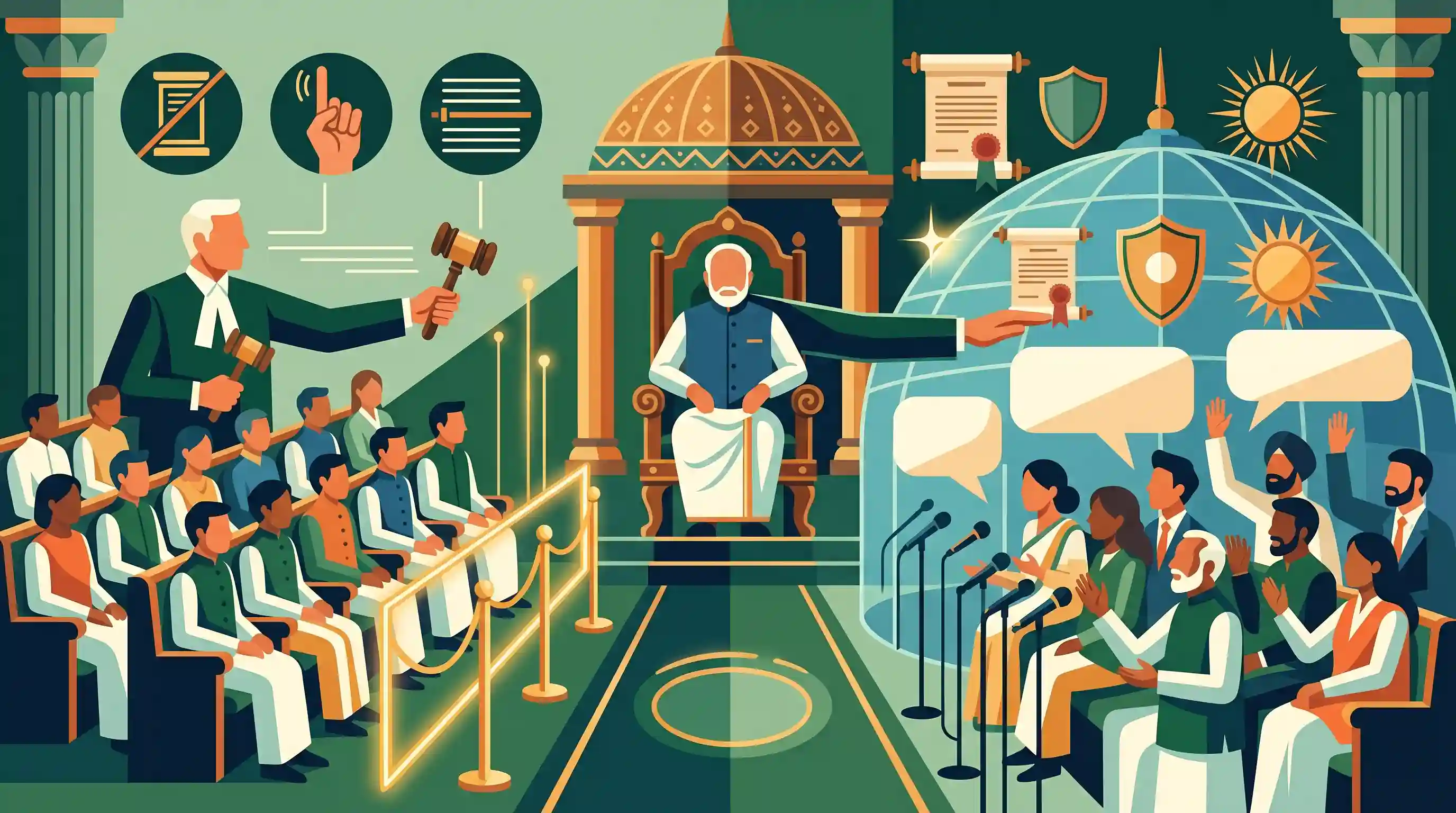
The Vice-President and Chairman of the Rajya Sabha advised Members of Parliament to strictly adhere to parliamentary decorum, referring to it as a 'Lakshman rekha' that must not be breached. He stressed that maintaining discipline is crucial for the effective functioning of the House. However, he also assured the members that their rightful claims, democratic voices, and parliamentary privileges would be fully protected. This highlights the dual responsibility of the Presiding Officer in enforcing order while safeguarding the rights of the legislators.
Key Points
- The Vice-President, acting as the ex-officio Chairman of the Rajya Sabha, cautioned Members of Parliament against crossing the 'Lakshman rekha' of parliamentary decorum.
- He emphasized the paramount importance of maintaining discipline to ensure the smooth and productive functioning of the legislative house.
- While demanding strict adherence to rules, the Chairman assured members that their legitimate claims and parliamentary privileges would be safeguarded.
- The statement highlights the delicate balance the Presiding Officer must maintain between enforcing order and protecting the democratic rights of members to raise issues.
Important Terms
Article 105 of the Constitution

Constitutional provision granting Members of Parliament freedom of speech and immunity from legal proceedings for any statement made or vote cast within the House or its committees.
UPSC context
GS Paper II: Parliament; essential for understanding legislative independence and the limits of judicial intervention in parliamentary matters.
Parliamentary Privileges
Special rights and immunities enjoyed by legislators to perform their duties effectively, including freedom from arrest in civil cases during sessions and the collective right to regulate internal affairs.
UPSC context
GS Paper II: Functions and responsibilities of the Union; tests knowledge of the balance between legislative freedom and accountability.
Chairman of Rajya Sabha
The ex-officio role of the Vice-President of India, who presides over the Upper House, maintains order, and acts as the guardian of the House's dignity and members' privileges.
UPSC context
GS Paper II: Constitutional Posts; focuses on the presiding officer's powers, neutral role, and authority in legislative procedures.
Article 122 of the Constitution
Constitutional article barring courts from inquiring into the validity of parliamentary proceedings on the grounds of alleged procedural irregularities, reinforcing the separation of powers.
UPSC context
GS Paper II: Separation of Powers; critical for understanding the immunity of the legislative process from judicial review.
Parliamentary Decorum
The code of conduct, etiquette, and discipline required from members to ensure the smooth and dignified functioning of the House without disruption.
UPSC context
GS Paper II: Parliament and State Legislatures; relevant to debates on legislative productivity and the role of ethics committees.
Rajya Sabha
The Upper House of the Indian Parliament, representing the States and Union Territories, serving as a permanent house that provides a platform for expert and sober second thought on legislation.
UPSC context
GS Paper II: Structure and Functioning of the Legislature; fundamental for understanding bicameralism and federal representation in India.
Prelims Trap
"The Chairman of the Rajya Sabha has the power to automatically suspend a member for grossly disorderly conduct."
Unlike the Lok Sabha Speaker (Rule 374A), the Rajya Sabha Chairman cannot automatically suspend a member. Suspension in the Upper House requires a formal motion to be adopted (Rule 256).
Static Concepts Connected
How do disciplinary powers differ between the Lok Sabha Speaker and Rajya Sabha Chairman?
- Lok Sabha Speaker: Can direct a member to withdraw (Rule 373) and has the power to automatically suspend a member for 5 days or the remainder of the session (Rule 374A).
- Rajya Sabha Chairman: Can direct withdrawal (Rule 255) but cannot automatically suspend a member. Suspension strictly requires the House to pass a motion under Rule 256.
What are the core features of Parliamentary Privileges under Article 105?
- Freedom of Speech: MPs enjoy freedom of speech in the House, but it is explicitly subject to constitutional provisions and internal rules of procedure regulating parliamentary decorum.
- Judicial Immunity: MPs are granted absolute immunity from any judicial proceedings for anything said or any vote cast during parliamentary or committee proceedings.
- Codification Status: Privileges remain largely uncodified in India. They are derived from the Constitution, rules of procedure, precedents, and historical conventions.
Cross-Topic Patterns
Article 105 Privileges vs Article 121 Restrictions
Parliamentary free speech (Article 105) operates alongside strict constitutional limits, such as Article 121, which restricts MPs from discussing the conduct of Supreme Court and High Court judges.
Anti-Defection Law vs Parliamentary Free Speech
The ongoing tension between an MP's constitutional right to free speech and individual expression in the House, and the binding constraints of party whips under the Tenth Schedule (Anti-Defection).

Expect a comparative multi-statement question in Prelims on the disciplinary powers (suspension rules) of the LS Speaker vs RS Chairman.
Linked PYQs · 4
Linked PYQs · 4
- 2022MainsGS2
Discuss the role of the Vice-President of India as the Chairman of the Rajya Sabha.
- 2023MainsGS2
Discuss the role of Presiding Officers of state legislatures in maintaining order and impartiality in conducting legislative work and in facilitating best democratic practices.
- 2014MainsGS2
The 'Powers, Privileges and Immunities of Parliament and its Members' as envisaged in Article 105 of the Constitution leave room for a large number of un-codified and un-enumerated privileges to continue. Assess the reasons for the absence of legal codification of the 'parliamentary privileges'. How can this problem be addressed ?
- 2013PrelimsGS1
Consider the following statements : 1. The Chairman and the Deputy Chairman of the Rajya Sabha are not the members of that House. 2. While the nominated members of the two Houses of the Parliament have no voting right in the presidential election, they have the right to vote in the election of the Vice President. Which of the statements given above is/are correct?
