BJP nominates candidates for upcoming Rajya Sabha elections in UP
Source:jagranjosh ↗
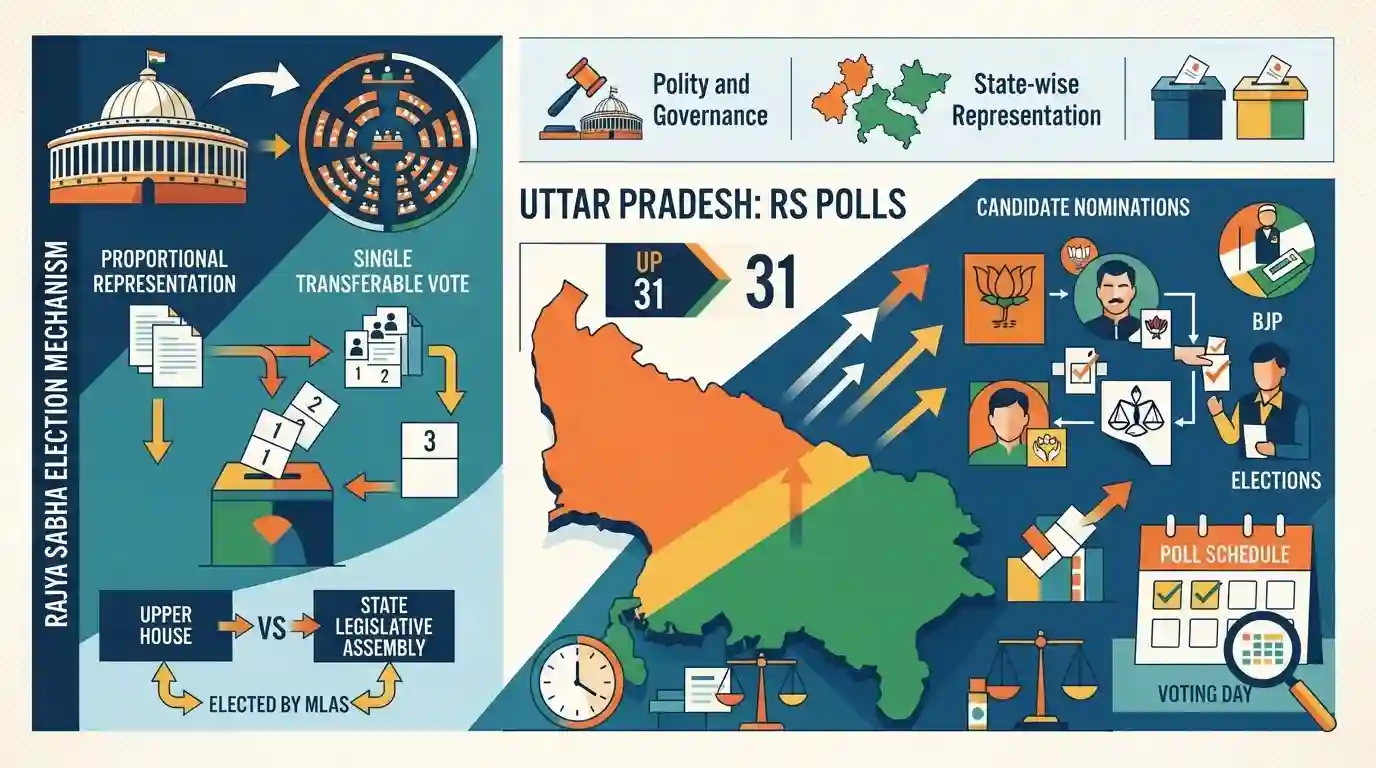
Why It Matters
Important for UPPSC aspirants tracking state-level political developments, parliamentary structure, and constitutional seat allocations for Uttar Pradesh.
Summary
The article details the Rajya Sabha elections scheduled in Uttar Pradesh, including BJP candidate nominations and poll scheduling, providing context on Upper House election mechanisms relevant to Indian polity.
Key Points
- Rajya Sabha elections and schedule announcements in Uttar Pradesh.
- BJP nominates candidates for the Upper House seats from UP.
- Involves understanding of Rajya Sabha seat allocation, electoral mechanics, and constitutional provisions.
Important Terms
Rajya Sabha

The Upper House of the Indian Parliament, representing states and union territories under Article 80, with members elected via proportional representation by state legislative assemblies.
UPSC context
GS Paper II (Indian Polity): Tests understanding of federal structure, bicameralism, and parliamentary procedures.
Election Commission of India
An autonomous constitutional body under Article 324 responsible for administering election processes in India for Parliament and State Legislatures.
UPSC context
GS Paper II (Polity & Governance): Tests constitutional bodies, electoral reforms, and free and fair elections.
Bharatiya Janata Party (BJP)
One of India's major national political parties, currently leading the ruling coalition at the Centre, which nominates candidates for parliamentary elections.
UPSC context
GS Paper II (Polity): Relevant for understanding political party dynamics, candidate selection processes, and multi-party democracy.
Prelims Trap
The 12 members nominated by the President to the Rajya Sabha participate in all legislative and executive election processes on par with elected members.
Aspirants often assume nominated members of the Rajya Sabha can vote in the Presidential election. Constitutionally, nominated members do not vote in Presidential elections, though they vote in Vice-Presidential elections.
Static Concepts Connected
What are the constitutional provisions and electoral mechanics governing the Rajya Sabha under the Indian Constitution?
- Strength Cap: Maximum Strength is capped at 250 members (238 from states/UTs and 12 nominated by the President).
- Fourth Schedule: Fourth Schedule allocates seats to States and UTs on the basis of population. Uttar Pradesh has the highest with 31 seats.
- Indirect Election: Election system uses proportional representation by means of the single transferable vote (STV) by elected MLAs.
- Permanent House: Permanent Body where one-third of members retire every second year; member term is six years.
Cross-Topic Patterns
Rajya Sabha Representation and Federalism Debates
Rajya Sabha seat allocation is governed by the Fourth Schedule, which links population size to parliamentary representation, intersecting with census delays and delimitation debates.
Proportional Representation in Bicameral Legislatures
Elections to the Upper House use proportional representation by single transferable vote, a mechanism also applied to Presidential and Legislative Council elections in UP.

UP legislative mechanics, Fourth Schedule seat allocations, and proportional representation voting rules are high-yield for UPPSC Prelims statements.
Linked PYQs · 1
Linked PYQs · 1
- 2025UPPSC_PRELIMSGS1
Match List - I with List - II and choose the correct answer using the code given below the lists. List-I (State): (A) Maharashtra (B) Karnataka (C) Bihar (D) Tamil Nadu List-II (Number of seats in Rajya Sabha): 1. 16 2. 18 3. 19 4. 12
