AI Surveillance Integration in Rajasthan Wildlife Sanctuaries
Source:hindustantimes ↗
Why It Matters
Crucial for RPSC RAS aspirants tracking e-governance, technological advancements in forest management, and biodiversity conservation in Rajasthan.
Summary
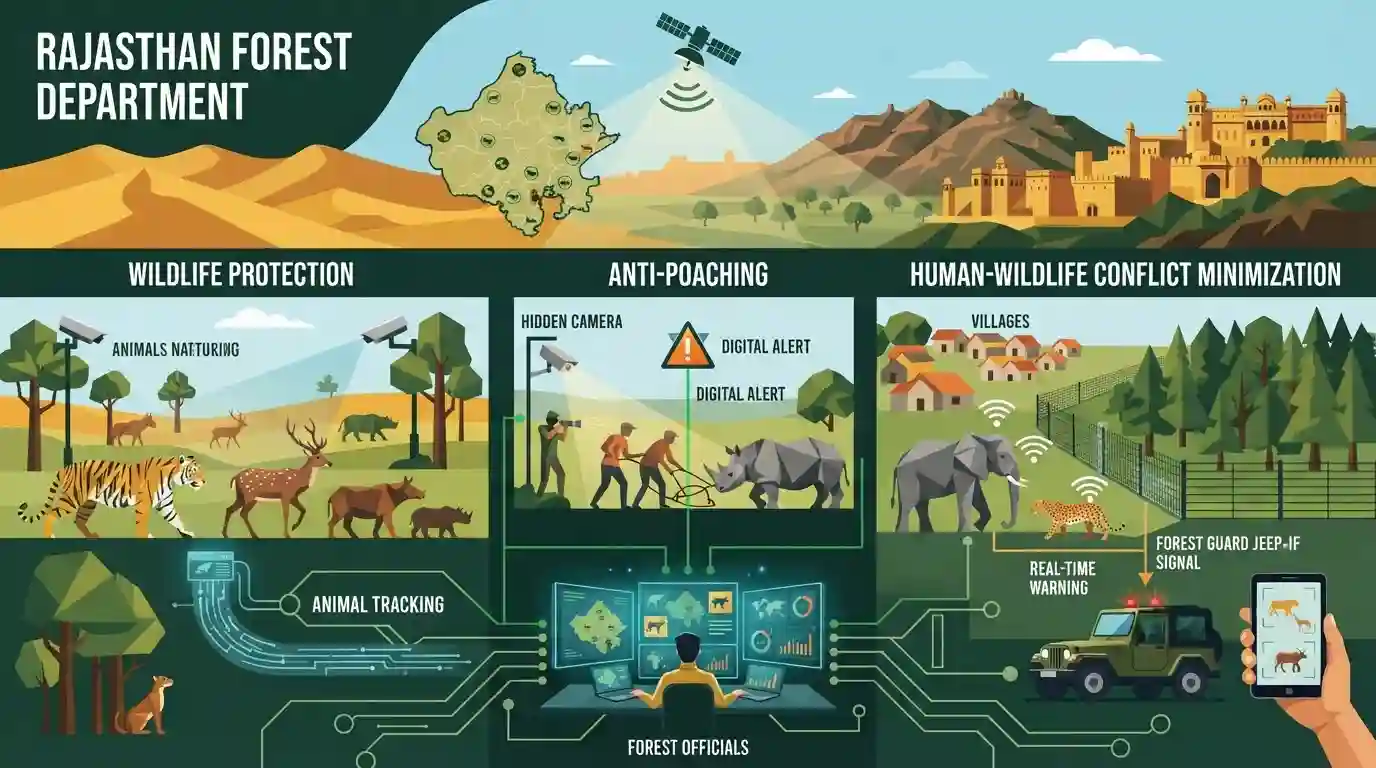
The Rajasthan Forest Department has announced plans to deploy Artificial Intelligence (AI)-based surveillance systems across major wildlife sanctuaries and tiger reserves in the state to boost wildlife protection, monitor poaching activities, and minimize human-wildlife conflict through automated and real-time tracking.
Key Points
- Rajasthan Forest Department is deploying AI-based surveillance systems in wildlife sanctuaries and national parks.
- The initiative aims to enhance wildlife monitoring, combat poaching, track animal movements, and manage human-wildlife conflict more effectively.
- It integrates modern technology like artificial intelligence and automated camera traps for real-time alerts.
Important Terms
Rajasthan Forest Department

The nodal state government department responsible for the protection, conservation, and management of forests, wildlife sanctuaries, and tiger reserves across Rajasthan.
UPSC context
Crucial for RPSC RAS Paper III (Environment & Biodiversity Conservation, Wildlife Management, and State Governance). Tests administrative initiatives in environmental protection.
RajCOMP Info Services Limited (RISL)
A state-owned IT consulting corporation under the Government of Rajasthan that implements critical e-governance and technological infrastructure projects, including AI-based surveillance in state wildlife sanctuaries.
UPSC context
Important for RPSC RAS Paper II/III (Information Technology and E-Governance in Rajasthan). Tests implementation agencies of state digital interventions.
AI-Based Surveillance in Wildlife Sanctuaries
The integration of machine learning, computer vision, and real-time data analytics into forest management systems to track wildlife movement, prevent poaching, and mitigate human-wildlife conflicts.
UPSC context
Important for RPSC RAS Paper III (Science & Tech applications and Environment Conservation). Tests emerging technological interventions in biodiversity protection.
Static Concepts Connected
What are the statutory provisions and apex bodies governing tiger reserves and wildlife in India?
- NTCA Statutory Status: NTCA is a statutory body under the Wildlife (Protection) Act, 1972, established in 2006 following Tiger Task Force recommendations.
- State Authority: Chief Wildlife Warden of the state heads the wildlife wing and is empowered under WLPA 1972 to manage sanctuaries.
- Recent Amendments: Wildlife (Protection) Amendment Act, 2022 empowers state governments to notify Conservation Reserves in consultation with local communities.
Cross-Topic Patterns
AI Wildlife Surveillance + State IT Governance
Integrating AI camera traps into tiger reserves links state tech infrastructure (RISL/DoIT&C) with national Project Tiger protocols under the National Tiger Conservation Authority (NTCA).
Biometric AI + Biodiversity Conservation
Leopard and tiger reserves utilizing biometric stripe identification connect wildlife ecology with advanced biometric computing and database management.

RPSC loves pairing specific Rajasthan sanctuary phases (e.g., Ramgarh Vishdhari) with technology initiatives like RISL camera traps.
Linked PYQs · 2
Linked PYQs · 2
- 2023RPSC_PRELIMSGS1
The National Tiger Conservation Authority has conferred the status of the fifth tiger sanctuary in Rajasthan, to which of the following sanctuaries?
- 2023RPSC_PRELIMSGS1
Where will the “Artificial Intelligence of Things Innovation Hub” be established in Rajasthan?
