Rajasthan launches conservation plans for wetlands and wildlife
Source:timesofindia-indiatimes ↗
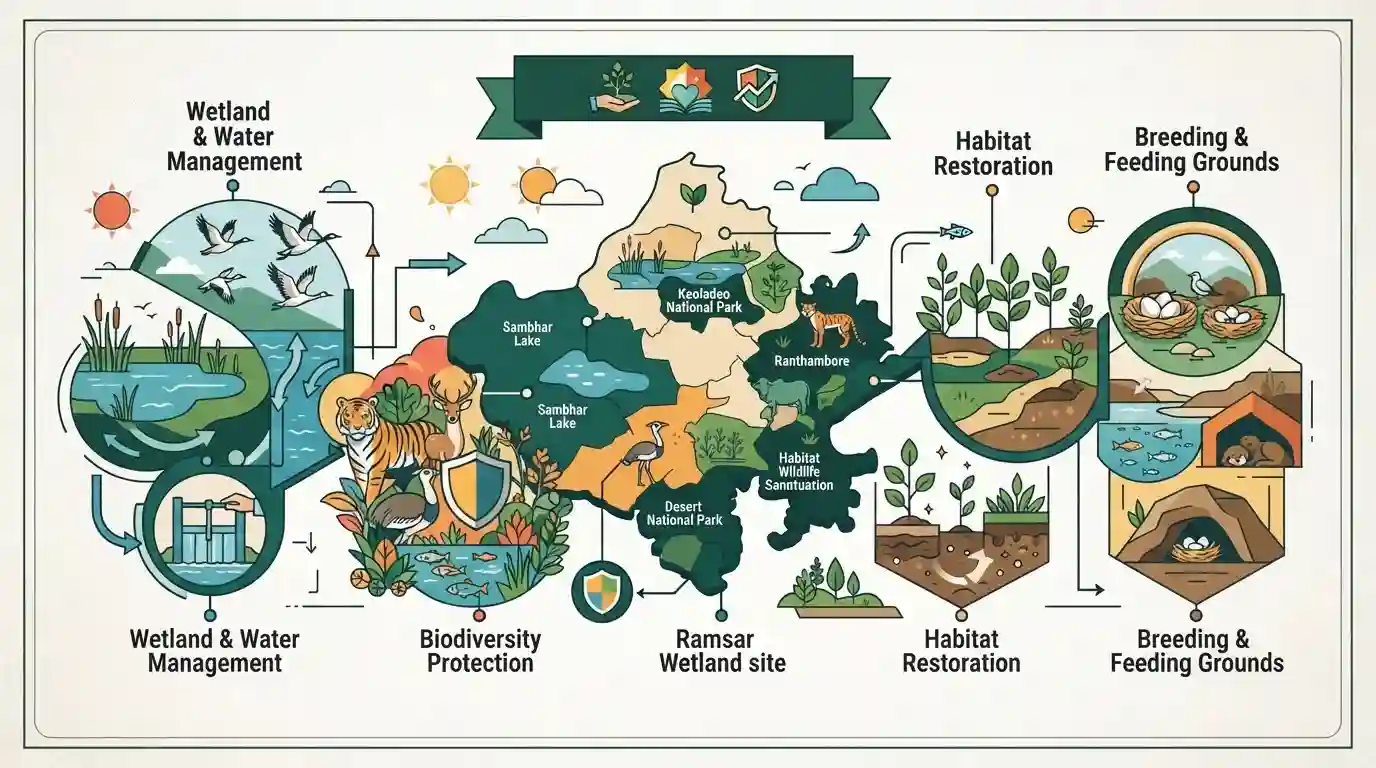
Why It Matters
Crucial for RPSC RAS aspirants tracking environmental governance, state-level biodiversity initiatives, wildlife management, and conservation policies within Rajasthan.
Summary
The Rajasthan government has introduced comprehensive conservation plans targeting critical wetlands and wildlife sanctuaries across the state. The initiative aims to enhance biodiversity protection, restore ecological habitats, manage water resources effectively, and secure safe breeding and feeding grounds for resident and migratory species.
Key Points
- The Rajasthan government has launched comprehensive conservation plans for key wetlands and wildlife sanctuaries to protect the state's biodiversity.
- The initiative focuses on habitat restoration, protection of migratory bird routes, and improving water retention and ecological balance in crucial protected zones.
- It aligns with ongoing efforts to safeguard critical wildlife habitats, including Ramsar sites like Sambhar Lake and important wildlife reserves across Rajasthan.
Important Terms
Wetland and Wildlife Sanctuary Conservation Plans

Comprehensive management frameworks initiated by the Rajasthan government to protect critical wetlands, restore ecological habitats, manage water resources, and secure safe breeding grounds for resident and migratory species.
UPSC context
RPSC RAS Paper III (Environment & Biodiversity): Tests knowledge of state-level conservation policies, ecosystem restoration, and wetland management in Rajasthan.
Ramsar Convention
An intergovernmental environmental treaty adopted in 1971 in Ramsar, Iran, for the conservation and sustainable use of wetlands of international importance, which includes prominent Rajasthan sites like Keoladeo Ghana and Sambhar Lake.
UPSC context
RPSC RAS Prelims/Mains: Tests international environmental agreements, Ramsar sites in Rajasthan, and wetland conservation strategies.
Rajasthan Forest Department
The primary state government body responsible for protecting and managing Rajasthan's forests, wildlife sanctuaries, national parks, and conservation reserves to preserve biodiversity and ecological balance.
UPSC context
RPSC RAS Paper III (Environment & Forestry): Tests administrative machinery and statutory bodies managing state natural resources and wildlife.
Prelims Trap
All state-protected wetlands automatically acquire international Ramsar Convention status upon notification.
Aspirants often confuse all state-level wetlands with Ramsar status. While Rajasthan has many vital wetlands, only specific sites like Keoladeo and Sambhar hold international Ramsar recognition.
Static Concepts Connected
What are the Ramsar Convention wetland sites located in Rajasthan?
- Keoladeo National Park: Keoladeo Ghana National Park, located in Bharatpur district, designated as a Ramsar site in 1981.
- Sambhar Salt Lake: Sambhar Lake, India's largest inland salt lake situated across Jaipur, Nagaur, and Ajmer districts, designated in 1990.
Cross-Topic Patterns
Wetlands + International Environmental Conventions
Rajasthan's wetland push intersects with the National Wetland Conservation Programme (NWCP) and the Ramsar Convention's international treaty obligations for trans-boundary migratory birds.
Sanctuary Conservation + Local Livelihoods
Habitat restoration plans in sanctuaries directly impact ecotourism revenues and pastoralist grazing rights managed under the Rajasthan Forest Act.

RPSC 2024-25 often couples Ramsar sites in Rajasthan with specific geographic districts in matching-type questions. Expect Sambhar and Keoladeo tests.
Linked PYQs · 2
Linked PYQs · 2
- 2016RPSC_PRELIMSGS1
Which lake in Rajasthan has been included in the Ramsar Wetlands List?
- 2023RPSC_PRELIMSGS1
The National Tiger Conservation Authority has conferred the status of the fifth tiger sanctuary in Rajasthan, to which of the following sanctuaries?
