Surveillance Infrastructure and Passenger Safety in Indian Railways
Source:Indian Express ↗
Why It Matters
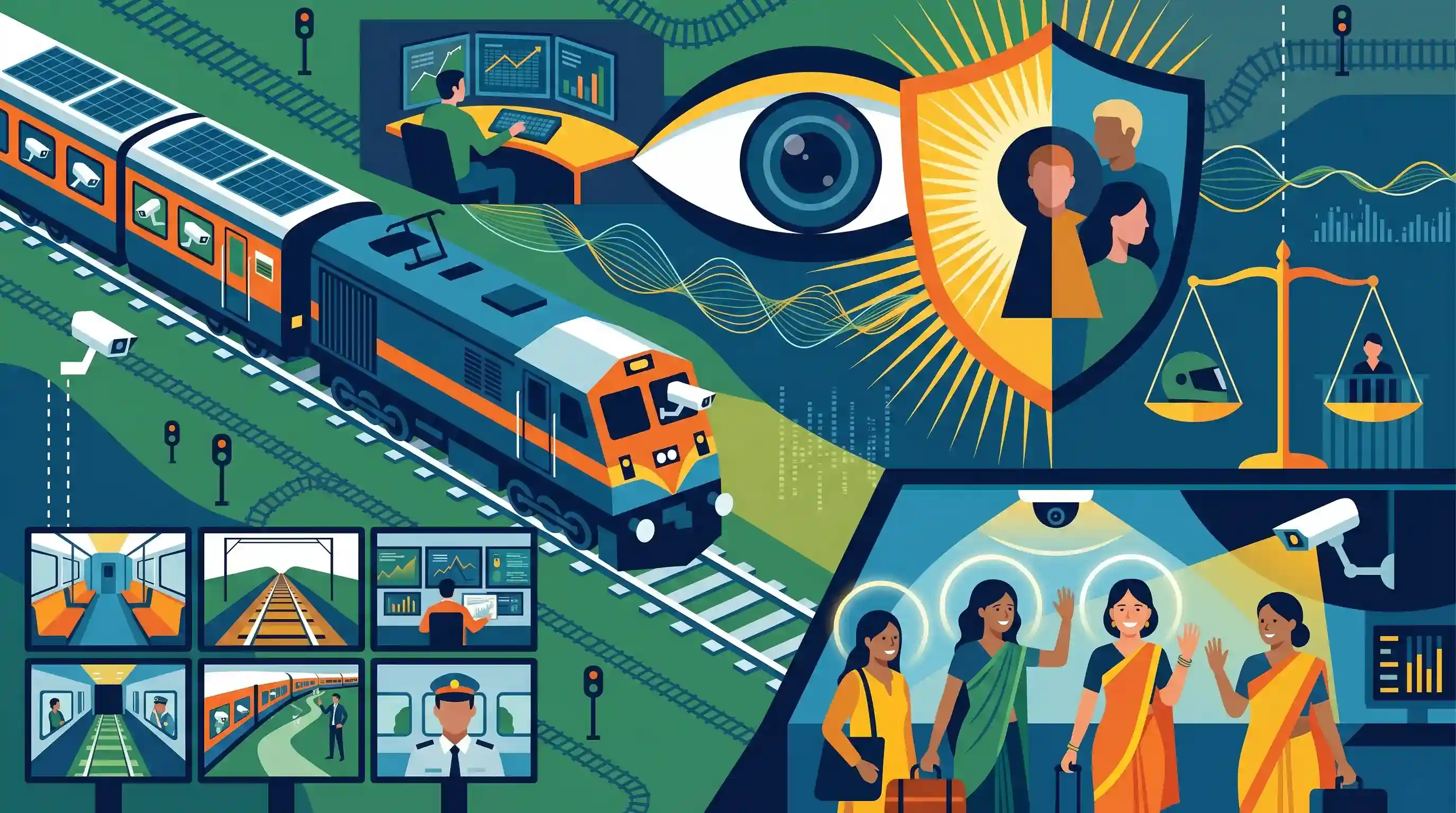
The deployment of CCTVs highlights the ongoing modernization of Indian Railways to prevent accidents and crimes. It provides a practical case study for UPSC aspirants on balancing technological surveillance for public safety against the constitutional Right to Privacy.
Summary
The Indian Railways has initiated a comprehensive plan to install CCTV cameras in all passenger coaches and locomotives. This modernization effort is aimed at enhancing passenger security, deterring crimes (including offenses against women), and aiding in the investigation of accidents and derailments by monitoring track conditions and crew actions. While this infrastructure upgrade supplements other safety measures like the 'Kavach' system, the mass deployment of surveillance technology in public spaces raises important debates around balancing public security with the fundamental Right to Privacy guaranteed under Article 21 of the Constitution.
Key Points
- Indian Railways is installing CCTV cameras across all passenger coaches and locomotives to significantly enhance safety and security.
- Locomotive CCTVs will record track conditions and crew actions, acting as a crucial tool for post-accident and derailment investigations.
- In passenger coaches, the cameras aim to deter crimes such as theft, vandalism, and harassment, particularly bolstering women's safety in public transit.
- This initiative is part of a broader infrastructure modernization drive, complementing automated safety technologies like the Kavach train protection system.
- Widespread deployment of surveillance in public transport necessitates balancing enhanced security with the fundamental Right to Privacy under Article 21.
Important Terms
Kavach

Indigenous Automatic Train Protection (ATP) system using RFID technology to prevent collisions by automatically applying brakes if signals are ignored.
UPSC context
GS III (Infrastructure/S&T); crucial for rail safety modernization and preventing human error in accidents.
Right to Privacy (Article 21)
A fundamental right under Article 21 ensuring individual autonomy and protection against unauthorized state surveillance, established by the Puttaswamy judgment (2017).
UPSC context
GS II (Polity); central to the debate on balancing public security with civil liberties.
STQC (Standardization Testing and Quality Certification)
An organization under MeitY providing quality assurance and cybersecurity certification for electronic and IT products used in national infrastructure.
UPSC context
GS III (Science & Technology); ensures reliability and security of electronic systems like railway surveillance.
IndiaAI Mission
A comprehensive government initiative to foster an AI ecosystem, including compute infrastructure and application of AI in public services like railways.
UPSC context
GS III (Science & Technology); focuses on tech-driven governance and AI integration in safety monitoring.
LHB Coaches
Modern, anti-climbing railway coaches designed for high-speed travel and enhanced passenger safety compared to traditional ICF models.
UPSC context
GS III (Infrastructure); part of the modernization of India's rolling stock and safety standards.
Prelims Trap
Kavach system utilizes locomotive CCTV cameras for automated train collision avoidance.
Kavach uses Radio Frequency Identification (RFID) and UHF communication to detect train proximity and brake automatically. It does not use optical CCTV cameras to function.
Static Concepts Connected
What is the 'Kavach' system and how does it function?
- Indigenous ATP: It is India's domestically developed Automatic Train Protection (ATP) system, designed by the RDSO (Research Design and Standards Organisation).
- Working Principle: Uses Ultra High Frequency (UHF) radio communication and RFID tags placed on tracks to prevent Signal Passing At Danger (SPAD) and collisions.
- Automatic Braking: Automatically applies the train's brakes if the locomotive pilot fails to respond to speed limits or impending danger signals.
How does the Judiciary balance State surveillance with the Right to Privacy?
- Puttaswamy Judgment: The 2017 ruling declared the Right to Privacy a fundamental right under Article 21, but clearly stated it is not an absolute right.
- Proportionality Test: Any State intrusion into privacy must have legislative backing, a legitimate state aim (such as public security), and be proportionate to the objective.
Cross-Topic Patterns
Public Transport Security & Nirbhaya Fund
Railway CCTV projects are heavily funded by the non-lapsable Nirbhaya Fund, linking internal security infrastructure directly with gender-budgeting and women's empowerment initiatives.
Tech Modernization vs. Article 21 Privacy
Mass railway CCTVs mirror controversies around facial recognition systems and DNA profiling, highlighting the recurring theme of state security imperatives clashing with data protection laws.

Expect a multi-statement Prelims question mixing Kavach's RFID/UHF tech with the Right to Privacy proportionality test and Nirbhaya Fund.
Linked PYQs · 5
Linked PYQs · 5
- 2025PrelimsGS1
Consider the following statements : I. Indian Railways have prepared a National Rail Plan (NRP) to create a 'future ready' railway system by 2028. II. 'Kavach' is an Automatic Train Protection system developed in collaboration with Germany. III. 'Kavach' system consists of RFID tags fitted on track in station section. Which of the statements given above are not correct?
- 2024PrelimsGS1
Under which of the following Articles of the Constitution of India, has the Supreme Court of India placed the Right to Privacy ?
- 2021PrelimsGS1
'Right to Privacy' is protected under which Article of the Constitution of India?
- 2018PrelimsGS1
Right to Privacy is protected as an intrinsic part of Right to Life and Personal Liberty. Which of the following in the Constitution of India correctly and appropriately imply the above statement?
- 2024MainsGS2
Right to privacy is intrinsic to life and personal liberty and is inherently protected under Article 21 of the constitution. Explain. In this reference discuss the law relating to D.N.A. testing of child in the womb to establish its paternity.
