Medical Tourism and AYUSH Highlight India Soft Power Diplomacy
Source:The Hindu ↗
Why It Matters
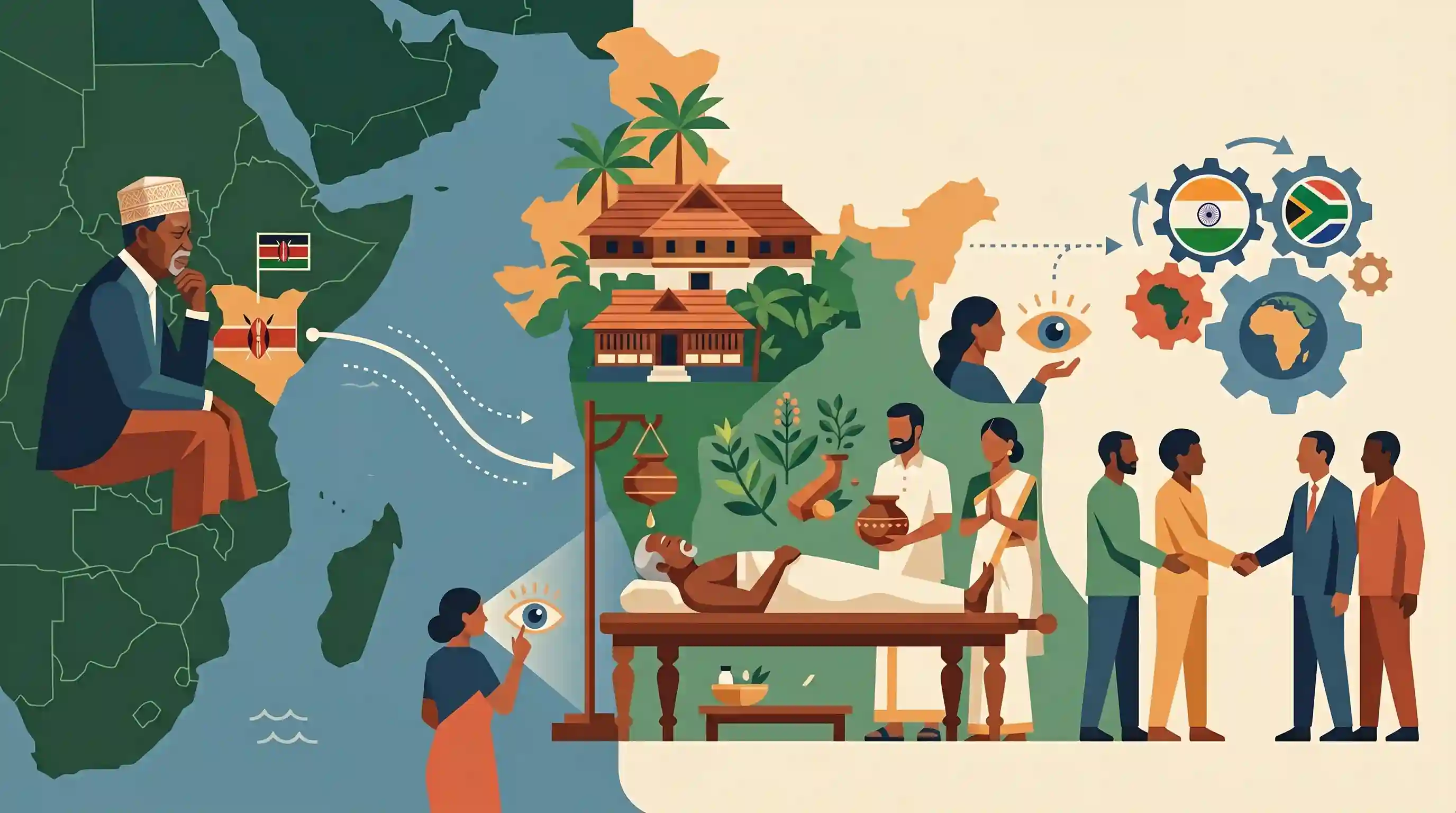
The fact that a prominent African leader sought traditional medical care in India illustrates the global reach of the AYUSH sector and medical tourism. It serves as a practical example of India's soft power diplomacy, deepening people-to-people and diplomatic ties between India and African nations.
Summary
Former Kenyan Prime Minister Raila Odinga passed away at 80 following a cardiac failure while undergoing Ayurvedic treatment in Kerala, India. Odinga had sought traditional medical care in the state to recover from a stroke after initial treatment in Mumbai. The family had prior connections to the facility, as his daughter successfully regained her vision there following optic nerve damage in 2017. The incident underlines the growing significance of India's medical tourism sector and traditional medicine systems (AYUSH) as a potent tool for soft power diplomacy, particularly in strengthening bilateral ties with African nations.
Key Points
- Former Kenyan Prime Minister Raila Odinga died at the age of 80 due to cardiac failure while seeking treatment at an Ayurvedic hospital in Kerala.
- He was undergoing Ayurvedic therapy for post-stroke recovery after receiving initial allopathic treatment in Mumbai.
- The leader's choice of healthcare in India stems from his daughter Rosemary's successful treatment for optic nerve damage at the same Ayurvedic center in 2017.
- The presence of prominent African leaders seeking medical care in India highlights the country's soft power and emergence as a premier hub for medical tourism and traditional systems of medicine like AYUSH.
Important Terms
Medical Value Travel (MVT)

The practice of traveling across international borders to receive medical care. It integrates modern allopathy with traditional AYUSH systems to provide cost-effective, high-quality healthcare to global patients.
UPSC context
GS Paper 2 (Health/Governance) and GS Paper 3 (Economy). Focuses on India's potential as a global healthcare hub.
AYUSH
An acronym for Ayurveda, Yoga & Naturopathy, Unani, Siddha, and Homoeopathy; traditional Indian medical systems overseen by the Ministry of AYUSH to promote holistic healthcare and global standardization.
UPSC context
GS Paper 2 (Health). Crucial for healthcare diversification, indigenous knowledge systems, and cultural soft power.
Soft Power Diplomacy
A diplomatic strategy using cultural or humanitarian appeal, such as traditional medicine or "Vaccine Maitri," to influence international relations and build global goodwill without coercion.
UPSC context
GS Paper 2 (International Relations). Key to India’s "Global South" leadership and bilateral ties with African nations.
Heal in India
A flagship government initiative to position India as a premier health and wellness destination. It streamlines services for international patients through a dedicated digital portal and infrastructure upgrades.
UPSC context
GS Paper 2 (Government Schemes). Tests knowledge of health policy and efforts to boost the service sector.
Ayush Visa
A specialized visa category introduced in 2023 for foreign nationals seeking traditional Indian medical treatments, including Ayurveda and Yoga, to facilitate easier access for medical tourists.
UPSC context
GS Paper 2 (Policy/Governance). Represents ease-of-doing-business and sector-specific diplomatic tools.
Sreedhareeyam Ayurvedic Eye Hospital
A specialized Kerala-based Ayurvedic hospital-cum-research centre famous for treating complex ocular conditions. It gained global attention for treating high-profile international figures like the daughter of Kenya's Raila Odinga.
UPSC context
GS Paper 2 (Health/IR). Serves as a specific case study for the global efficacy of Indian traditional medicine.
Prelims Trap
"The National Medical and Wellness Tourism Board functions under the Ministry of Health and Family Welfare."
The board is actually constituted by the Ministry of Tourism and chaired by the Minister of Tourism, aiming to link healthcare with hospitality.
Static Concepts Connected
What are the key pillars of the 'Heal in India' initiative?
- Global Hub: Positions India as a premier global destination for Medical Value Travel (MVT), blending modern allopathic care with traditional medicine.
- Ayush Visa: A dedicated visa category specifically introduced for foreign nationals seeking treatment under Indian traditional medicine systems.
- Ayush Mark: A standard certification mark ensuring the quality, safety, and authenticity of traditional Indian medicine products worldwide.
How is Medical Value Travel (MVT) institutionally supported in India?
- Institutional Board: The National Medical and Wellness Tourism Board, under the Ministry of Tourism, acts as the umbrella promotional body for MVT.
- Champion Services Scheme: Under this scheme, the Ministry of Ayush provides interest subsidies to private investors to establish AYUSH-based super-specialty hospitals and day-care centers.
Cross-Topic Patterns
Medical Diplomacy vs Chinese Aid
India leverages affordable healthcare, pharma, and AYUSH in Africa as benign South-South cooperation, contrasting sharply with China's resource-backed infrastructure loans and debt-trap diplomacy.
Services Export + Health Infrastructure
Medical Value Travel (MVT) inherently links healthcare with hospitality, aviation, and foreign exchange, making AYUSH a critical booster for India's broader services sector exports.

Mains 2026 could feature India's 'Health Diplomacy' in Africa, contrasting AYUSH/pharma exports with traditional aid models.
Linked PYQs · 3
Linked PYQs · 3
- 2021MainsGS2
If the last few decades were of Asia's growth story, the next few are expected to be of Africa's.” In the light of this statement, examine India's influence in Africa in recent years.
- 2025MainsGS2
India-Africa digital partnership is achieving mutual respect, co-development and long-term institutional partnerships. Elaborate.
- 2015MainsGS2
Terrorist activities and mutual distrust have clouded India-Pakistan relations. To what extent the use of soft power like sports and cultural exchanges could help generate goodwill between the two countries? Discuss with suitable examples.
