Rabies Data Discrepancies Highlight Public Health Surveillance Gaps
Source:The Hindu ↗
આ શા માટે મહત્વનું છે
Understanding public health data discrepancies and disease surveillance gaps is vital for effective health policy formulation, resource allocation, and strengthening grassroots health delivery systems in India.
સારાંશ
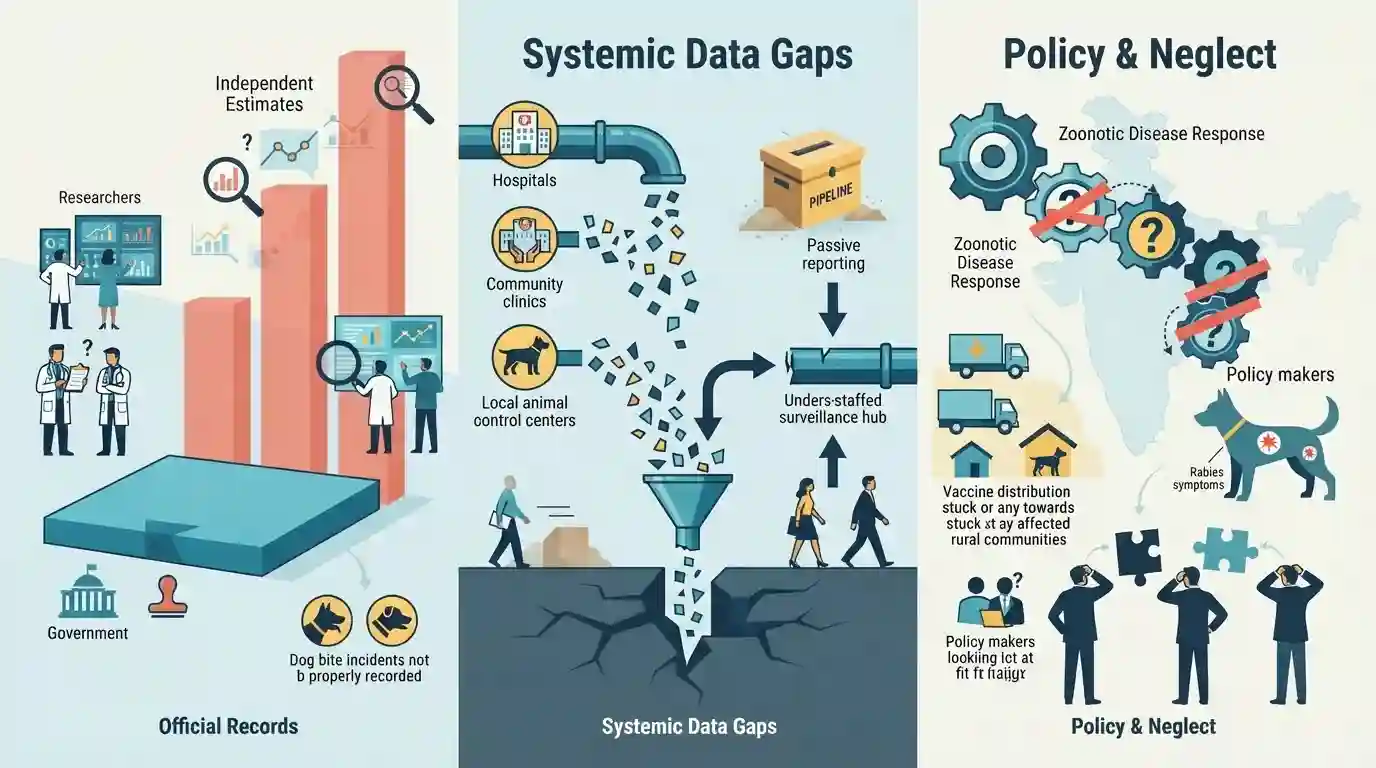
This article examines the stark contrast between India's official rabies death records and independent epidemiological estimates. It highlights critical systemic gaps in India's public health data collection, disease surveillance systems (such as passive reporting and lack of mandatory notification), and the resulting policy challenges in tackling neglected zoonotic diseases like rabies.
મુખ્ય મુદ્દા
- India's official rabies mortality figures differ significantly from independent scientific estimates due to under-reporting, misdiagnosis, and structural gaps in health surveillance.
- Rabies is almost 100% fatal once symptoms manifest, but it is 100% preventable through timely post-exposure prophylaxis (PEP) and animal vaccination.
- Systemic challenges including lack of mandatory notification for rabies, reliance on passive surveillance, and poor last-mile data collection lead to vast discrepancies in public health data.
- Strengthening grassroots public health architecture, improving community awareness, and integrating animal-human health monitoring (One Health approach) are crucial to addressing the burden.
મહત્વપૂર્ણ શબ્દો
National Rabies Control Programme

A central sector initiative implemented by the Ministry of Health and Family Welfare to prevent and control rabies in India, aiming for zero human rabies deaths by 2030 through mass dog vaccination and free post-exposure prophylaxis.
UPSC context
UPSC Mains Paper II (Health Policies & Governance): Evaluates India's interventions and strategies for tackling neglected zoonotic diseases and meeting global elimination targets.
Integrated Disease Surveillance Programme
A nationwide decentralized surveillance system established by the Ministry of Health and Family Welfare to monitor disease trends, detect outbreaks early, and facilitate timely public health interventions across India.
UPSC context
UPSC Mains Paper II (Public Health Systems): Important for questions on disease surveillance data gaps, reporting mechanisms, and epidemiological infrastructure in India.
World Health Organization (WHO)
The specialized United Nations agency responsible for international public health, which sets global norms, issues treatment guidelines, and coordinates the 'Zero by 30' global strategic plan to eliminate human rabies deaths.
UPSC context
UPSC Mains Paper II (International Organizations): Tests the role of global multilateral bodies in shaping national health policies and disease control targets.
સંલગ્ન સ્થિર ખ્યાલો
What are the key differences between Active and Passive Disease Surveillance systems in India?
- Active Surveillance: Active surveillance involves health workers proactively searching for cases in communities, yielding higher accuracy but requiring intensive resources and manpower.
- Passive Surveillance: Passive surveillance relies on patients visiting health facilities and providers reporting cases; it is cost-effective but prone to severe under-reporting.
- Systemic Gaps: Integration challenges include reliance on understaffed primary health centers and missing private sector records in passive reporting loops.
આંતર-વિષય પેટર્ન
Public Health Data vs. Seventh Schedule Federalism
Zoonotic disease management intersects with federalism as public health is a State subject under the Seventh Schedule, complicating nationwide enforcement of notifiable disease rules.
One Health & Inter-Ministerial Governance Gaps
The One Health framework bridges animal husbandry and human health ministries, testing inter-ministerial coordination on neglected tropical diseases.

Expect statement-based Qs linking passive surveillance data discrepancies with India's NAPRE 2030 targets and notifiable disease mandates.
સંલગ્ન PYQ · 1
સંલગ્ન PYQ · 1
- 2024MainsGS2
In a crucial domain like the public healthcare system the Indian State should play a vital role to contain the adverse impact of marketisation of the system. Suggest some measures through which the State can enhance the reach of public healthcare at the grassroots level.
