Ras Laffan LNG Facility Attacks and India Energy Security Risks
Source:Indian Express ↗
Why It Matters
This incident perfectly illustrates the nexus between international geopolitics and India's domestic energy security, a recurring theme in UPSC Mains. It provides a contemporary case study for questions on India's strategic energy policies, relations with West Asia, and the economic impacts of supply chain shocks (force majeure).
Summary
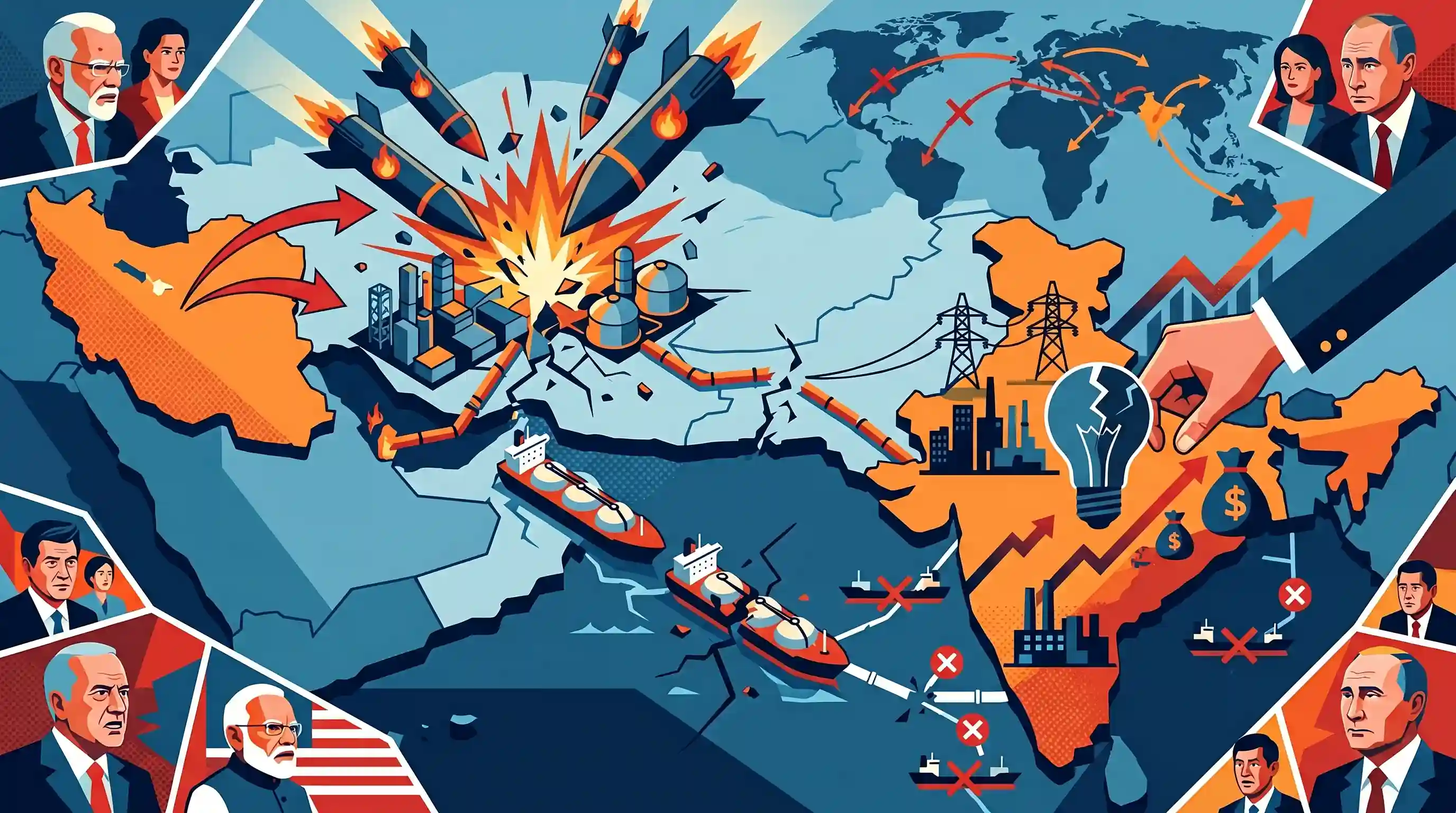
The article discusses the significant geopolitical and economic fallout resulting from Iran's strikes on Qatar's Ras Laffan, a critical global Liquefied Natural Gas (LNG) hub. The attack threatens QatarEnergy's LNG supplies to India, potentially triggering a 'force majeure' clause that excuses non-performance of supply contracts. This poses a severe risk to India's energy security, given its heavy reliance on Middle Eastern LNG imports. The incident exposes the vulnerability of global energy supply chains to regional conflicts and could cause long-term natural gas shortages and price volatility in India, reinforcing the need for energy diversification.
Key Points
- Geopolitical Conflict: Iran's strikes on Qatar's key 'Gas Capital', Ras Laffan, escalate tensions in West Asia and threaten critical global energy infrastructure.
- Energy Security Risk: India is heavily dependent on Qatar for Liquefied Natural Gas (LNG) imports. Physical disruptions at Ras Laffan severely jeopardize India's natural gas supply.
- Economic Impact: The disruption is described as a potential $20 billion blow to global energy markets, creating the risk of a multi-year freeze on consistent LNG supplies for India.
- Force Majeure: The potential invocation of force majeure in international trade contracts could excuse QatarEnergy from its delivery obligations due to the unforeseen attack, leaving Indian markets vulnerable to acute shortages and price volatility.
- Strategic Imperative: The crisis highlights the vulnerability of global energy supply chains to Middle Eastern conflicts, underscoring the urgent need for India to diversify its energy import basket and build strategic reserves.
Important Terms
Force Majeure

A legal clause excusing a party from contractual obligations due to extraordinary, unforeseeable events beyond their control, such as war, strikes, or natural disasters, preventing contract performance.
UPSC context
GS Paper 2 (International Relations) & Paper 3 (Economy); tests knowledge of international trade law and legal shields during global supply chain shocks.
QatarEnergy
The state-owned petroleum company of Qatar, it is the world’s leading producer of Liquefied Natural Gas (LNG) and a primary strategic energy partner for India.
UPSC context
GS Paper 2 (International Relations); critical for understanding India-West Asia energy diplomacy and the impact of regional instability on national energy imports.
Ras Laffan
A strategic industrial city in Qatar and the world's largest export hub for Liquefied Natural Gas, processing output from the massive offshore North Field.
UPSC context
GS Paper 1 (Geography) & Paper 3 (Energy Security); identifies key global infrastructure hubs and their vulnerability to regional geopolitical conflicts.
Petroleum and Natural Gas Regulatory Board (PNGRB)
The Indian statutory body responsible for regulating the midstream and downstream petroleum and natural gas sectors to ensure competitive markets and protect consumer interests.
UPSC context
GS Paper 3 (Economy); important for studying Indian regulatory frameworks that manage domestic energy distribution and infrastructure during international crises.
Strait of Hormuz
A narrow, strategically vital waterway connecting the Persian Gulf to the Gulf of Oman, serving as a primary transit route for global oil and LNG shipments.
UPSC context
GS Paper 1 (World Geography) & Paper 2 (Geopolitics); essential for analyzing maritime security, trade chokepoints, and India's strategic maritime interests.
Energy Security
The reliable availability of energy sources at an affordable price, encompassing long-term structural diversification and short-term resilience to sudden supply disruptions or price volatility.
UPSC context
GS Paper 3 (Infrastructure); a core concept for questions on resource management, import dependency, and India’s goal of achieving energy self-reliance.
Prelims Trap
Qatar is India's top supplier of both crude oil and Liquefied Natural Gas (LNG).
Qatar is India's largest LNG supplier, but Russia, Iraq, and Saudi Arabia dominate crude oil imports. UPSC often combines these commodities to create false statements.
Static Concepts Connected
What is the strategic geography of Qatar's LNG exports?
- Persian Gulf Hub: Ras Laffan is a major industrial city situated on Qatar's Persian Gulf coast. It processes gas extracted from the massive North Field, shared with Iran.
- Strait of Hormuz: This narrow chokepoint connecting the Persian Gulf to the Gulf of Oman is the mandatory transit route for approximately 60% of India's LNG imports.
What is the status of Natural Gas in India's energy mix?
- Current Share: Natural gas currently accounts for only about 6% of India's primary energy mix, which is significantly lower than the global average of roughly 24%.
- 2030 Target: The Indian government has officially targeted increasing the share of natural gas to 15% by 2030 to transition toward a less carbon-intensive economy.
- High Import Dependency: India imports roughly 50% of its total natural gas consumption in the form of LNG, relying heavily on long-term contracts rather than spot markets.
Cross-Topic Patterns
Strategic Gas Reserves vs SPRs
While India has Strategic Petroleum Reserves for crude oil, the lack of strategic LNG storage amplifies economic vulnerability to sudden Middle East supply disruptions.
Force Majeure + Trade Vulnerability
Geopolitical strikes triggering commercial 'force majeure' clauses expose the limits of long-term purchase agreements in guaranteeing energy security during active regional conflicts.

Expect a Prelims map question pairing West Asian ports (Ras Laffan, Hormuz) with statements on India's 15% gas-based economy target.
Linked PYQs · 3
Linked PYQs · 3
- 2017MainsGS2
The question of India's Energy Security constitutes the most important part of India's economic progress. Analyze India's energy policy cooperation with West Asian countries.
- 2024MainsGS2
Discuss the geopolitical and geostrategic importance of Maldives for India with a focus on global trade and energy flows. Further also discuss how this relationship affects India's maritime security and regional stability amidst international competition ?
- 2025PrelimsGS1
Consider the following activities : I. Production of crude oil II. Refining, storage and distribution of petroleum III. Marketing and sale of petroleum products IV. Production of natural gas How many of the above activities are regulated by the Petroleum and Natural Gas Regulatory Board in our country?
