Pune Riverfront Development Sparks Ecological Concerns Over Flooding
Source:Indian Express ↗
Why It Matters
The Pune RFD controversy serves as an excellent case study for UPSC aspirants on the conflict between urban infrastructure 'beautification' and ecological conservation. It directly ties into GS-3 topics like EIA, urban flooding, and environmental degradation, as well as GS-2 topics involving citizen participation and the role of environmental NGOs in governance.
Summary
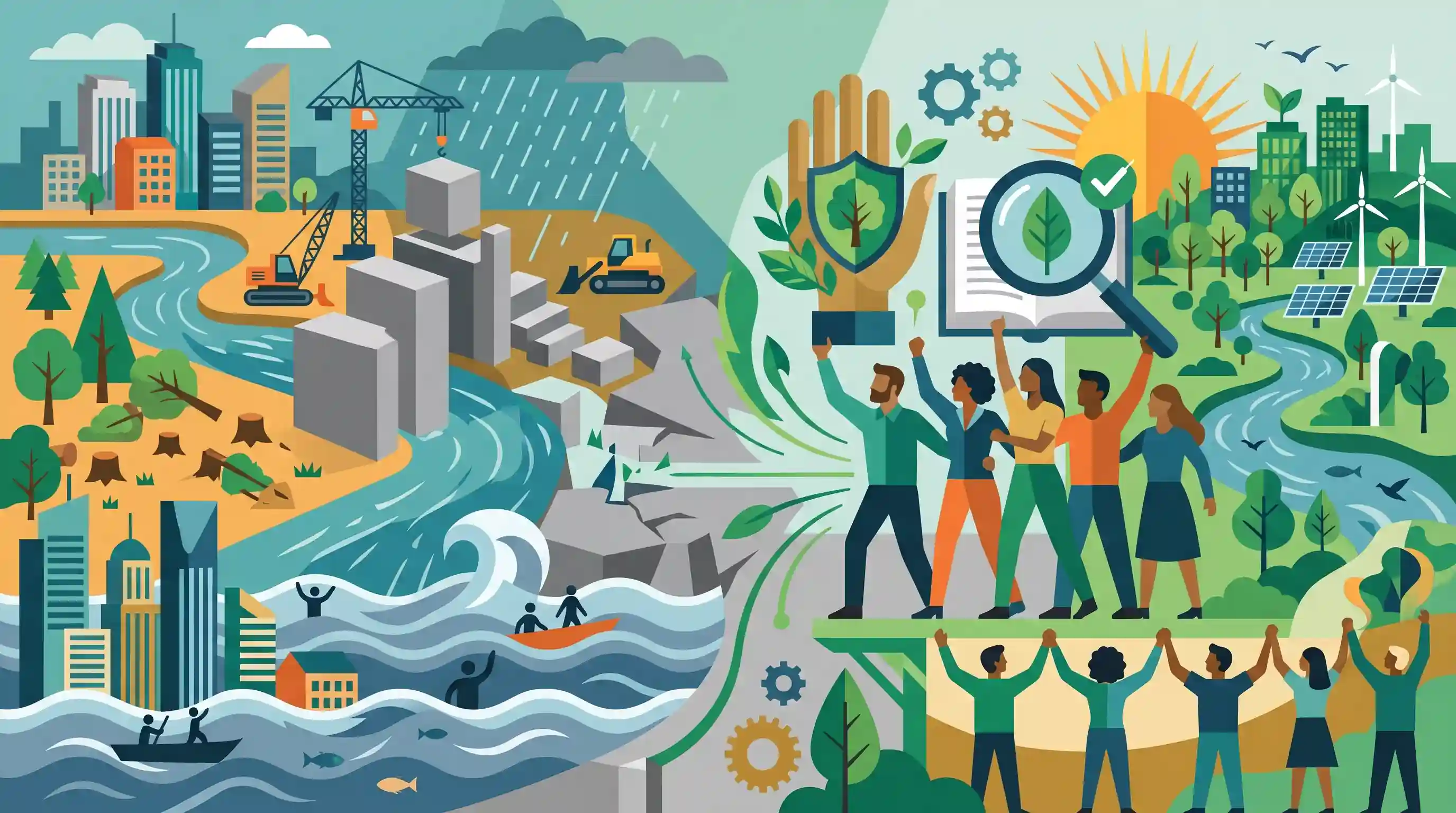
Pune citizens have escalated their opposition to the Mula-Mutha River Front Development (RFD) project by approaching the Union Jal Shakti Minister. Environmentalists argue that the project, pushed by the Pune Municipal Corporation, threatens the riverine ecology through massive concretization, tree felling, and the destruction of natural riparian buffers. They warn that altering the river's hydrology will severely increase the risk of urban flooding. This civic pushback emphasizes the critical need for sustainable urban planning, genuine ecological restoration over cosmetic beautification, and the indispensable role of civil society in demanding transparency and rigorous Environmental Impact Assessments (EIAs) for large-scale infrastructure projects.
Key Points
- Citizens and environmentalists in Pune have appealed to the Union Jal Shakti Minister to intervene regarding the ongoing Mula-Mutha River Front Development (RFD) project.
- Major concerns include the destruction of the natural riparian zone, large-scale felling of trees, and extensive concretization of river banks, which experts warn will exacerbate urban flooding risks.
- The agitation highlights the vital role of civil society in scrutinizing urban infrastructure projects and demanding rigorous Environmental Impact Assessments (EIA).
- The RFD controversy reflects the broader 'development versus ecology' debate, questioning whether aesthetic riverfront beautification should come at the cost of natural hydrological cycles and environmental sustainability.
Important Terms
Pune River Front Development (RFD) Project

A ₹4,727-crore project by Pune Municipal Corporation to revamp 44 km of the Mula-Mutha riverbanks. Critics argue its concretization strategy increases urban flooding risks and destroys natural riparian ecosystems.
UPSC context
GS3: Environment/Disaster Management; GS1: Urbanization. Illustrates conflicts between urban infrastructure development and ecological preservation.
Environmental Impact Assessment (EIA)
A statutory process under the Environment (Protection) Act, 1986, used to evaluate potential environmental consequences of proposed projects before approval, ensuring sustainable development and community involvement.
UPSC context
GS3: Environment. High-priority topic for Prelims (regulatory framework) and Mains (transparency and procedural compliance).
National Green Tribunal (NGT)
A specialized quasi-judicial body established under the NGT Act 2010 for the effective and expeditious disposal of cases relating to environmental protection and conservation of forests.
UPSC context
GS2: Statutory bodies; GS3: Environment. Crucial for understanding environmental justice and judicial activism in India.
Ministry of Jal Shakti
Formed in 2019 by merging the Water Resources and Drinking Water ministries, it oversees integrated water management, river rejuvenation (e.g., Namami Gange), and national water security.
UPSC context
GS2: Government Policies; GS3: Water Resources. Key for schemes like Jal Jeevan Mission and river basin management.
Pune Municipal Corporation (PMC)
The local governing body responsible for Pune's urban infrastructure. Its role in the RFD project highlights the powers and environmental responsibilities of Urban Local Bodies under the 74th Amendment.
UPSC context
GS2: Local Governance. Tests understanding of municipal functions and public accountability in large-scale urban projects.
Urban Flooding
Inundation in a built environment caused by intense rainfall overwhelming drainage systems. The Pune RFD project is criticized for potentially worsening this through riverbed narrowing and concretization.
UPSC context
GS3: Disaster Management. A critical, recurring topic concerning urban planning failures and climate change adaptation.
Prelims Trap
"The National River Conservation Directorate (NRCD) operates under the Ministry of Environment, Forest and Climate Change."
Aspirants assume river conservation is strictly a MoEFCC portfolio. However, the NRCD was transferred to the Ministry of Jal Shakti, though EIA clearances remain under MoEFCC.
Static Concepts Connected
How does the Mula-Mutha river connect to the peninsular drainage system?
- Confluence: The Mula and Mutha rivers originate in the Sahyadri ranges and join in Pune to form the Mula-Mutha river.
- Tributary of Bhima: The Mula-Mutha flows east and empties into the Bhima River.
- Krishna Basin: The Bhima River is a major left-bank tributary of the Krishna River, making the Mula-Mutha a vital sub-catchment of the larger Krishna basin.
What are Riparian Buffers and why are they critical in urban ecology?
- Transitional Zones: They are naturally vegetated transitional zones situated between terrestrial land and river ecosystems.
- Flood Mitigation: They act as natural sponges, absorbing excess surface runoff and significantly preventing rapid flash floods during monsoons.
- Erosion & Filtration: Their deep root systems stabilize riverbanks against erosion and filter out urban pollutants before they can enter the water channel.
Cross-Topic Patterns
Urban Flooding vs. Riverfront Projects
Projects like the Sabarmati, Gomti, and now Mula-Mutha RFDs share a pattern: concretizing floodplains reduces groundwater recharge, heavily linking aesthetic development to GS-1/GS-3 urban flooding vulnerabilities.
EIA Public Consultation Deficits
Civic protests in Pune highlight systemic issues in the EIA framework, where mandatory public consultations are frequently diluted or bypassed for large-scale municipal infrastructure projects.

Expect a 2026 prelims map question on Krishna tributaries (Bhima, Mula-Mutha) or a GS-3 mains query on riverfront concretization.
Linked PYQs · 4
Linked PYQs · 4
- 2024MainsGS3
What role do environmental NGOs and activists play in influencing Environmental Impact Assessment (EIA) outcomes for major projects in India? Cite four examples with all important details.
- 2024MainsGS3
Flooding in urban areas is an emerging climate-induced disaster. Discuss the causes of this disaster. Mention the features of two such major floods in the last two decades in India. Describe the policies and frameworks in India that aim at tackling such floods.
- 2024MainsGS3
Industrial pollution of river water is a significant environmental issue in India. Discuss the various mitigation measures to deal with this problem and also the government's initiatives in this regard.
- 2021MainsGS2
Can Civil Society and Non-Governmental Organizations present an alternative model of public service delivery to benefit the common citizen? Discuss the challenges of this alternative model.
