Integration of Psycho-Oncology in Public Healthcare Systems
Source:The Hindu ↗
Why It Matters
Understanding psycho-oncology is crucial for GS2 answers regarding healthcare reforms, as it shifts the focus from purely clinical treatment of non-communicable diseases to a holistic public health approach that integrates mental healthcare and addresses socioeconomic burdens.
Summary
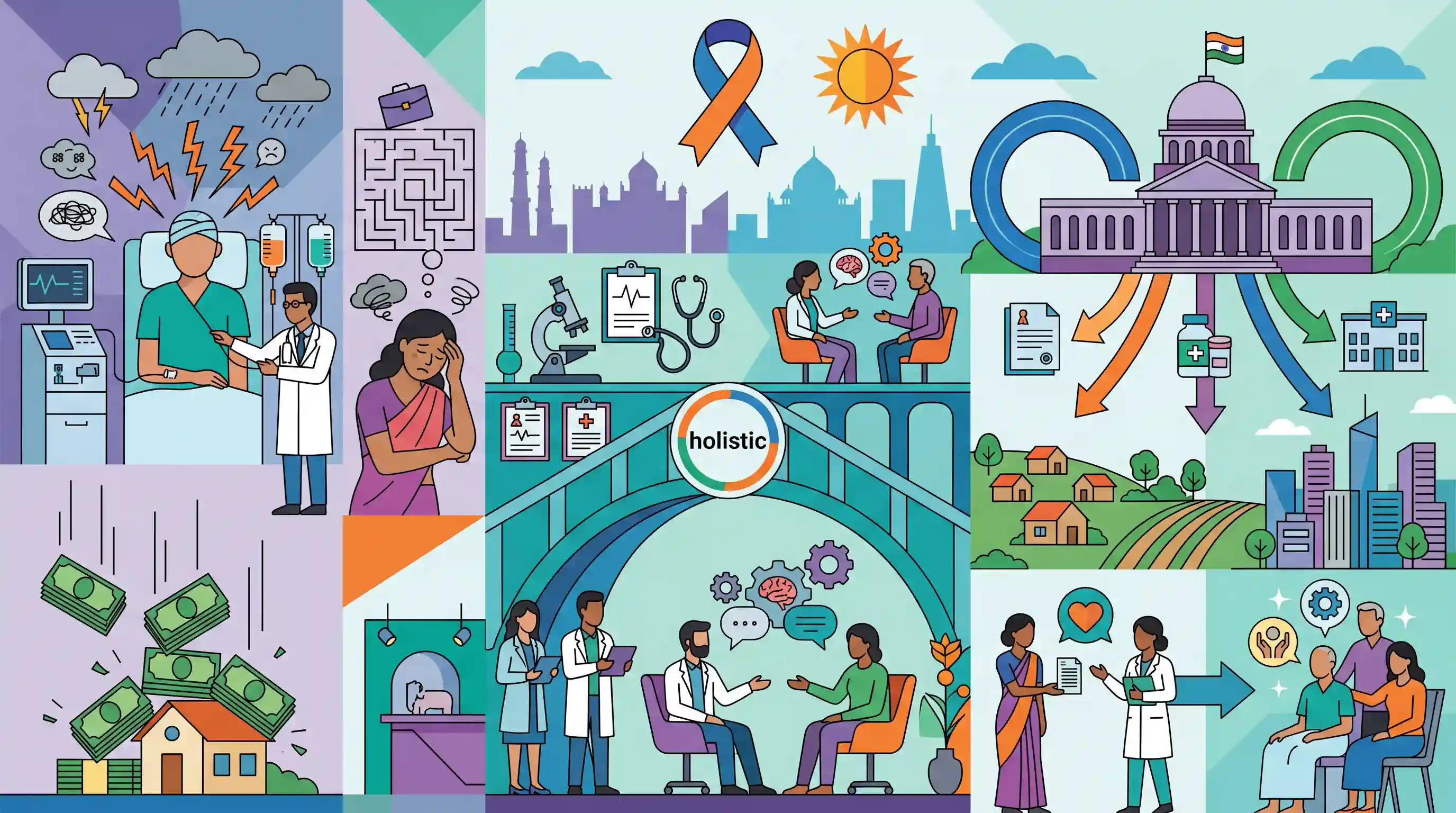
The article explores the growing necessity of 'psycho-oncology' within India's cancer care ecosystem, particularly highlighted on the occasion of World Cancer Day. It underscores that a cancer diagnosis brings not only physical suffering but also profound psychological, emotional, and social distress for both patients and their families. Emphasizing a holistic approach, the piece argues that standard oncology must integrate mental health interventions to manage anxiety, depression, and caregiver burnout. Furthermore, the financial toxicity of prolonged treatments adds to this mental burden, necessitating comprehensive public health strategies and state intervention to make empathetic and inclusive healthcare accessible at all levels.
Key Points
- Psycho-oncology has emerged as a critical component of comprehensive cancer care, focusing on the psychological, social, and behavioral dimensions of the disease.
- The immense emotional distress, anxiety, and depression following a cancer diagnosis require integrating mental health interventions into standard oncology practices.
- Financial toxicity from high out-of-pocket expenditure on cancer treatment exacerbates mental stress, emphasizing the need for robust public health safety nets.
- Caregiver burden is a significant issue; family members providing care also need psychological support to prevent burnout.
- World Cancer Day highlights the importance of addressing the holistic well-being of patients, looking beyond survival rates to ensure a high quality of life.
Important Terms
Psycho-oncology

A specialized multidisciplinary field addressing the psychological, social, and behavioral aspects of cancer, focusing on both patient distress and the emotional well-being of caregivers.
UPSC context
GS-II: Social Sector/Health; tests understanding of holistic healthcare models and mental health integration in non-communicable disease (NCD) management.
NPCDCS (NP-NCD)
Renamed the National Programme for Prevention & Control of Non-Communicable Diseases (NP-NCD), it is a flagship initiative focusing on infrastructure, early diagnosis, and management of chronic diseases.
UPSC context
GS-II: Government schemes/Health; critical for questions on India's NCD burden and public health infrastructure.
National Mental Health Programme (NMHP)
Launched in 1982 to ensure minimum mental healthcare accessibility for all, particularly through the community-based District Mental Health Programme (DMHP) and digital initiatives like Tele-MANAS.
UPSC context
GS-II: Social Justice/Health; essential for discussing the Mental Healthcare Act 2017 and rights-based healthcare delivery.
Financial Toxicity
The severe economic burden placed on patients due to high out-of-pocket medical expenses, often leading to catastrophic health expenditures and household impoverishment.
UPSC context
GS-III: Economic Development/Inclusive Growth; key for analyzing the impact of healthcare costs on poverty and social mobility.
Palliative Care
Specialized medical care focusing on providing relief from the symptoms and stress of serious illness, aiming to improve the quality of life for both the patient and the family.
UPSC context
GS-II: Health; relevant for discussions on geriatric care, end-of-life ethics, and comprehensive NCD strategies.
World Health Organization (WHO)
The specialized UN agency responsible for international public health, setting global standards for NCD control and promoting universal health coverage (UHC) targets.
UPSC context
GS-II: International Organizations; tests knowledge of global health governance and India's alignment with Sustainable Development Goal 3.4.
Prelims Trap
Under the NP-NCD, population-level screening at Ayushman Arogya Mandirs covers all major cancers including lung and stomach.
The NP-NCD mandates population-level screening specifically for only three common cancers: Oral, Breast, and Cervical. Broadening this to 'all major cancers' is a classic trap.
Static Concepts Connected
What are the cancer screening parameters under the NP-NCD?
- Target cohort: Population-level screening specifically targets individuals aged 30 years and above.
- Specific coverage: The programme mandates screening exclusively for three common types: Oral, Breast, and Cervical cancers.
- Primary nodes: Screenings are conducted at Ayushman Arogya Mandirs (formerly HWCs) under the Comprehensive Primary Health Care framework.
What is Out-of-Pocket Expenditure (OOPE) in Indian healthcare?
- Definition: Direct payments made by individuals to healthcare providers at the time of service use, bypassing insurance.
- Current trend: While declining, OOPE remains high (around 47% per recent NHA estimates), frequently leading to catastrophic health expenditure.
- Financial toxicity: High OOPE for chronic NCDs like cancer acts as a primary driver of medical impoverishment in India.
Cross-Topic Patterns
Catastrophic healthcare costs and Poverty
The 'financial toxicity' of NCDs links health infrastructure directly to economic vulnerability, demonstrating how out-of-pocket medical expenses often reverse national poverty alleviation gains.
Unpaid care economy and Caregiver burden
Caregiver burnout in chronic disease management disproportionately impacts women, linking oncology care deficits to the broader socio-economic discourse on the unpaid care economy.

Expect a GS2 Mains question connecting the 'financial toxicity' of rising NCDs to the urgency of expanding PM-JAY and mental health nets.
Linked PYQs · 3
Linked PYQs · 3
- 2024MainsGS2
In a crucial domain like the public healthcare system the Indian State should play a vital role to contain the adverse impact of marketisation of the system. Suggest some measures through which the State can enhance the reach of public healthcare at the grassroots level.
- 2020MainsGS2
In order to enhance the prospects of social development, sound and adequate health care policies are needed particularly in the fields of geriatric and maternal health care. Discuss.
- 2021MainsGS2
“Besides being a moral imperative of a Welfare State, primary health structure is a necessary precondition for sustainable development.” Analyze.
