Probiotics and Cardiovascular Health Benefits
Source:The Hindu ↗
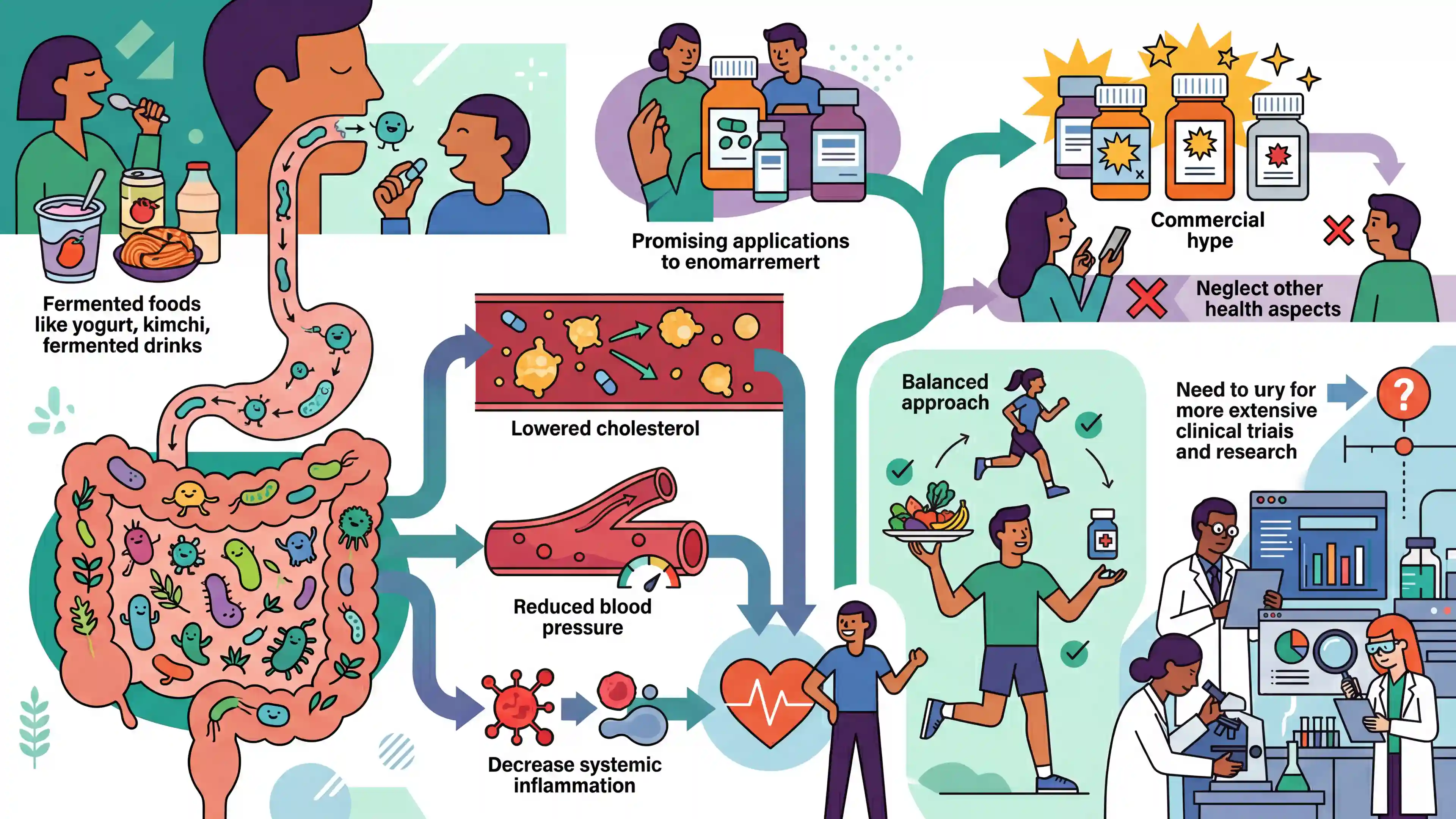
Why It Matters
The gut microbiome and everyday biotechnological interventions (like probiotics) are recurring themes in Prelims Science & Technology questions. Furthermore, managing the rising burden of non-communicable diseases like cardiovascular disease is a critical public health topic relevant to both GS2 and GS3.
Summary
The article examines the scientific validity of claims that probiotics benefit cardiovascular health. It explores how maintaining a robust gut microbiome through probiotics and fermented foods can potentially lower cholesterol, reduce blood pressure, and decrease systemic inflammation—all key factors in heart disease. While highlighting the promising applications of these 'good bacteria', the piece tempers the commercial hype by emphasizing that probiotics are not a panacea. It advises that they should complement, rather than replace, established medical treatments and lifestyle modifications for managing cardiovascular diseases, underscoring the need for more extensive clinical trials.
Key Points
- Probiotics are live microorganisms that confer health benefits, primarily by balancing the gut microbiome and improving digestive health.
- Emerging scientific research suggests a potential link between a healthy gut flora and cardiovascular benefits, including modest reductions in LDL cholesterol and blood pressure.
- Systemic inflammation, a significant driver of cardiovascular diseases (CVDs), may be mitigated by the metabolic byproducts of certain probiotic bacterial strains.
- Despite the commercial hype, experts caution that probiotics are not a standalone cure for heart disease and must be viewed as an adjunct to standard medical therapies and healthy lifestyle choices.
Prelims Trap
"Probiotics consist exclusively of beneficial bacteria that reside in the human gut."
Probiotics are not limited to bacteria; they also include beneficial yeasts (like Saccharomyces boulardii). UPSC tested this exact distinction in the 2022 Prelims.
Static Concepts Connected
What is the difference between Prebiotics, Probiotics, and Postbiotics?
- Probiotics: Live microorganisms (both beneficial bacteria and yeasts) that confer health benefits to the host when consumed in adequate amounts.
- Prebiotics: Non-digestible food components (usually specialized plant fibers) that stimulate the growth or activity of beneficial microorganisms in the colon.
- Postbiotics: Bioactive metabolic byproducts (like short-chain fatty acids) secreted by live bacteria during fermentation, which provide systemic benefits like reduced inflammation.
What are the key aspects of India's Non-Communicable Disease (NCD) burden?
- Mortality share: NCDs account for over 60% of all mortality in India, with Cardiovascular Diseases (CVDs) being the single leading cause of death.
- Behavioral risk factors: Tobacco use, unhealthy diet (high salt/sugar/trans-fats), physical inactivity, and harmful alcohol use.
- Govt response: The National Programme for Prevention and Control of Cancer, Diabetes, Cardiovascular Diseases and Stroke (NPCDCS) is the flagship containment strategy.
Cross-Topic Patterns
AMR and gut microbiome depletion
Overuse of broad-spectrum antibiotics drives Anti-Microbial Resistance (AMR) while indiscriminately destroying beneficial gut microbiota, linking pharmaceutical misuse directly to declining systemic and cardiovascular health.
FSSAI regulations on functional foods
As the market for probiotic-fortified foods expands, FSSAI's regulations on nutraceuticals and health supplements become critical to curb misleading commercial claims regarding complex NCDs like heart disease.

Expect a multi-statement question combining probiotics (bacteria/yeast), the gut microbiome, and their role in mitigating inflammation.
Linked PYQs · 3
Linked PYQs · 3
- 2022PrelimsGS1
Consider the following statements in respect of probiotics : 1. Probiotics are made of both bacteria and yeast. 2. The organisms in probiotics are found in foods we ingest but they do not naturally occur in our gut. 3. Probiotics help in the digestion of milk sugars. Which of the statements given above is/are correct?
- 2008PrelimsGS1
Consider the following statements about probiotic food: 1. Probiotic food contains live bacteria which are considered beneficial to humans. 2. Probiotic food helps in maintaining gut flora. Which of the statements given above is/are correct?
- 2021MainsGS3
What are the research and developmental achievements in applied biotechnology? How will these achievements help to uplift the poorer sections of the society?
