Parole and Reformative Justice for POCSO Convicts
Source:Indian Express ↗
Why It Matters
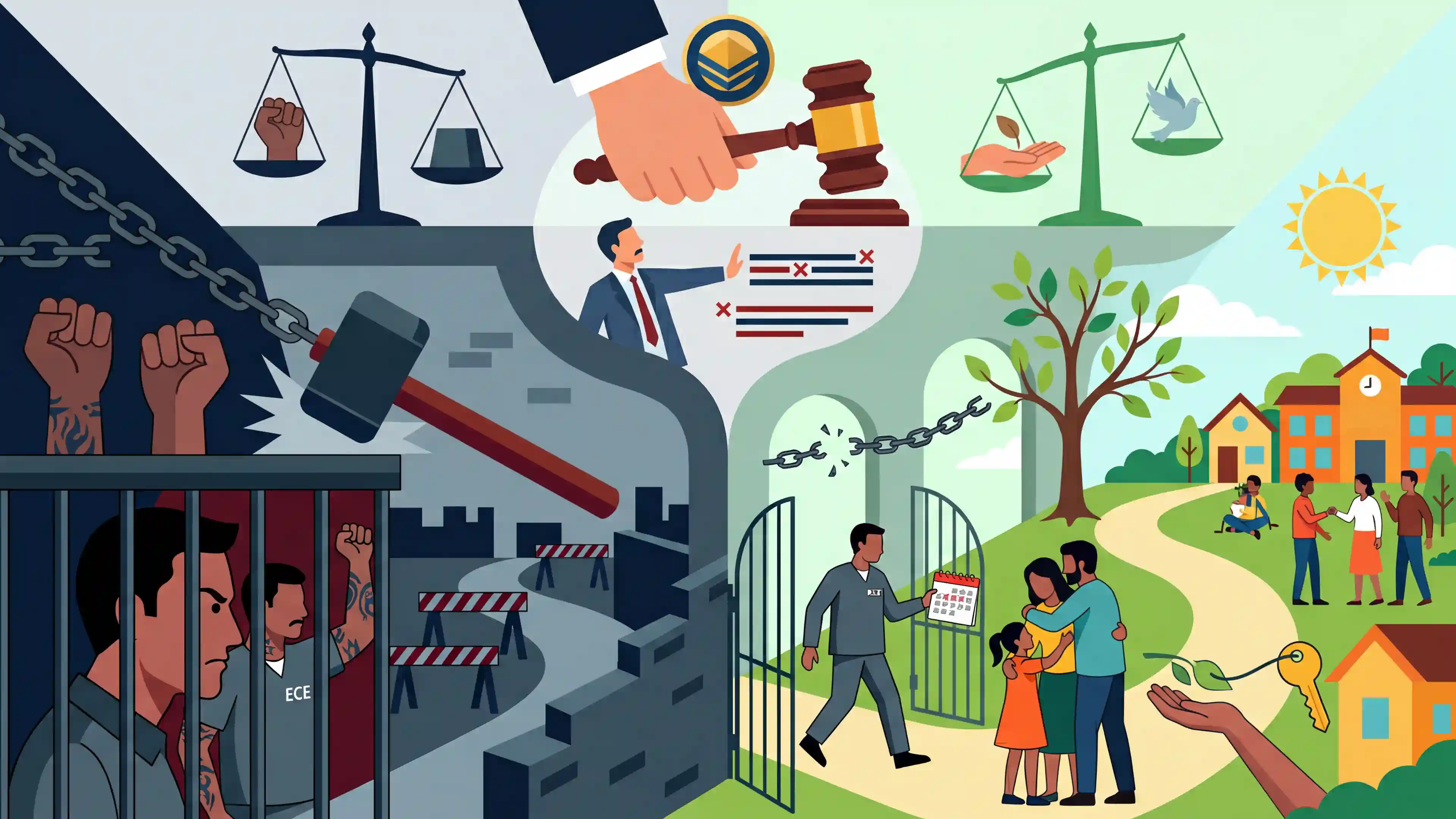
This judgement serves as an essential case study for UPSC aspirants on the ongoing debate between retributive and reformative justice. It illustrates how the judiciary interprets prisoners' rights and statutory provisions like parole within the expanding scope of Article 21 (Right to Life and Personal Liberty), especially in the context of heinous statutory offenses like those under the POCSO Act.
Summary
The Himachal Pradesh High Court granted a 28-day parole to a POCSO convict sentenced to 25 years of rigorous imprisonment, rejecting the state's objection that parole is merely a privilege and the crime too grave. The court prioritized the principles of reformative justice over a purely retributive approach. It observed that the fundamental purpose of parole and furlough is to enable convicts to maintain societal connections, address family affairs, and gradually reintegrate into the mainstream. Continual denial of such temporary release, the court noted, risks turning inmates into hardened criminals, thereby defeating the broader objective of rehabilitation within the criminal justice system.
Key Points
- The Himachal Pradesh High Court granted a 28-day parole to a convict serving a 25-year sentence under the POCSO Act and IPC for the rape of a minor.
- State authorities opposed the parole, arguing that under Section 6 of the HP Good Conduct Prisoners Act, parole is a privilege rather than a right and cited the gravity of the crime.
- The court underscored the philosophy of reformative justice, asserting that permanently confining an inmate might turn them into a hardened criminal.
- Parole and furlough are designed to help convicts maintain societal ties, resolve family problems, and eventually reintegrate into the mainstream, regardless of the severity of their initial crime.
- The ruling highlights the delicate balance the judiciary must maintain between retributive justice for heinous crimes and the humanistic goal of prisoner rehabilitation.
Important Terms
Protection of Children from Sexual Offences (POCSO) Act, 2012

A comprehensive 2012 law protecting minors (<18) from sexual assault and pornography. It features gender-neutrality, mandatory reporting, and Special Courts to ensure child-friendly legal proceedings.
UPSC context
GS II: Social Justice/Vulnerable Sections. Crucial for understanding statutory protections for children and judicial interpretations of heinous crimes.
Reformative Theory of Punishment
A criminal justice philosophy focusing on rehabilitating offenders and reintegrating them into society. It treats crime as a social malady requiring education and reform rather than just punishment.
UPSC context
GS IV: Ethics. Relevant for debates on the moral purpose of incarceration and the rights of convicts.
Parole
The conditional release of a prisoner before their sentence ends, usually granted for specific family or personal reasons. It is considered a privilege, not a legal right.
UPSC context
GS II: Judiciary/Polity. Important for prison reform discussions and the distinction between parole and furlough.
Retributive Theory of Punishment
A theory of punishment based on the principle of 'just deserts,' where the penalty is proportionate to the crime. It prioritizes social retribution over offender rehabilitation.
UPSC context
GS IV: Ethics. Contrasts with reformative justice; used in evaluating sentencing policies for serious offenses.
Himachal Pradesh Good Conduct Prisoners (Temporary Release) Act, 1968
A regional statute governing the temporary release (parole/furlough) of inmates in Himachal Pradesh. It provides the legal framework for evaluating a convict's conduct for release eligibility.
UPSC context
GS II: Federalism/Governance. Illustrates the legislative power of states over 'Prisons' under the Seventh Schedule.
Prelims Trap
Parole is an absolute fundamental right under Article 21, whereas furlough is merely a discretionary privilege.
It is the opposite. Furlough is seen as a right to break prison monotony, whereas parole is a conditional privilege granted for specific exigencies.
Static Concepts Connected
What is the legal distinction between Parole and Furlough in India?
- Nature of grant: Parole is a conditional privilege granted for specific reasons (e.g., family emergencies). Furlough is a routine break to relieve prison monotony, generally viewed as a right.
- Specificity of reason: Parole requires a demonstrated specific exigency. Furlough is periodic and does not require a specific reason to be granted.
- Governing Laws: Both are governed by the Prisons Act, 1894, and state-specific rules. Consequently, eligibility and duration vary significantly across different states.
What fundamental rights do prisoners retain under Article 21?
- Sunil Batra Doctrine: The Supreme Court established that fundamental rights do not completely flee the person as they enter the prison gates. Inmates remain human beings entitled to dignity.
- Scope of Rights: Convicts retain the right to human dignity, health, free legal aid, speedy trial, and protection against cruel treatment, torture, or unjustified solitary confinement.
- Reasonable Restrictions: These rights are not absolute and are subject to reasonable restrictions inherently required by the fact of incarceration (e.g., restricted movement).
Cross-Topic Patterns
State List vs Concurrent Criminal Laws
While substantive criminal laws like POCSO are on the Concurrent List, 'Prisons' is Entry 4 of the State List, meaning parole rules and procedures depend entirely on state-specific legislation.
GS4: Reformative vs Retributive Justice
This highlights a classic GS4 ethical tension: punishing proportionately for heinous crimes (retributive) versus prioritizing inmate rehabilitation (reformative) to prevent long-term societal recidivism.

Expect a Prelims statement comparing the statutory backing of parole vs furlough, or a GS2 question on standardizing prison manuals.
Linked PYQs · 2
Linked PYQs · 2
- 2023MainsGS2
“The Constitution of India is a living instrument with capabilities of enormous dynamism. It is a constitution made for a progressive society.” Illustrate with special reference to the expanding horizons of the right to life and personal liberty.
- 2024MainsGS4
“The concept of Just and Unjust is contextual. What was just a year back, may turn out to be unjust in today's context. Changing context should be constantly under scrutiny to prevent miscarriage of justice.” Examine the above statement with suitable examples.
