PM KUSUM Component C Scheme Transforms Rural Solar Irrigation
Source:The Hindu ↗
Why It Matters
Crucial for understanding India's renewable energy targets in agriculture, managing power subsidies for discoms, and promoting sustainable water-energy management at the grassroots level.
Summary
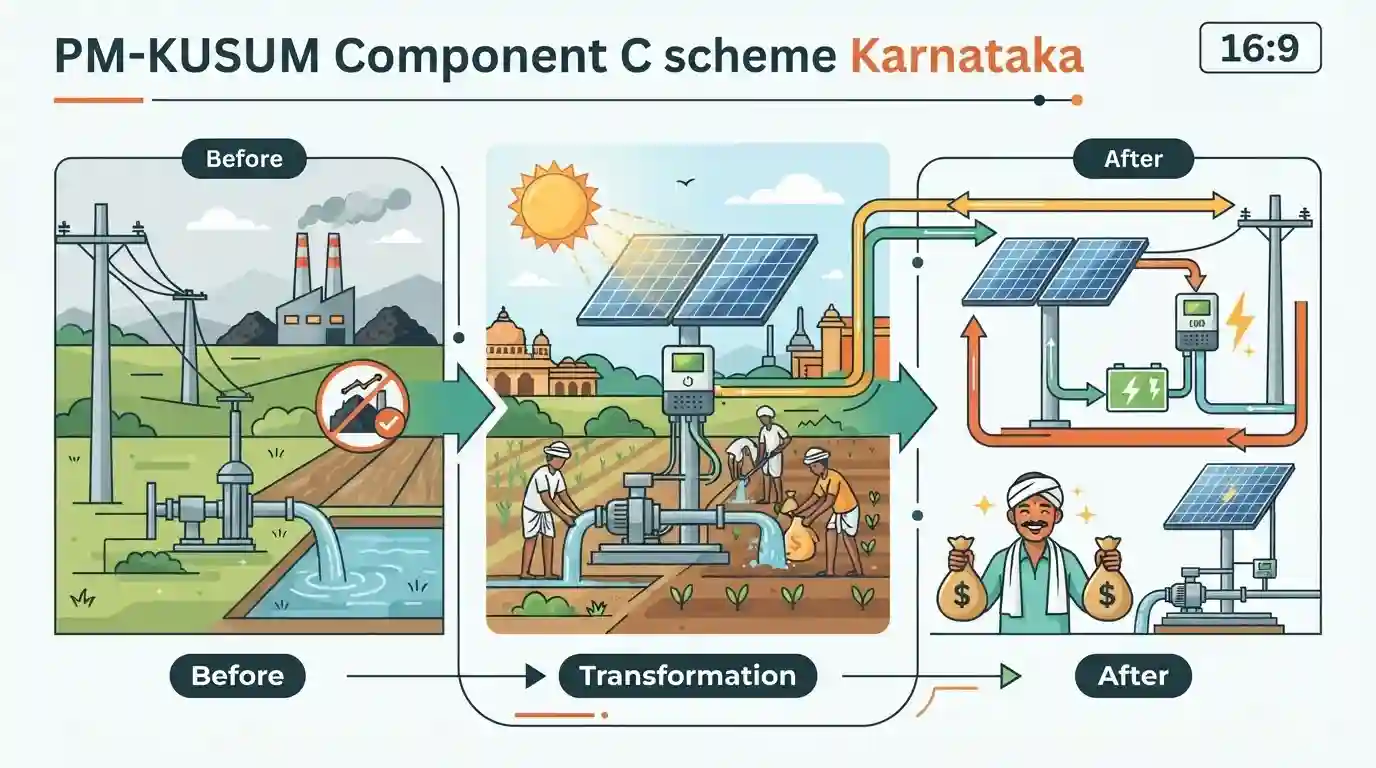
An analysis of the PM-KUSUM Component C scheme in Karnataka, highlighting how solarising grid-connected agricultural pumpsets transforms rural irrigation, cuts power subsidies, and provides extra income to farmers by feeding surplus solar energy back into the grid.
Key Points
- PM-KUSUM Component C focuses on the solarisation of individual grid-connected agricultural pumps, allowing farmers to run pumps using solar energy and feed surplus power back into the grid.
- The initiative helps reduce the heavy fiscal burden of electricity subsidies borne by state governments and discoms while providing an additional source of income for farmers.
- It addresses the water-energy-nexus by promoting sustainable groundwater extraction and green energy transition in rural areas.
- Challenges include high upfront capital costs, grid connectivity bottlenecks, and the need for localized technical maintenance support.
Important Terms
PM KUSUM Scheme

A central government scheme aimed at ensuring energy security for farmers, promoting solar irrigation, and reducing diesel dependency by installing standalone solar pumps and grid-connected solar power plants.
UPSC context
Important for UPSC Prelims (Government Schemes) and Mains GS Paper III (Agriculture, Infrastructure, Energy subsidies).
PM KUSUM Component C
A sub-initiative of the PM-KUSUM program focused on the solarisation of existing grid-connected agricultural pumps, enabling daytime power access and sale of surplus energy.
UPSC context
Crucial for Mains GS Paper III regarding renewable energy integration, agricultural power reforms, and reducing discom losses.
Ministry of New and Renewable Energy
The apex central ministry responsible for formulating policies and coordinating matters relating to renewable energy development and deployment in India.
UPSC context
Relevant for Polity & Governance / Institutional framework of central ministries dealing with India's climate goals and net-zero targets.
BESCOM
A state-owned electricity distribution utility responsible for transmitting and supplying power to urban and rural districts in Karnataka, including agricultural feeder solarisation.
UPSC context
Useful for GS Paper III (Infrastructure and Energy management) to examine the operational role of state DISCOMs in executing green energy transitions.
Prelims Trap
PM-KUSUM Component C exclusively provides standalone off-grid solar water pumps to farmers in remote areas without electricity access.
Aspirants often confuse Component C with off-grid standalone pumps (Component B). Component C specifically targets *grid-connected* pumps with solarisation and net metering.
Static Concepts Connected
What are the three core components of the PM-KUSUM scheme and their distinct objectives?
- Component A (Plants): Component A focuses on setting up 10,000 MW of decentralized ground-mounted grid-connected renewable power plants by farmers.
- Component B (Pumps): Component B involves installation of 17.5 lakh standalone solar agriculture pumps for areas without grid connectivity.
- Component C (Grid Pumps): Component C targets solarisation of 15 lakh grid-connected agricultural pumps with net-metering facility to sell surplus power.
Cross-Topic Patterns
Agriculture Subsidies meets Power Sector Reforms
PM-KUSUM links agricultural power subsidies directly to the fiscal health of state electricity distribution companies (DISCOMs), acting as a bridge between agrarian distress and power sector reforms.
Water-Energy Nexus in Groundwater Governance
Decentralised solar generation under Component C operationalises the water-energy nexus, where free power incentives historically drove unchecked groundwater depletion across peninsular India.

PM-KUSUM components (A, B, C) and net metering mechanics frequently appear in match-the-column or multi-statement prelims questions.
Linked PYQs · 2
Linked PYQs · 2
- 2020MainsGS3
Describe the benefits of deriving electric energy from sunlight in contrast to the conventional energy generation. What are the initiatives offered by our Government for this purpose?
- 2024MainsGS3
What are the major challenges faced by Indian irrigation system in recent times? State the measures taken by the government for efficient irrigation management.
