Supreme Court Plea Challenges Transgender Law Amendment Provisions
Source:The Hindu ↗
Why It Matters
The controversy over the 2026 Amendment Act underscores a critical tension between legislative amendments and established judicial precedents (like the NALSA judgment). It is a vital case study for UPSC aspirants on issues of personal autonomy, bodily integrity, and the State's role in defining identity, which are central to questions on Constitutional rights (GS2) and social empowerment (GS1).
Summary
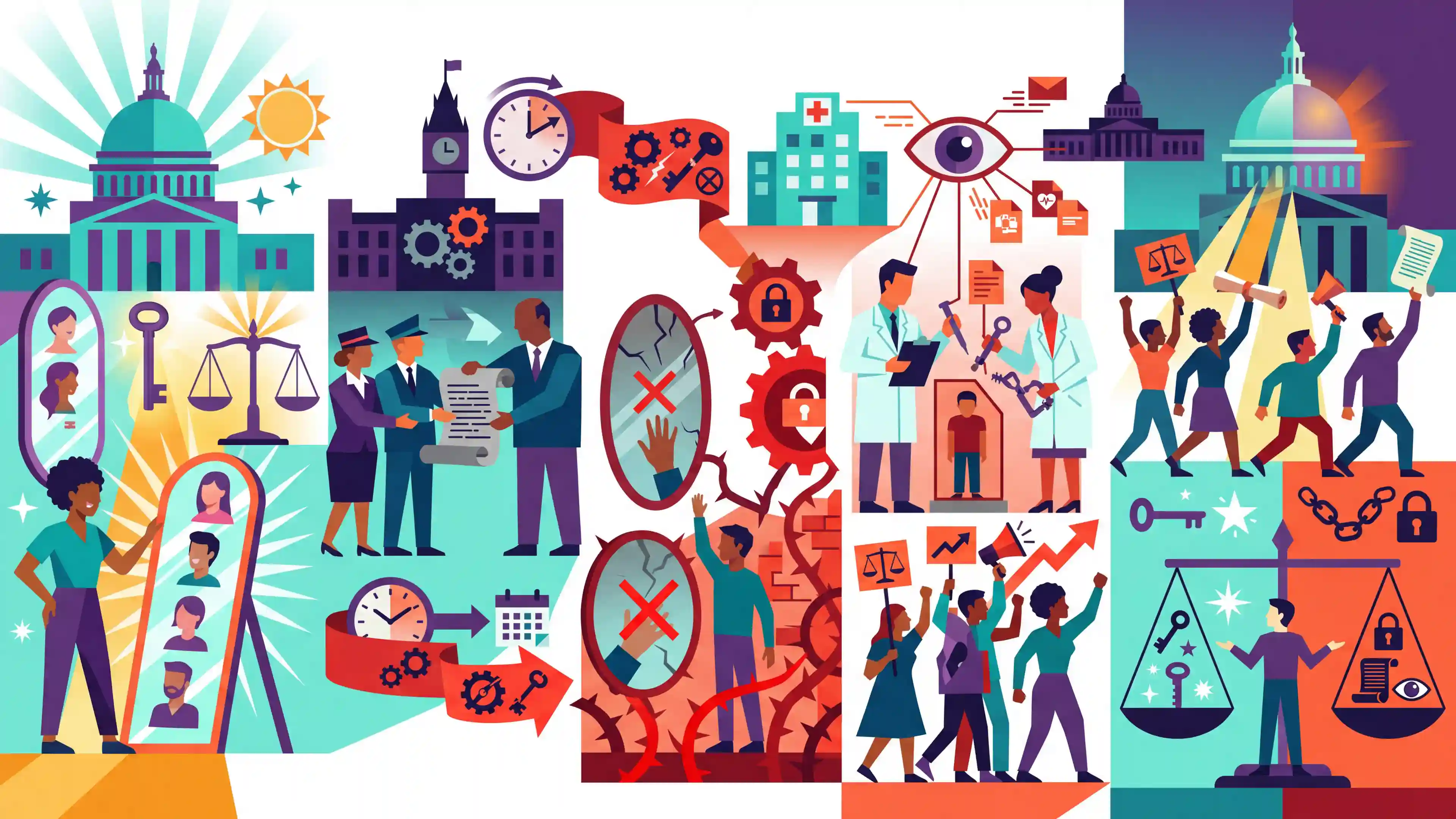
Activists have moved the Supreme Court challenging the Transgender Persons (Protection of Rights) Amendment Act, 2026, arguing that it dismantles the fundamental right to self-identified gender previously guaranteed by the 2014 NALSA judgment under Article 21. The plea criticizes the new law for omitting the right to self-perceived gender identity, instituting 'medical gatekeeping' through mandatory medical board certifications, and establishing a 'medical surveillance regime' by forcing hospitals to report gender-affirming surgeries to the state. The petitioners warn that the legislation effectively criminalizes the outwardly presentation of transgender identity while failing to provide adequate legal protection against physical and sexual abuse, highlighting a severe regression in gender justice and personal autonomy.
Key Points
- A plea has been filed in the Supreme Court by activists Laxminarayan Tripathi and Zainab Javid Patel challenging the constitutional validity of the Transgender Persons (Protection of Rights) Amendment Act, 2026.
- The petitioners argue that the 2026 Act violates the fundamental right to self-determined gender identity under Article 21, which was upheld in the landmark 2014 NALSA judgment.
- Section 3 of the new Act omits the statutory right to self-perceived gender identity, and mandates a 'medical gatekeeping' system where a government-appointed medical board's recommendation is required for a District Magistrate to issue an identity certificate.
- Section 5 mandates persons undergoing gender-change surgeries to apply for a revised identity certificate and requires hospitals to report patient details to the government, creating a 'medical surveillance regime'.
- The petition highlights that the new law conflates trafficking victims (those coerced into transgender identity by mutilation) with authentic transgender individuals, fails to increase punishments for their sexual and physical abuse, and effectively criminalizes the outwardly presentation of transgender identity.
Important Terms
Transgender Persons (Protection of Rights) Amendment Act, 2026

A 2026 legislative amendment that replaces gender self-identification with mandatory medical board certification and requires hospitals to report gender-affirming surgeries to the state.
UPSC context
GS Paper II (Social Justice); tests analysis of legislative changes impacting constitutional rights of vulnerable sections.
NALSA judgment
The landmark 2014 Supreme Court ruling that recognized transgender persons as the 'third gender' and upheld the right to self-identify gender as a fundamental right.
UPSC context
GS Paper II (Judiciary); essential for understanding judicial activism and the legal evolution of gender rights.
Article 21
A constitutional provision guaranteeing life and personal liberty, interpreted by the judiciary to include the right to dignity, privacy, and self-determined gender identity.
UPSC context
GS Paper II (Indian Constitution); core concept for understanding fundamental rights and personal autonomy.
Self-determined gender identity
The legal principle that an individual’s internal sense of gender is the sole criterion for recognition, requiring no medical or state validation.
UPSC context
GS Paper II (Fundamental Rights); relevant for debates on individual autonomy versus state-mandated certification.
Medical Board
A statutory panel of medical professionals authorized to certify gender identity, often criticized for replacing personal autonomy with clinical assessment.
UPSC context
GS Paper II (Governance); examines the role of medical bureaucracy in implementing social justice laws.
Medical gatekeeping
A process where authorities control access to rights or care by imposing hurdles that force individuals to 'prove' their identity.
UPSC context
GS Paper II (Social Justice); critical for analyzing policy barriers affecting marginalized groups.
Transgender Persons (Protection of Rights) Act, 2019
The primary Indian law providing for transgender rights and welfare, though criticized for requiring administrative certification for gender recognition.
UPSC context
GS Paper II (Welfare Schemes); tests knowledge of the foundational legislative framework for transgender rights.
Prelims Trap
The NALSA judgment mandated a medical board to certify transgender identity.
The 2014 NALSA judgment explicitly established the right to self-identification without medical intervention. It is the legislative Acts (2019/2026) that introduced medical board gatekeeping.
Static Concepts Connected
What were the core directives of the 2014 NALSA judgment?
- Third Gender: Legally recognized transgender persons as a distinct 'third gender' entitled to Fundamental Rights under Part III of the Constitution.
- Self-Identification: Upheld the right to self-perceived gender identity without requiring sex reassignment surgery or biological tests.
- SEBC Status: Directed the Centre and States to treat them as socially and educationally backward classes (SEBC) for reservations in education and employment.
How is bodily autonomy protected under Article 21?
- Puttaswamy Doctrine: The 2017 Puttaswamy judgment recognized privacy as an intrinsic part of life and liberty, encompassing both bodily autonomy and informational privacy.
- Proportionality Test: Any state intrusion (like forced medical reporting or surveillance) must pass the test of legality, legitimate state aim, and proportionality.
Cross-Topic Patterns
Medical Surveillance vs. Puttaswamy
Mandatory reporting of gender-affirming surgeries by hospitals directly tests the proportionality doctrine and informational privacy established in the 2017 Puttaswamy (Right to Privacy) judgment.
Legislature bypassing Judicial mandates
The 2026 Amendment's medical gatekeeping illustrates a recurring theme in Polity: Parliament imposing statutory conditions that effectively dilute or bypass Supreme Court fundamental rights rulings (like NALSA).

Expect a Prelims statement contrasting NALSA's 'self-identification' with the 2026 Act's 'medical gatekeeping' by District Magistrates.
Linked PYQs · 3
Linked PYQs · 3
- 2023MainsGS2
Explain the constitutional perspectives of Gender Justice with the help of relevant Constitutional Provisions and case laws.
- 2024MainsGS2
Right to privacy is intrinsic to life and personal liberty and is inherently protected under Article 21 of the constitution. Explain. In this reference discuss the law relating to D.N.A. testing of child in the womb to establish its paternity.
- 2024MainsGS1
Despite comprehensive policies for equity and social justice, underprivileged sections are not yet getting the full benefits of affirmative action envisaged by the Constitution. Comment.
