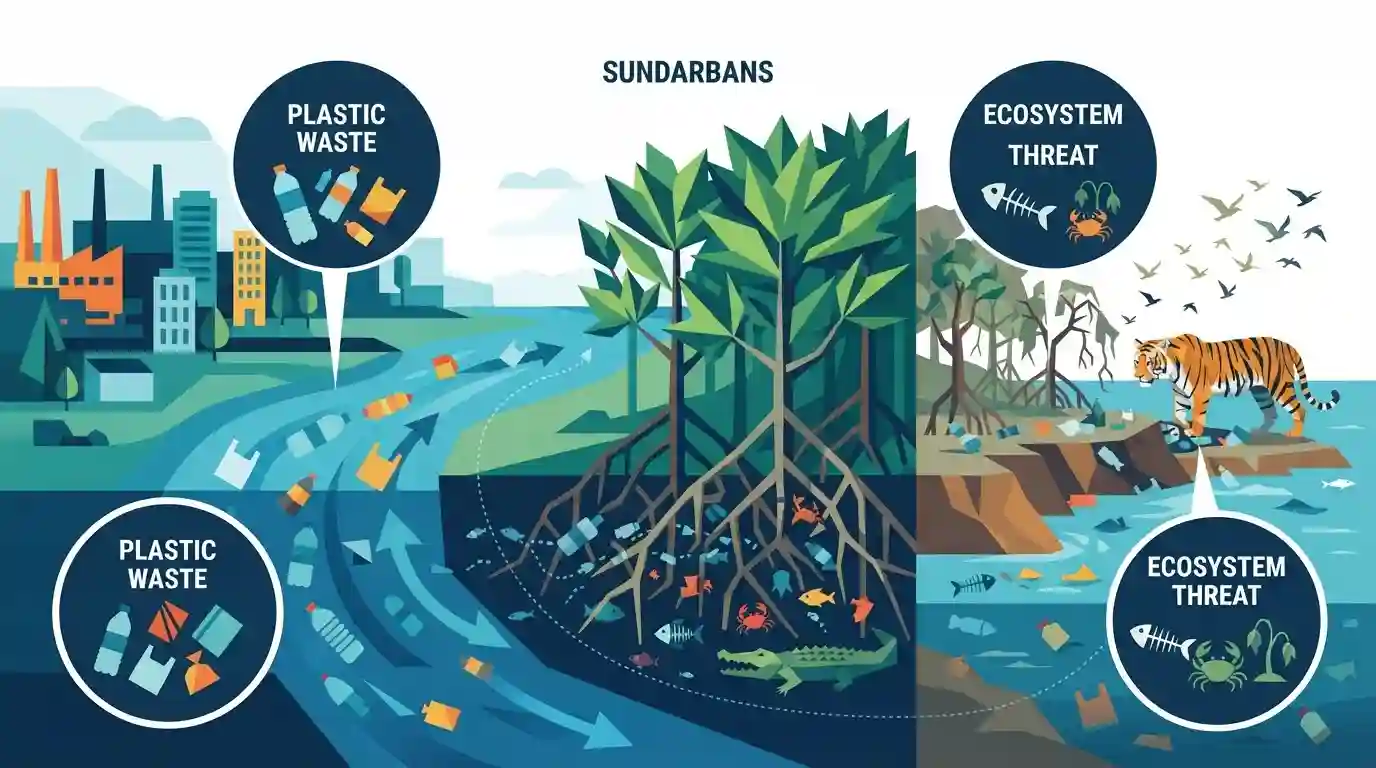
Sundarbans Ecosystem Threat: Plastic Waste Carried By Tidal Currents
Source:dhakatribune ↗
Why It Matters
Crucial for understanding the environmental challenges facing the Sundarbans mangrove ecosystem, a UNESCO World Heritage site shared by India and Bangladesh, with direct relevance to West Bengal geography and ecology.
Summary
The article highlights the growing threat of plastic waste carried by tides into the Sundarbans mangrove forest, endangering its unique biodiversity, aquatic ecosystems, and fragile environmental balance.
Key Points
- Plastic waste is increasingly threatening the ecological balance of the Sundarbans mangrove forest as tidal currents carry substantial debris into the ecosystem.
- The accumulation of non-biodegradable single-use plastics and waste poses severe risks to the rich biodiversity, aquatic life, and fragile mangrove habitats of the region.
- Transboundary river systems and coastal tides serve as major transport vectors for plastic pollution from urban and upstream areas into protected deltaic reserves.
Prelims Trap
The Sundarbans mangrove forest is exclusively located within the Indian territory of West Bengal.
Aspirants often assume the Sundarbans is entirely within West Bengal, India, whereas over 60% of this mangrove forest lies within Bangladesh.
Static Concepts Connected
What are the key geographical and ecological features of the Sundarbans?
- Extent and Location: World's largest contiguous mangrove forest, shared between India (West Bengal) and Bangladesh.
- Global Status: Recognized as a UNESCO World Heritage Site and a Ramsar Wetland of International Importance.
- Faunal Pride: Famous as the natural habitat of the endangered Royal Bengal Tiger (Panthera tigris tigris).
- Flora and Topography: Characterized by an intricate network of tidal waterways, mudflats, and halophytic (salt-tolerant) plant species like Sundari (Heritiera fomes).
Cross-Topic Patterns
Transboundary Rivers and Marine Plastic Pollution
Plastic debris transport via transboundary rivers from urban centers into the Sundarbans tests the efficacy of bilateral India-Bangladesh joint river commissions.
Mangrove Ecosystems and Bioaccumulation Dynamics
Mangrove root systems naturally trap plastics, creating concentrated microplastic hotspots that impact regional aquatic bioaccumulation and estuarine food webs.

Sundarbans geography + plastic pollution impact on estuarine fauna will likely feature in a multi-statement environment/WB geography question.
Linked PYQs · 2
Linked PYQs · 2
- 2019WBCS_PRELIMSGS1
Sundarban is declared as 'World Heritage Site' for
- 2017WBCS_PRELIMSGS1
Necton are
