Small Hydro Power Potential and Renewable Energy in India
Source:PIB ↗
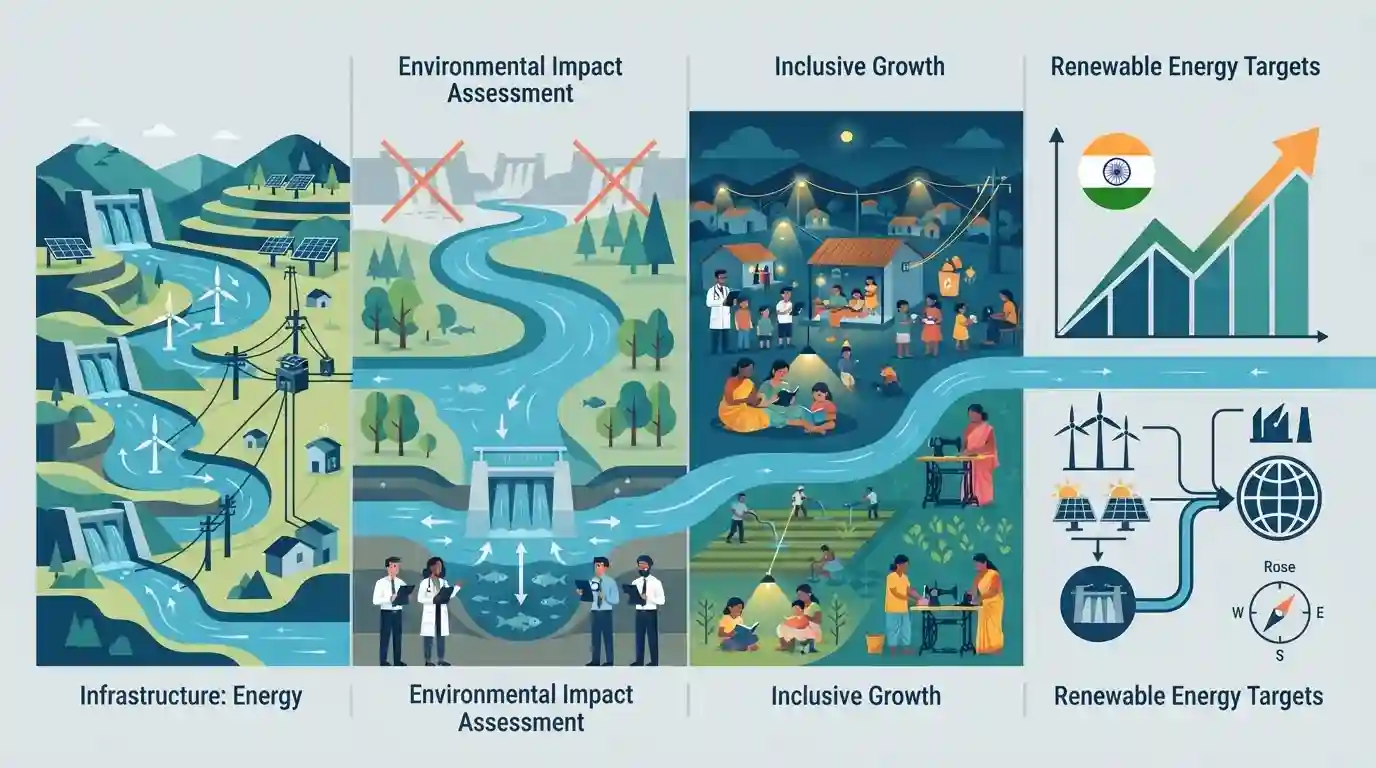
Why It Matters
Small hydro power is crucial for India's renewable energy transition, decentralized power generation, and remote area development, aligning with Sustainable Development Goals and climate commitments.
Summary
The article discusses the initiatives, potential, and significance of harnessing Small Hydro Power (SHP) in India. Promoted by the Ministry of New and Renewable Energy, SHP projects serve as a decentralized solution for energy security, remote electrification, and grid stability with minimal environmental impact.
Key Points
- Small hydro power projects offer a decentralized and environmentally friendly source of renewable energy in India.
- The Ministry of New and Renewable Energy promotes small hydro development to harness untapped potential, especially in remote and hilly regions.
- Key benefits include grid stabilization, local employment, energy security, and minimal ecological displacement compared to large hydro projects.
Important Terms
Ministry of New and Renewable Energy

The nodal ministry of the Government of India responsible for formulating and implementing policies, schemes, and programmes relating to renewable energy, including solar, wind, biomass, and small hydro power.
UPSC context
UPSC GS Paper III (Infrastructure: Energy, Renewable Energy Targets). Tests knowledge of institutional frameworks driving India's green transition and decentralized energy security.
Prelims Trap
All hydroelectric power projects in India are planned, approved, and regulated exclusively by the Ministry of Power.
Aspirants often assume all hydroelectric projects are regulated by the Ministry of Power, whereas Small Hydro Power (up to 25 MW) is specifically under the Ministry of New and Renewable Energy (MNRE).
Static Concepts Connected
What is the official classification and institutional governance of hydroelectric power in India?
- SHP Definition: Capacity threshold: Projects with an installed capacity up to 25 MW are classified as Small Hydro Power (SHP).
- MNRE Mandate: Nodal ministry: SHP development is mandated under the Ministry of New and Renewable Energy (MNRE).
- Ministry of Power: Large hydro: Projects exceeding 25 MW fall under the administrative jurisdiction of the Ministry of Power.
- Run-of-the-River: Design profile: Most SHP plants utilize run-of-the-river schemes with minimal water storage and displacement.
Cross-Topic Patterns
Small Hydro vs Large Dams in EIA
While large hydro projects face strict EIA mandates and interstate water disputes, SHP projects bypass many of these roadblocks via run-of-the-river designs while falling under renewable energy quotas.
SHP and Border Area Development
SHP installations provide critical energy security for isolated border grids, merging renewable energy targets with strategic infrastructure development in the North-East.

Expect a statement-based question distinguishing MNRE's jurisdiction over SHP (up to 25 MW) from the Ministry of Power's large hydro mandate.
Linked PYQs · 2
Linked PYQs · 2
- 2018MainsGS3
“Access to affordable, reliable, sustainable and modern energy is the sine qua non to achieve Sustainable Development Goals (SDGs).” Comment on the progress made in India in this regard.
- 2024PrelimsGS1
Recently, the term "pumped-storage hydropower" is actually and appropriately discussed in the context of which one of the following?
