Chintan Shivir Focuses on Shram Shakti and Labour Reforms
Source:PIB ↗
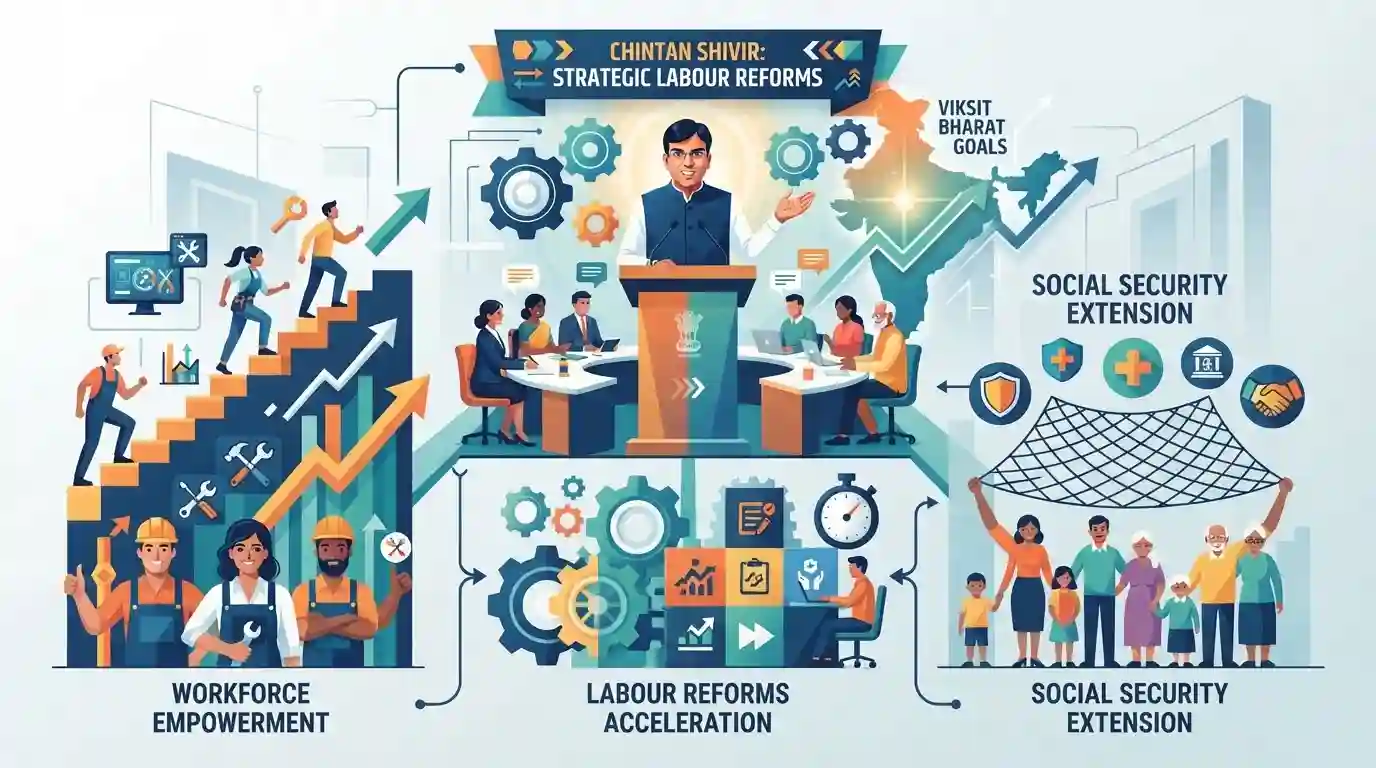
Why It Matters
This policy dialogue highlights government strategies for labour market modernization, social security integration for unorganized workers, and overall alignment with inclusive growth and Viksit Bharat goals.
Summary
Union Minister Dr. Mansukh Mandaviya led a Chintan Shivir to review and accelerate strategic reforms in India's labour and employment sector, focusing on workforce empowerment, social security extension, and alignment with Viksit Bharat goals.
Key Points
- Union Minister Dr. Mansukh Mandaviya chaired a Chintan Shivir focusing on labour and employment sector reforms.
- The deliberations aimed to align labour welfare policies with the vision of 'Viksit Bharat' (Developed India) by empowering 'Shram Shakti' (Labour Force).
- Key areas discussed included social security extension for unorganized workers, skill development, occupational safety, and modernizing labour administration.
- Emphasis was placed on leveraging technology and data integration to streamline employment exchanges and welfare benefit delivery.
Prelims Trap
Aggregator-based funding models and social security contributions for gig workers are entirely funded through central budgetary allocations.
The Code on Social Security, 2020 provides statutory frameworks for gig and platform workers, but implementation details and state rules often lead to confusion regarding central vs. state jurisdiction.
Static Concepts Connected
What are the key structural components of India's Four Labour Codes?
- Wage Code: Code on Wages, 2019: Subsumes four central acts to ensure universal minimum wage and timely payment for all workers.
- IR Code: Industrial Relations Code, 2020: Streamlines provisions for trade unions, conditions of employment, and dispute resolution mechanisms.
- Social Security: Social Security Code, 2020: Extends social security to unorganised, gig, and platform workers, integrating databases like e-Shram.
- OSH Code: OSH Code, 2020: Regulates occupational safety, health, and working conditions across factories, mines, and establishments.
Cross-Topic Patterns
Labour Welfare meets Digital Public Infrastructure
The integration of unorganized workers via e-Shram directly connects labour welfare with digital public infrastructure (DPI) and financial inclusion agendas.
Labour Codes and Ease of Doing Business
Consolidating 29 central labor laws into 4 codes touches both governance reforms and industrial dispute resolution frameworks.

Expect match questions linking specific Labour Codes (Wages, Social Security, IR, OSH) with their novel provisions like gig-worker welfare funds.
Linked PYQs · 1
Linked PYQs · 1
- 2024MainsGS3
Discuss the merits and demerits of the four 'Labour Codes' in the context of labour market reforms in India. What has been the progress so far in this regard?
