EMRS and Tribal Education Empowerment in India
Source:PIB ↗
Why It Matters
Crucial for understanding government initiatives aimed at bridging educational gaps and ensuring inclusive growth for Scheduled Tribe (ST) communities.
Summary
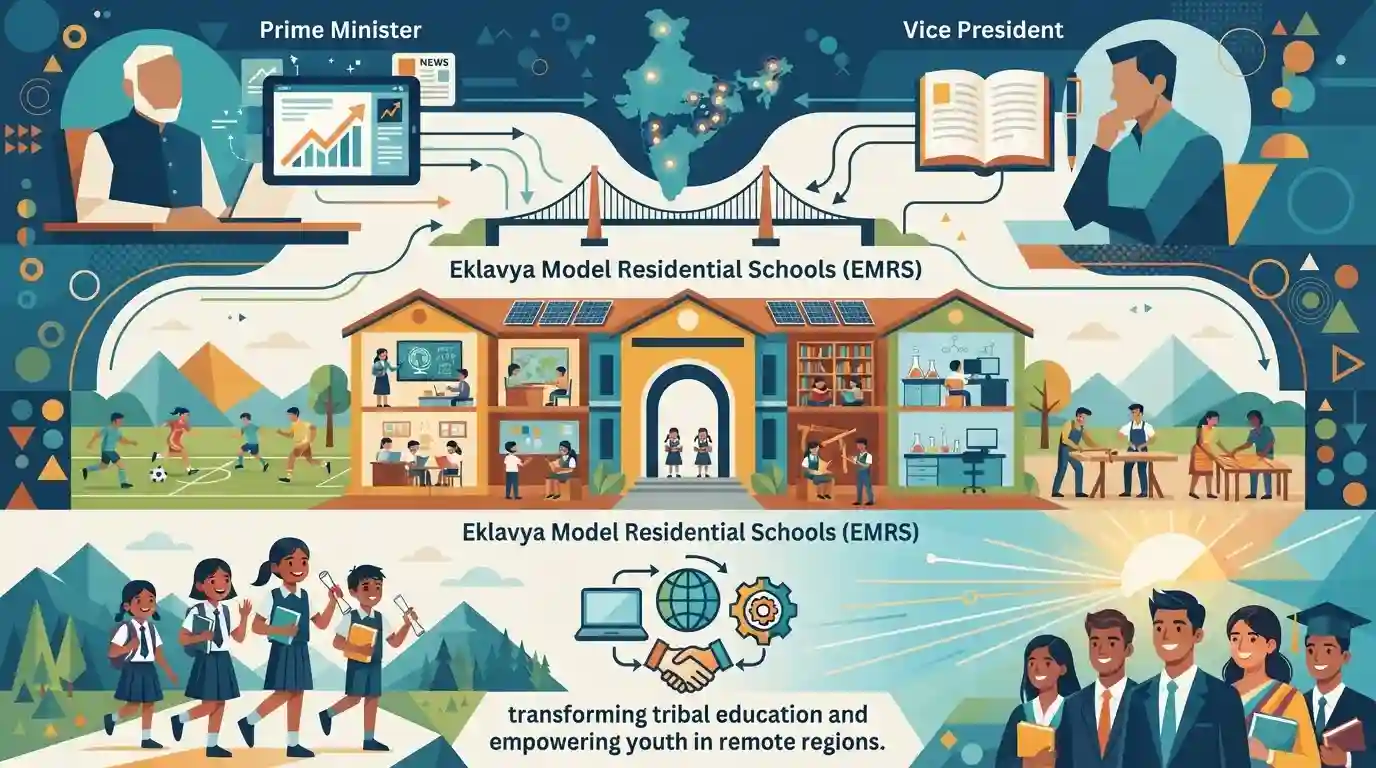
Prime Minister shared an article written by Vice President Thiru C. P. Radhakrishnan highlighting the significance of Eklavya Model Residential Schools (EMRS) in transforming tribal education and empowering youth in remote regions of India.
Key Points
- Prime Minister shared an article by Vice President Thiru C. P. Radhakrishnan emphasizing the role of Eklavya Model Residential Schools (EMRS).
- EMRS aims to provide quality middle and high-level education to Scheduled Tribe (ST) students in remote areas.
- The initiative focuses on holistic development, preserving tribal culture, and enhancing career and higher education opportunities for tribal youth.
Important Terms
Eklavya Model Residential Schools (EMRS) Scheme

A flagship initiative by the Ministry of Tribal Affairs to provide quality middle and high school education to Scheduled Tribe (ST) students in remote areas, ensuring holistic development and bridging educational gaps.
UPSC context
UPSC GS Paper II (Welfare Schemes for Vulnerable Sections, Education). Tests understanding of government interventions for tribal empowerment.
Eklavya Model Residential Schools
Residential educational institutions established under the EMRS scheme to offer free education, boarding, and all-round development opportunities to Scheduled Tribe students from Class VI to XII.
UPSC context
UPSC GS Paper II (Human Resource Development, Scheduled Tribes). Important for questions on inclusive growth and educational equity.
Prelims Trap
Eklavya Model Residential Schools (EMRS) are administered directly by the Ministry of Education as central residential schools.
Aspirants often assume EMRS is implemented by the Ministry of Education because it follows the CBSE curriculum and focuses on schooling, but it is actually a flagship scheme of the Ministry of Tribal Affairs.
Static Concepts Connected
What are the constitutional provisions and administrative bodies dedicated to Scheduled Tribes in India?
- Article 275(1) Grants: Article 275(1) empowers the Union Government to provide Grants-in-Aid to States for promoting the welfare of Scheduled Tribes or raising the level of administration of Scheduled Areas.
- NCST Body: National Commission for Scheduled Tribes (NCST) is a constitutional body established under Article 338A to monitor safeguards provided to STs.
- NESTS Management: NESTS (National Education Society for Tribal Students) is an autonomous organization under the Ministry of Tribal Affairs managing EMRS operations.
Cross-Topic Patterns
Article 275(1) Grants and Tribal Education Finance
EMRS funding under Article 275(1) links specific tribal welfare grants with national education infrastructure targets, intersecting federal fiscal devolution and social sector budgeting themes.

EMRS criteria (50% ST population, 20k tribals) + NESTS autonomous body under MoTA are prime targets for matching statements in Prelims.
Linked PYQs · 2
Linked PYQs · 2
- 2023MainsGS2
The crucial aspect of development process has been the inadequate attention paid to Human Resource Development in India. Suggest measures that can address this inadequacy.
- 2023MainsGS2
Skill development programmes have succeeded in increasing human resources supply to various sectors. In the context of the statement analyse the linkages between education, skill and employment.
