Indian Visa Regime Rationalization and Governance Reforms
Source:PIB ↗
Why It Matters
It highlights crucial administrative and policy reforms in India's visa framework, impacting tourism, economic growth, and e-governance service delivery.
Summary
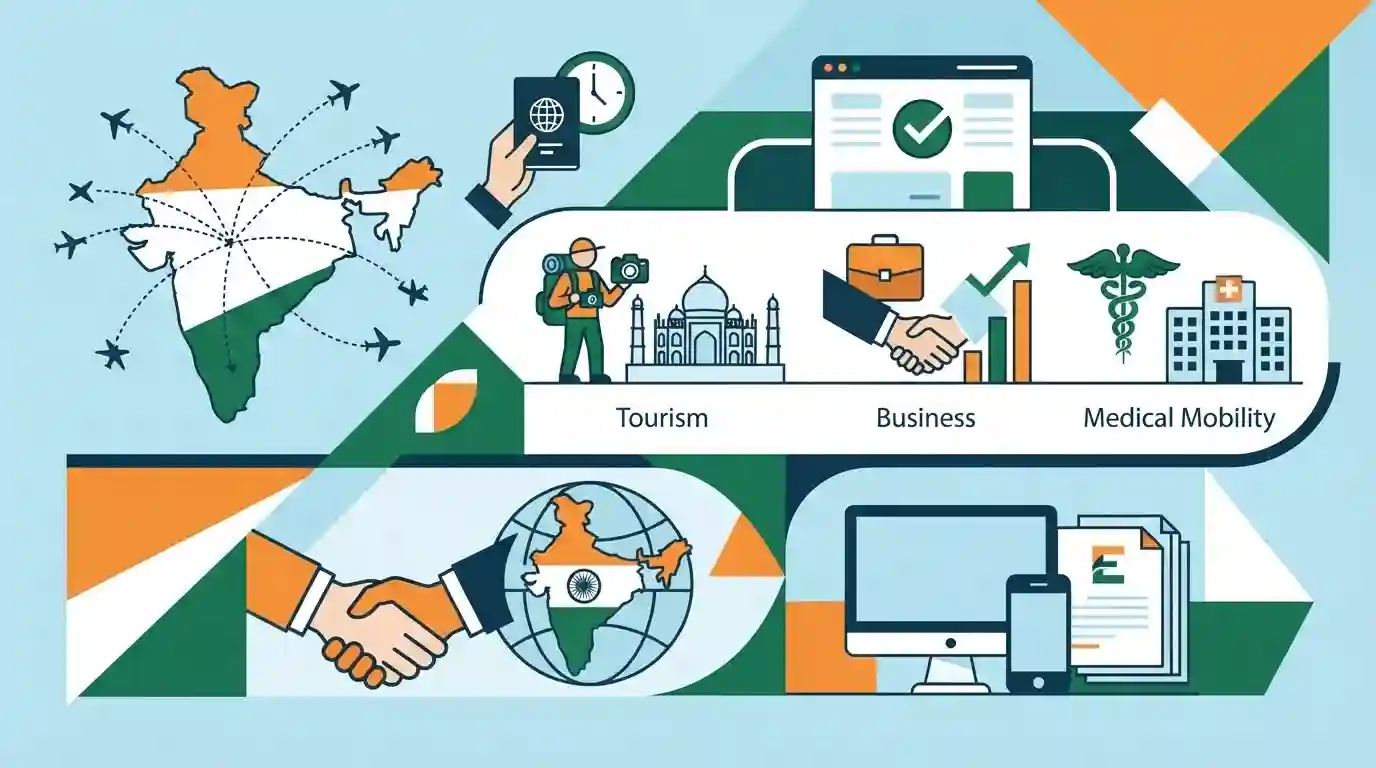
The Government of India has rationalized and streamlined the Indian visa regime to enhance ease of travel, promote tourism, business, and medical mobility, and strengthen citizen-centric governance and digital public service delivery.
Key Points
- Government of India rationalized the Indian visa regime to promote tourism, business, medical travel, and cultural exchange.
- The policy updates aim to simplify procedures, enhance transparency, and foster citizen-centric e-governance in public service delivery.
- Streamlined visa categories facilitate greater people-to-people contact, supporting international relations and soft power diplomacy.
Important Terms
Indian Visa Regime

The framework of laws, procedures, and categories governing the entry, stay, and movement of foreign nationals in India, recently rationalized to streamline tourist, business, and medical mobility.
UPSC context
UPSC Prelims/Mains (Governance & International Relations): Tests understanding of administrative reforms, ease of travel policies, and digital governance.
Ministry of Home Affairs
The central government ministry responsible for the maintenance of internal security, domestic policy, and the administration of immigration, citizenship, and visa services in India.
UPSC context
UPSC Prelims/Mains (Polity & Governance): Tests knowledge of organizational mandates, ministerial jurisdictions, and internal security administration in India.
Static Concepts Connected
What are the key constitutional provisions and statutory frameworks governing entry, stay, and departure of foreigners in India?
- Statutory Power: Foreigners Act, 1946 empowers the central government to regulate entry, presence, and departure of foreigners.
- Entry Mandate: Passport (Entry into India) Act, 1920 mandates valid passports and visas for entering Indian territory.
- Fundamental Rights: Constitutional Reach, Article 21 guarantees right to life and personal liberty to non-citizens, while Article 19 is restricted to citizens.
Cross-Topic Patterns
Visa Policy & Regional Diplomacy
Visa rationalization directly supports the 'Act East' and 'Neighbourhood First' policies by easing mobility and reducing bureaucratic friction for regional partners.
DPI & E-Governance Expansion
Streamlining visa categories and expanding e-Visas reflects India's broader Digital Public Infrastructure (DPI) push, exporting governance models digitally.

Visa regime reforms tied to digital public service delivery will feature in governance/e-governance application-based MCQs.
Linked PYQs · 3
Linked PYQs · 3
- 2024MainsGS2
e-governance is not just about the routine application of digital technology in service delivery process. It is as much about multifarious interactions for ensuring transparency and accountability. In this context evaluate the role of the 'Interactive Service Model' of e-governance.
- 2025MainsGS2
e-governance projects have a built-in bias towards technology and back-end integration than user-centric designs. Examine.
- 2023MainsGS2
e-governance, as a critical tool of governance, has ushered in effectiveness, transparency and accountability in governments. What inadequacies hamper the enhancement of these features ?
