CPSE Procurement from SC ST MSEs and Policy Mandates
Source:PIB ↗
Why It Matters
This topic directly connects to inclusive growth, affirmative action for vulnerable groups, and the performance of MSMEs in India's manufacturing and public procurement ecosystem.
Summary
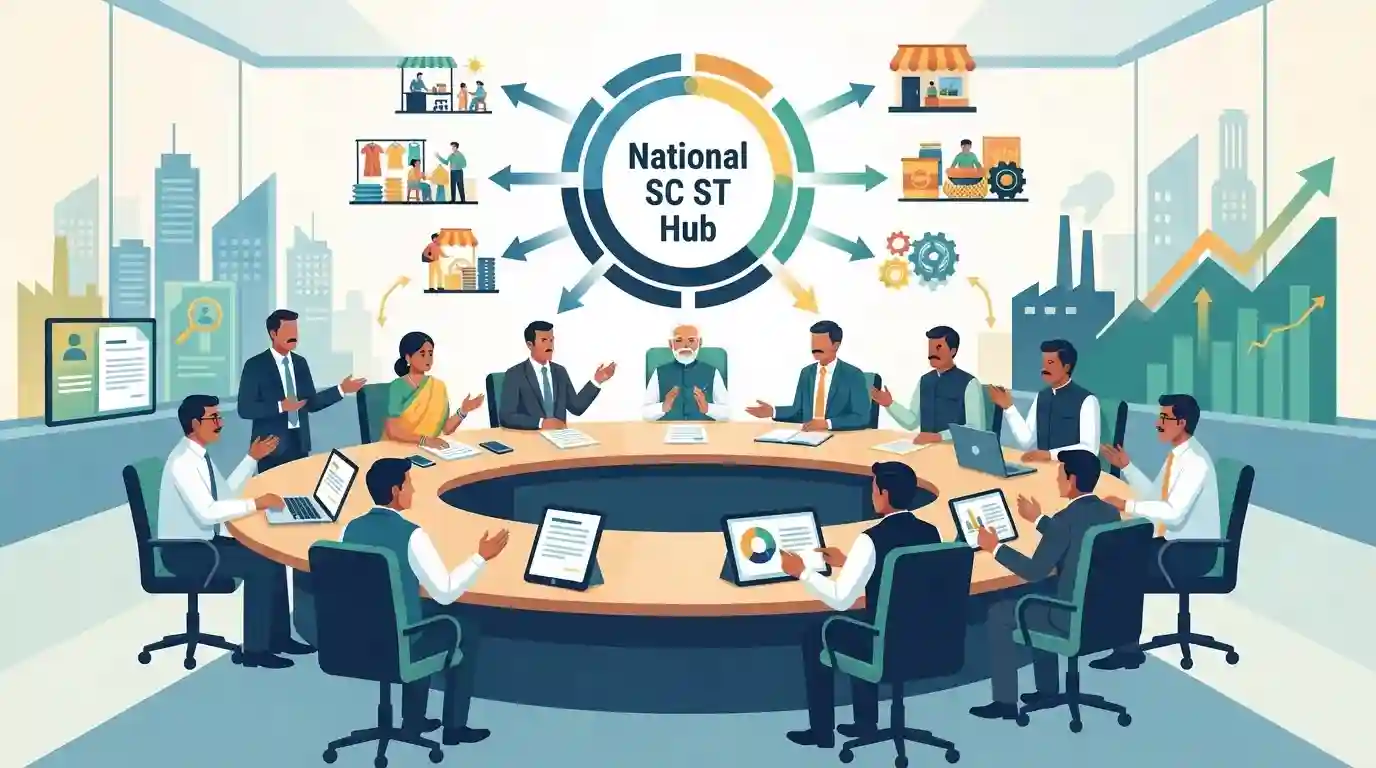
The Ministry of MSME hosted a high-level round table discussion with Central Public Sector Enterprises (CPSEs) to strategize and boost public procurement from Scheduled Caste (SC) and Scheduled Tribe (ST) owned Micro and Small Enterprises (MSEs). The event reviewed compliance with the Public Procurement Policy mandates, identified structural bottlenecks in supply chains, and emphasized targeted handholding through the National SC ST Hub to foster inclusive economic growth and entrepreneurship among marginalized communities.
Key Points
- The Ministry of MSME organized a round table discussion with Central Public Sector Enterprises (CPSEs) to review and enhance public procurement from SC/ST-owned Micro and Small Enterprises (MSEs).
- The Public Procurement Policy mandates a minimum 4% annual procurement from MSEs owned by SC/ST entrepreneurs, out of the total 25% mandatory procurement from MSEs by CPSEs/Central Ministries.
- Discussions focused on addressing capacity constraints, vendor registration challenges, mapping of SC/ST enterprises, and leveraging the Samadhan and Sambandh portals.
- Initiatives like the National SC ST Hub (NSSH) were highlighted for providing handholding, skill development, and financial linkage support to marginalized entrepreneurs.
Static Concepts Connected
What are the key statutory and policy mandates governing public procurement for MSMEs in India?
- Overall Target: Mandates a minimum 25% annual procurement of goods and services by Central Ministries, Departments, and CPSEs from MSEs.
- SC/ST Sub-target: Out of the 25% target, a sub-target of 4% is statutorily earmarked for MSEs owned by SC/ST entrepreneurs.
- Women Entrepreneurs: An additional sub-target of 3% is earmarked for procurement from MSEs owned by women entrepreneurs under the policy.
- Monitoring Portals: Portals like Sambandh monitor procurement compliance, while Samadhan tracks delayed payments to micro and small enterprises.
Cross-Topic Patterns
Public Procurement meets Social Justice Mandates
Affirmative action mandates in public procurement intersect with reservation policies, creating a unique intersection of social justice and economic policy in public sector undertakings.

Expect a statement-based prelims question combining the 25% total MSE procurement target with the specific 4% SC/ST and 3% women sub-targets.
Linked PYQs · 2
Linked PYQs · 2
- 2023MainsGS3
Faster economic growth requires increased share of the manufacturing sector in GDP, particularly of MSMEs. Comment on the present policies of the Government in this regard.
- 2023MainsGS2
“Development and welfare schemes for the vulnerable, by its nature, are discriminatory in approach.” Do you agree? Give reasons for your answer.
