Bal Vivah Mukt Bharat Campaign for Child Marriage Eradication
Source:PIB ↗
Why It Matters
Important for understanding government interventions, legal frameworks, and social campaigns aimed at protecting vulnerable sections like children and women from social evils.
Summary
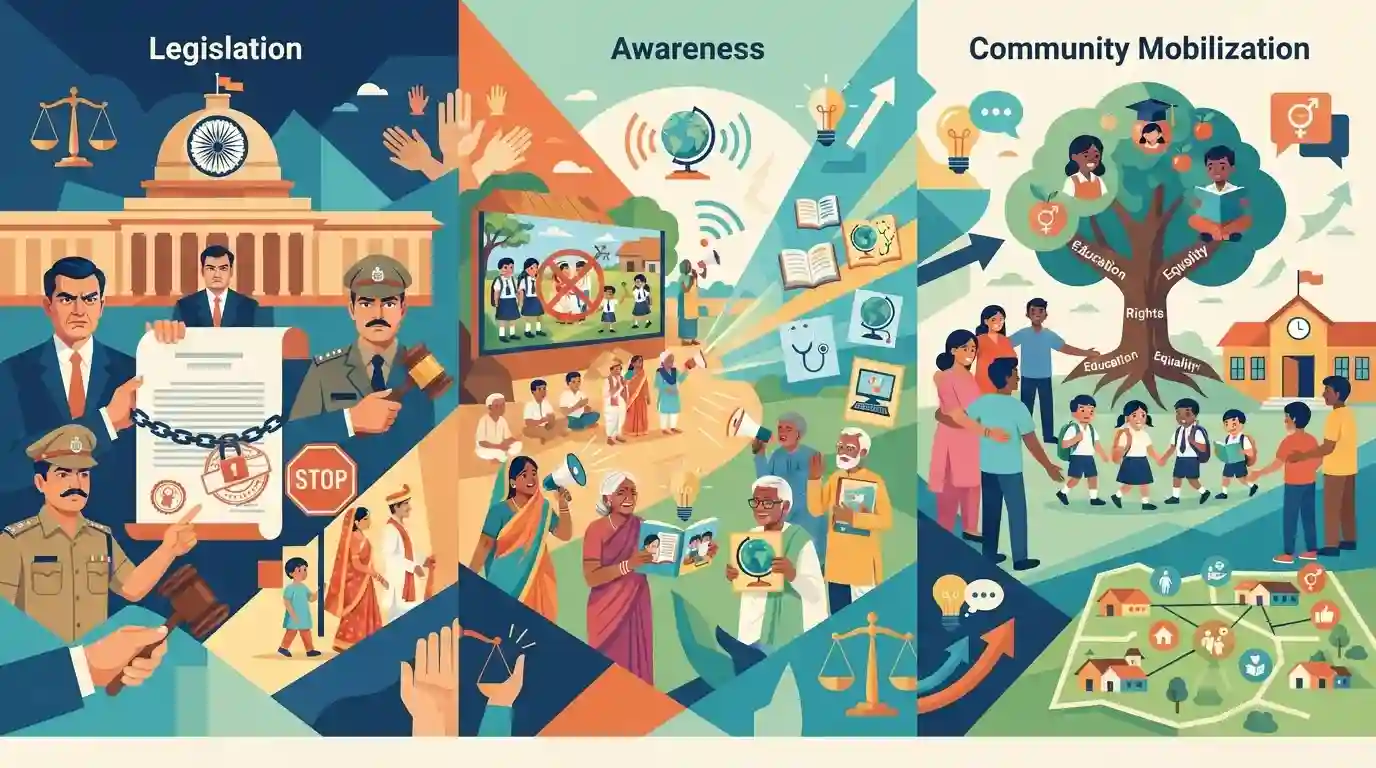
The Bal Vivah Mukt Bharat initiative focuses on eliminating child marriage in India by strengthening legislative enforcement, raising mass awareness, and fostering community mobilization to protect children's rights and promote gender equality.
Key Points
- Bal Vivah Mukt Bharat campaign aims to eradicate child marriage through nationwide awareness, strict enforcement, and community mobilization.
- Child marriage remains a deep-rooted social evil violating child rights, health, and education, particularly affecting young girls.
- Inter-ministerial convergence and grassroots participation through Panchayati Raj institutions are vital for effective implementation.
Important Terms
Bal Vivah Mukt Bharat Campaign

A national initiative launched by the Ministry of Women and Child Development to eradicate child marriages across India by 2030, emphasizing community mobilization, strict legal enforcement, and awareness.
UPSC context
UPSC Paper II (Social Justice/Vulnerable Sections): Tests government policies and interventions targeting child rights and gender equality.
Prohibition of Child Marriage Act
The principal legislation in India criminalizing child marriages, defining a child as a male under 21 and a female under 18, and appointing Child Marriage Prohibition Officers.
UPSC context
UPSC Paper II (Polity & Governance/Social Justice): Evaluates legal frameworks, enforcement mechanisms, and statutory protections against social evils.
Ministry of Women and Child Development
The nodal ministry of the Government of India responsible for formulating and implementing policies, legislation, and programs for the holistic development of women and children.
UPSC context
UPSC Paper II (Governance): Essential for understanding institutional frameworks and ministerial responsibilities concerning vulnerable demographics.
National Commission for Protection of Child Rights
A statutory body established under the CPCR Act, 2005 to protect, promote, and monitor children's rights and oversee the effective implementation of child-centric laws in India.
UPSC context
UPSC Paper II (Polity): Frequently tested as a statutory regulatory body mandated with safeguarding child rights and monitoring state implementation.
Static Concepts Connected
What are the key provisions and legal parameters under the Prohibition of Child Marriage Act (PCMA), 2006?
- Age Limits: Legal Age: Sets minimum age of marriage at 18 years for females and 21 years for males.
- Voidable Status: Voidable Status: Marriages solemnized below legal age are voidable at the option of the contracting party being a child within specified time limits.
- Cognizable Offences: Offence Status: Offences under PCMA are cognizable and non-bailable, empowering police and courts to take strict punitive action.
- PMCO Role: Child Marriage Prohibition Officer: State governments must appoint PCMOs to prevent solemnization and create awareness.
Cross-Topic Patterns
Child Marriage & Demographic Dividends
Child marriage intersects with reproductive health and maternal mortality, linking social welfare policy with SDG 3 (Good Health) and demographic transition trends.
Panchayati Raj & Social Legislation Enforcement
Grassroots implementation relies on active engagement by PRIs, showing how rural local bodies function as front-line agencies for social legislation.

PCMA amendments, legal age of marriage, and SDG 5 convergence are frequently tested in Prelims via multi-statement statements.
Linked PYQs · 2
Linked PYQs · 2
- 2023MainsGS2
Explain the constitutional perspectives of Gender Justice with the help of relevant Constitutional Provisions and case laws.
- 2025MainsGS2
Women's social capital complements in advancing empowerment and gender equity. Explain.
