NHAI Guidelines for Multi-Lane Free Flow Tolling on Highways
Source:PIB ↗
Why It Matters
This topic is highly relevant for GS3 (Infrastructure, Logistics, and Technology in Transport) as it addresses India's transition towards advanced electronic toll collection systems, reducing logistics costs and improving highway efficiency.
Summary
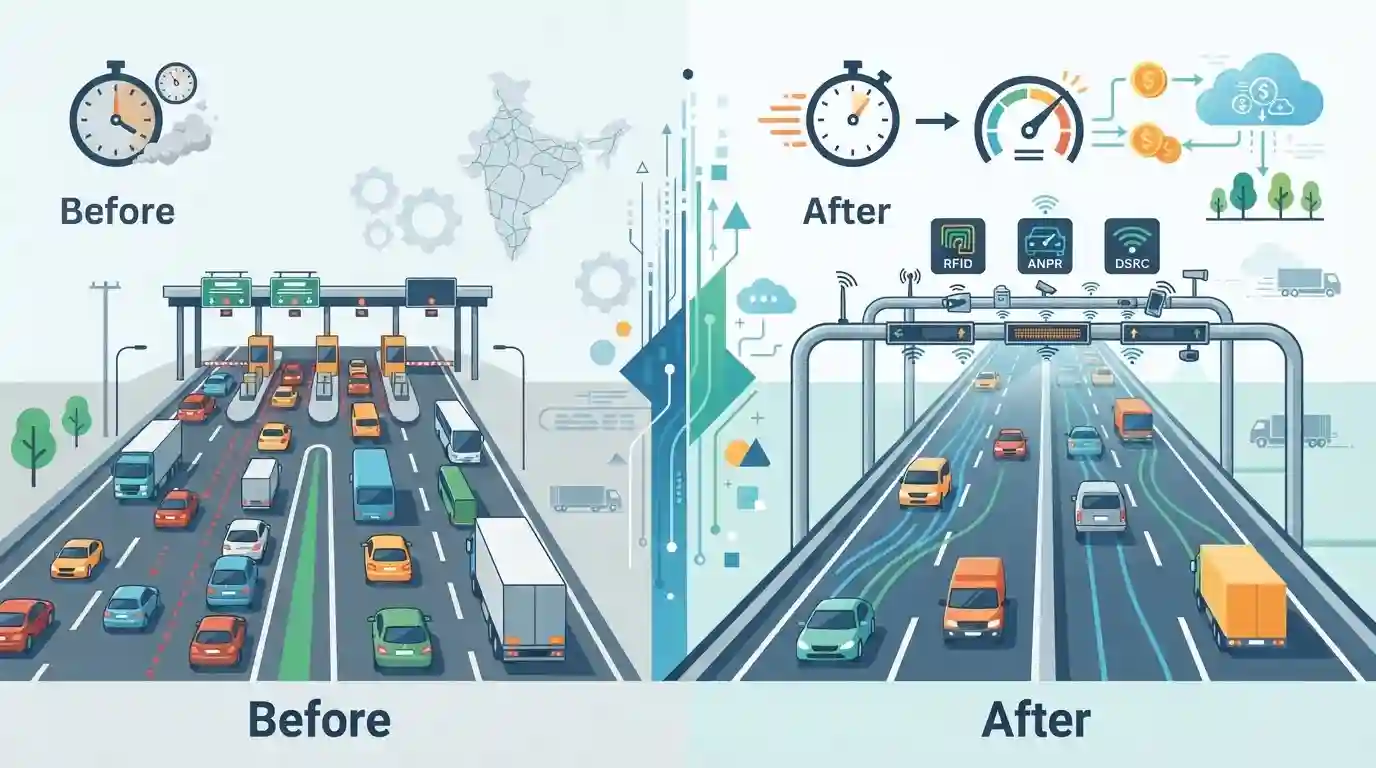
The National Highways Authority of India (NHAI) has released comprehensive guidelines for standardising design and infrastructure for Multi-Lane Free Flow (MLFF) Tolling on national highways of four lanes and above. This initiative is designed to transition India's highway network toward barrier-free electronic toll collection, eliminating traditional toll booths to reduce traffic congestion, improve logistics efficiency, and minimize environmental impact.
Key Points
- NHAI issued guidelines to standardise design and infrastructure for Multi-Lane Free Flow (MLFF) Tolling.
- Aims to implement barrier-free electronic toll collection on national highways of four lanes and above.
- Seeks to eliminate congestion at toll plazas, reduce vehicle wait times, and lower fuel consumption and carbon emissions.
- Involves modernising highway infrastructure with advanced overhead gantry systems, automatic number plate recognition (ANPR), and RFID technologies.
Important Terms
Multi-Lane Free Flow (MLFF) Tolling

A modern technology-driven toll collection system that allows vehicles to pass through toll plazas at highway speeds without stopping at physical barriers, using RFID and ANPR cameras.
UPSC context
UPSC Prelims/Mains (GS III: Infrastructure - Roads and Transport). Tests knowledge of modern transport technology, logistics efficiency, and highway governance reforms.
National Highways Authority of India (NHAI)
An autonomous statutory body under the Ministry of Road Transport and Highways responsible for the development, maintenance, and management of national highways in India.
UPSC context
UPSC Prelims (Statutory bodies) and Mains GS III (Infrastructure development, transport sector policies, and institutional framework).
Prelims Trap
MLFF completely replaces the need for FASTag and RFID infrastructure on national highways.
Aspirants often assume MLFF completely replaces FASTag, whereas MLFF builds upon RFID and ANPR technologies to work alongside or evolve electronic toll collection.
Static Concepts Connected
What is the institutional mandate and financing structure of the National Highways Authority of India (NHAI)?
- Statutory Body: Established by an Act of Parliament in 1988, operationalized in 1995 under the Ministry of Road Transport and Highways.
- Primary Mandate: Responsible for development, maintenance, and management of National Highways entrusted to it by the Central Government.
- Funding Sources: Financed through cess allocations, market borrowings, Monetisation of Highways through TOT (Toll-Operate-Transfer) and Infrastructure Investment Trusts (InvITs).
Cross-Topic Patterns
MLFF Tolling + National Logistics Policy
Integrating ANPR and RFID for automated tolling directly supports National Logistics Policy targets by lowering transit friction and reducing truck turnaround times across economic corridors.
Digital Public Infrastructure + Intelligent Transportation
Advanced overhead gantries and automated enforcement systems showcase how digital public infrastructure is expanding from financial payments into physical transport networks.

NHAI's MLFF guidelines combining ANPR, RFID, and gantry infrastructure will likely feature in a statement-based prelims question.
Linked PYQs · 1
Linked PYQs · 1
- 2024MainsGS3
What is the technology being employed for electronic toll collection on highways? What are its advantages and limitations? What are the proposed changes that will make this process seamless? Would this transition carry any potential hazards?
