Prosthetics and Orthotics Sector and Disability Welfare in India
Source:PIB ↗
Why It Matters
It underscores the intersection of health policy, specialized human resource training, and technological innovation required for the effective implementation of disability welfare frameworks like the Rights of Persons with Disabilities Act.
Summary
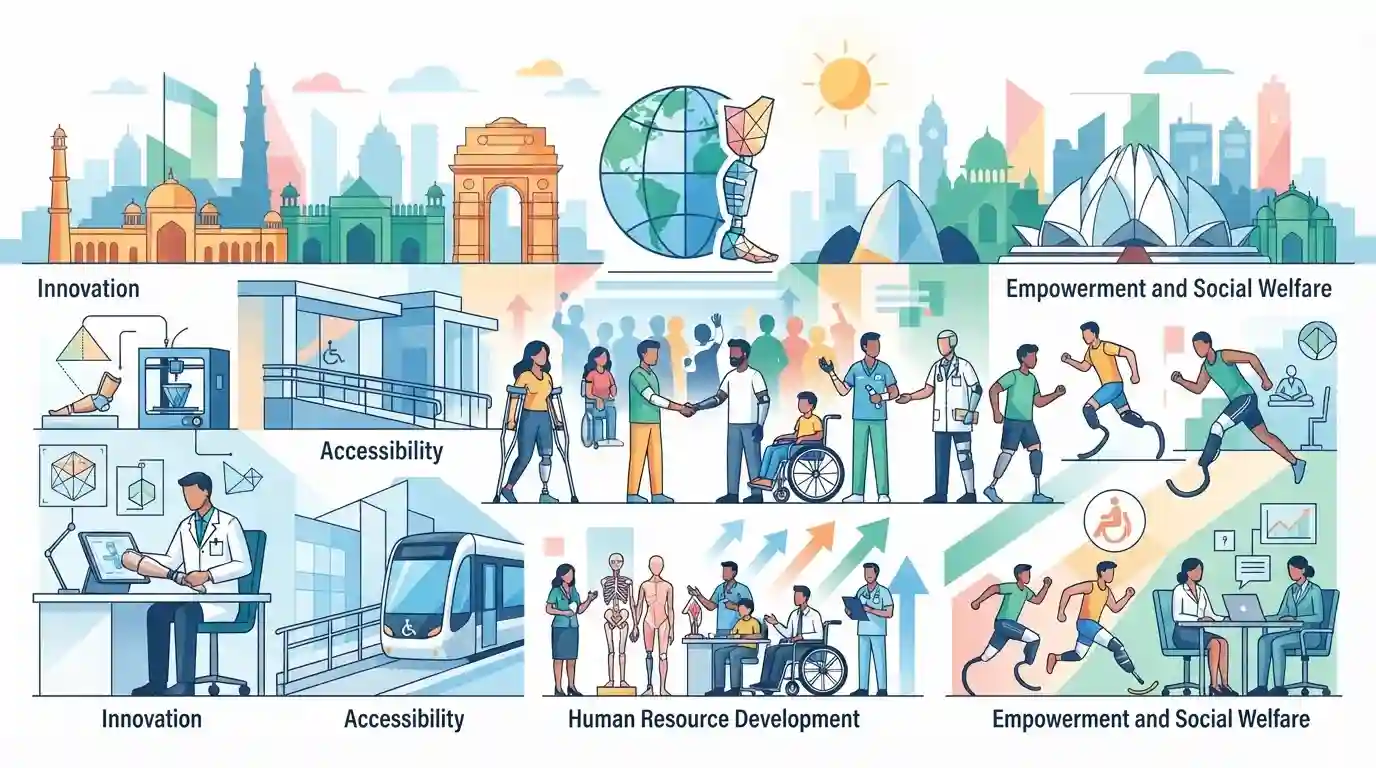
The article highlights the observance of International Prosthetist and Orthotist Day in New Delhi, emphasizing the importance of innovation, accessibility, and human resource development in prosthetics and orthotics. It discusses the critical role of specialized rehabilitation professionals in empowering persons with disabilities, enhancing assistive device accessibility, and expanding global opportunities within the healthcare and social welfare sectors.
Key Points
- Celebration of International Prosthetist and Orthotist Day focuses on innovation, accessibility, and global opportunities in rehabilitation services.
- Emphasis on bridging the gap between demand and supply of qualified prosthetists and orthotists in India and globally.
- Integration of advanced medical technology and assistive devices to improve the quality of life for persons with disabilities.
- Role of specialized healthcare professionals in ensuring inclusive development and physical rehabilitation.
Important Terms
Rights of Persons with Disabilities Act 2016

A landmark 2016 legislation replacing the 1995 Act, expanding recognized disabilities from 7 to 21 categories, guaranteeing educational and employment reservations, and aligning domestic law with the UNCRPD.
UPSC context
UPSC GS Paper II (Social Justice, Vulnerable Sections): Core legislation tested for welfare provisions, rights-based approach, and disability inclusion.
Assistance to Disabled Persons for Purchase/Fitting of Aids and Appliances ADIP Scheme
A central sector scheme by the Ministry of Social Justice and Empowerment providing durable, modern aids and assistive devices to needy persons with disabilities to enhance rehabilitation.
UPSC context
UPSC GS Paper II (Welfare Schemes for Vulnerable Sections): Evaluates government interventions in public health and assistive technology access.
International Society for Prosthetics and Orthotics
A global multi-disciplinary non-governmental organization dedicated to improving the quality of life of people needing prosthetic, orthotic, and mobility assistive technology through education and standards.
UPSC context
UPSC GS Paper II (International Bodies / Social Justice): Relevant for global best practices in disability rehabilitation and assistive health standards.
Static Concepts Connected
What are the key statutory bodies and welfare schemes for persons with disabilities in India?
- Rehabilitation Council of India: Statutory Body established under an Act of Parliament to regulate and standardize training policies for rehabilitation professionals.
- ADIP Scheme: A central sector scheme providing subsidized, standard assistive devices to needy disabled persons to promote self-reliance.
- ALIMCO Role: Central Public Sector Enterprise under the Ministry of Social Justice and Empowerment manufacturing artificial limbs affordably.
Cross-Topic Patterns
Disability Welfare & Affirmative Action Jurisprudence
The Rights of Persons with Disabilities Act 2016 expanded reservation from 3% to 4% and added acid-attack victims, linking disability rights to affirmative action and federal welfare jurisprudence.
Assistive Tech & Atmanirbhar Bharat Synergy
Indigenous manufacturing of bionic limbs through ALIMCO ties public health infrastructure directly to the Make in India and Atmanirbhar Bharat strategic frameworks.

Match ADIP scheme provisions, RCI statutory role, and RPwD Act 2016 quotas in a multi-statement prelims question.
Linked PYQs · 5
Linked PYQs · 5
- 2017MainsGS2
Does the Rights of Persons with Disabilities Act, 2016 ensure effective mechanism for empowerment and inclusion of the intended beneficiaries in the society? Discuss.
- 2023MainsGS2
“Development and welfare schemes for the vulnerable, by its nature, are discriminatory in approach.” Do you agree? Give reasons for your answer.
- 2024MainsGS2
Public charitable trusts have the potential to make India's development more inclusive as they relate to certain vital public issues. Comment.
- 2023MainsGS2
The crucial aspect of development process has been the inadequate attention paid to Human Resource Development in India. Suggest measures that can address this inadequacy.
- 2024MainsGS2
In a crucial domain like the public healthcare system the Indian State should play a vital role to contain the adverse impact of marketisation of the system. Suggest some measures through which the State can enhance the reach of public healthcare at the grassroots level.
